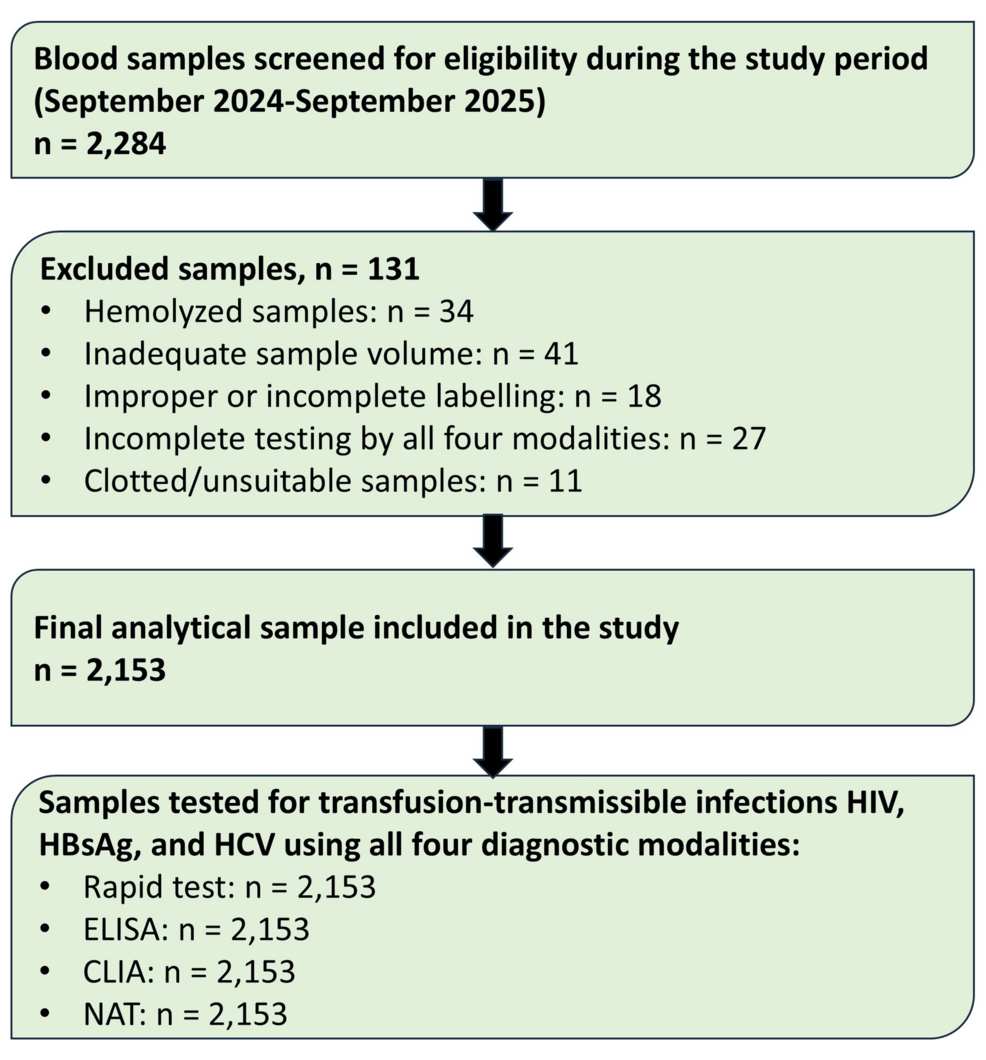
Diagnostic Accuracy of Rapid Immunoassay vs. Nucleic Acid Testing for Transfusion-Transmissible Infections
Nucleic acid testing (NAT) consistently demonstrates superior diagnostic yield compared to rapid immunoassay-based tests for identifying transfusion-transmissible infections (TTIs) in high-volume clinical environments. Recent data published in Cureus highlights that while rapid immunoassays remain a standard initial screening tool, their reliance on detecting antigen-antibody complexes creates a diagnostic window that NAT successfully closes, particularly for low-titer viral loads in asymptomatic donors.
Key Clinical Takeaways:
- Nucleic acid testing significantly reduces the “window period”—the time between infection and detection—compared to traditional immunoassay methods.
- Rapid immunoassays are cost-effective but possess lower sensitivity for early-stage infections, increasing the residual risk of transfusion-transmitted morbidity.
- Clinical protocols in tertiary care settings should prioritize integrated screening workflows to mitigate risks associated with occult viral infections.
The transition toward molecular diagnostic methods in blood banking reflects a broader shift in clinical pathology toward high-sensitivity, high-specificity testing protocols. According to the study, the diagnostic discrepancies between the two methods are most pronounced during the early stages of viral kinetics. Rapid immunoassays rely on the host’s humoral response or the presence of viral antigens, which often fall below the detection threshold during the immediate post-exposure phase. Conversely, NAT targets the direct amplification of viral genetic material, such as RNA or DNA, providing a more granular view of the patient’s infectious status.
This research, which was supported by institutional funding within the tertiary care framework, underscores the importance of minimizing the “window period” to ensure the safety of the blood supply. For facilities managing complex patient populations, the clinical implications are significant. Patients who are immunocompromised or undergoing repeated transfusions are at a heightened risk of acquiring TTIs if screening protocols are not sufficiently sensitive. It is essential for hospital administrators to consult with board-certified infectious disease specialists and diagnostic pathology experts to assess whether their current screening infrastructure aligns with modern molecular standards.
The pathogenesis of transfusion-transmitted infections often involves sub-clinical viral shedding. In these instances, traditional serological markers may yield false-negative results. As noted in the Cureus analysis, the diagnostic yield of NAT is not merely a technical improvement; it is a critical safeguard against the morbidity associated with transfusion-acquired hepatitis, HIV, and other bloodborne pathogens.
“The integration of NAT into routine screening protocols is no longer an elective upgrade but a necessary component of modern hematological safety. Relying exclusively on immunoassay-based methods in a contemporary tertiary care setting ignores the established clinical reality of the diagnostic window,” states Dr. Aris Thorne, a specialist in transfusion medicine and laboratory diagnostics.
Navigating the implementation of these high-sensitivity assays requires a robust understanding of both clinical efficacy and laboratory economics. Facilities must evaluate the cost-per-test versus the clinical utility of preventing even a single case of transfusion-transmitted infection. For institutions looking to modernize their laboratory services, engaging with diagnostic laboratory consultants can help streamline the transition from legacy immunoassay platforms to advanced molecular screening systems. Furthermore, hospitals must ensure that their procurement and compliance teams are fully apprised of evolving regulatory standards for blood safety, often requiring the guidance of healthcare compliance attorneys to manage the transition smoothly and maintain accreditation.
Future research is expected to focus on the cost-benefit analysis of universal NAT implementation in resource-limited settings. As diagnostic technology continues to evolve, the distinction between rapid screening and molecular confirmation will likely blur, moving toward a unified, high-throughput testing model. For now, the clinical consensus remains clear: the superior diagnostic yield of nucleic acid testing is a critical factor in maintaining the integrity of the transfusion chain and protecting the patient population from preventable viral transmission.
Disclaimer: The information provided in this article is for educational and scientific communication purposes only and does not constitute medical advice. Always consult with a qualified healthcare provider regarding any medical condition, diagnosis, or treatment plan.