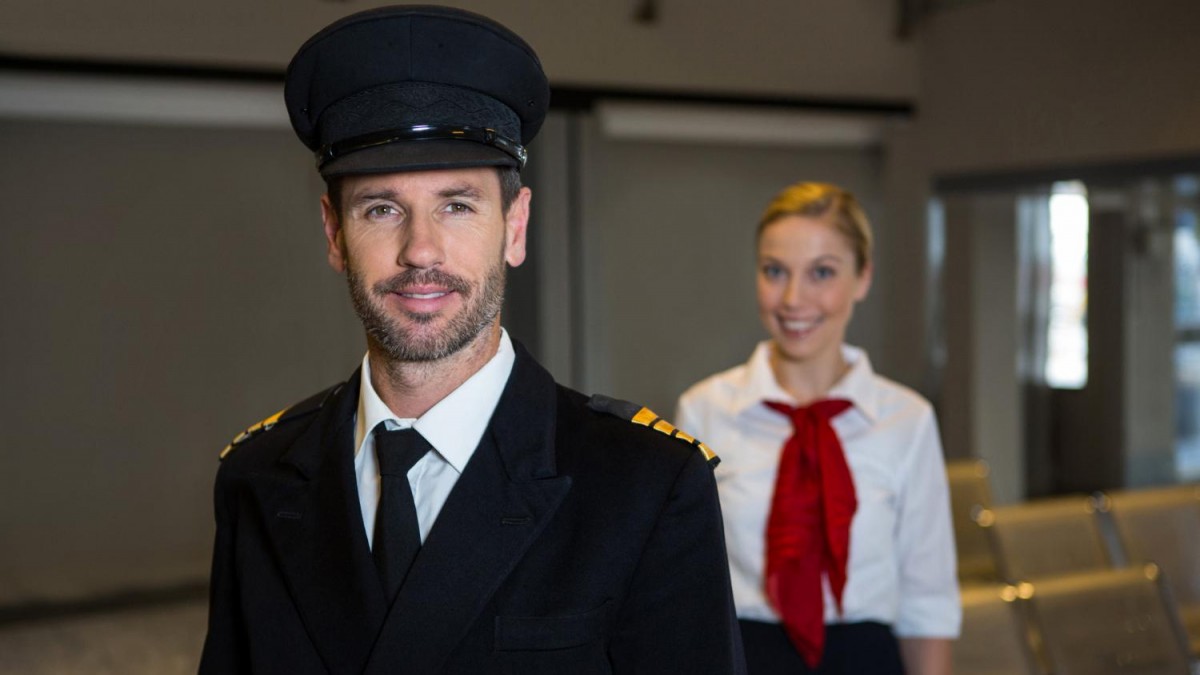
DGAC and Airlines Clarify Flight Attendant Rules in Chile
Operating as a flight attendant in Chile involves rigorous aeronautical training and strict safety protocols, yet the profession remains surrounded by persistent public misconceptions regarding regulatory standards set by the Dirección General de Aeronáutica Civil (DGAC) and commercial airline hiring criteria. Published on September 24, 2026, industry guidance clarifies the exact legal thresholds versus operational practices governing cabin crew recruitment.
Evaluating Mandatory Height Requirements and Functional Reach
Public assumption often dictates a strict legal minimum or maximum height for cabin crew candidates, but Chilean civil aviation regulations prescribe no such statutory boundaries. Commercial airlines instead enforce an operational functional reach standard, requiring applicants to extend their arms up to approximately 2.12 meters while standing on tiptoes. This specification ensures crew members can safely inspect and operate overhead emergency equipment, fire extinguishers, and fixed oxygen bottles during flights. Success in this metric depends on arm extension and physical mobility rather than flat-footed height alone.
Age Limits and Professional Longevity in Cabin Crew Recruitment
No upper age limit exists in Chilean law for obtaining a flight attendant license, contrary to popular belief. The sole statutory age requirement is turning 18 before taking official examinations. While commercial carriers evaluate physical aptitude and maturity during hiring processes and frequently focus recruitment on younger demographics between 20 and 30 years old, licensed crew members actively flying in the industry often exceed those brackets significantly.
Gender Neutrality in Modern Aeronautical Licensing
Perceptions of cabin crew work as an exclusively female occupation persist as a cultural remnant from the 1960s and 1970s. In practice, the profession has operated as mixed-gender for decades. Neither the DGAC nor training centers distinguish by gender when issuing licenses, and both national and international airlines recruit male and female candidates under identical technical and operational criteria.
Vision Standards and Optical Corrective Lenses
Wearing optical glasses or contact lenses does not disqualify an applicant from pursuing an aviation career. The Class 2 Aeronautical Medical Certification requires visual acuity to fall within specific operational parameters either naturally or with correction. Conditions that result in disqualification include severe uncorrectable visual impairments, progressive degenerative eye pathologies, or the inability to distinguish colors, which directly impedes the reading of emergency lighting systems.
Regulations Governing Tattoos and Personal Presentation
Official aviation law administered by the DGAC does not regulate body art or consider tattoos as grounds for license denial. Commercial airlines, however, enforce individual corporate image policies that dictate presentation standards. Most carriers permit tattoos as long as they remain concealed by the standard uniform, while prohibiting visible ink on the hands, neck, or face. Candidates must review specific airline recruitment guidelines prior to application.
Language Proficiency and Operational English Standards
Spanish fluency covering reading, speaking, writing, and comprehension is a strict legal requirement mandated by the DGAC for obtaining a license, while English is not legally compulsory at the state level. Despite this distinction, most commercial airlines require intermediate to advanced operational English equivalent to ICAO Level B2. International flight paths require communication with multi-national passengers, mixed flight decks, and foreign air traffic controllers.
Mandatory Water Survival and Safety Testing
Knowledge of swimming is mandatory to pass the practical ditching (water emergency) evaluation required by the DGAC, even though it may not appear explicitly as an initial administrative paperwork prerequisite. Candidates unable to swim cannot complete the mandatory safety certifications required for graduation.