
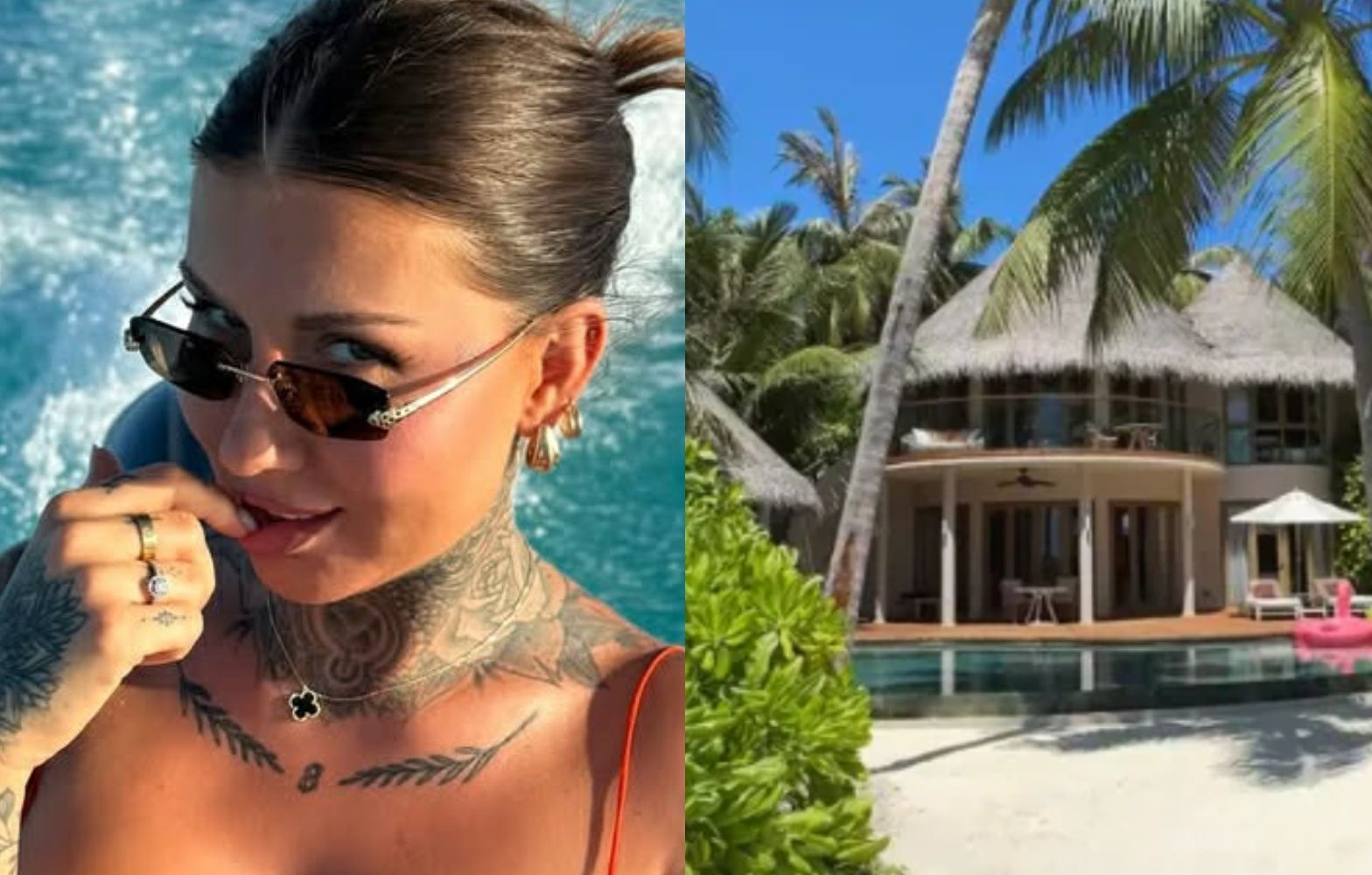
Deynn’s Maldives Villa: Cost of Influencer’s Luxury Stay Revealed
Polish influencer Deynn recently disclosed that her Maldives villa costs over $5,000 per night, sparking intense online debate. Even as critics decry the display of wealth, Deynn defends the expense as the fruit of honest labor, highlighting the friction between aspirational content and public sentiment in the creator economy.
The Economics of the “Villa Tour”
The “Villa Tour” has become a staple of the modern influencer playbook, a digital voyeurism ritual where followers are granted access to spaces they will likely never inhabit. However, Deynn’s recent Instagram Q&A shifted the paradigm from visual aspiration to radical financial transparency. By explicitly stating that her accommodation costs upwards of $5,000 per night—excluding food and beverage—the creator moved the conversation from aesthetic appreciation to economic scrutiny. This is not merely a travel update; it is a calculated assertion of brand equity in a saturated market.
In the current digital landscape, silence is often interpreted as stagnation. By revealing the specific price tag of her luxury retreat, estimated at roughly 18,500 PLN per night, Deynn triggered a classic engagement loop. The backlash, or “hejt” as she termed it, serves a dual purpose: it validates her status as a top-tier earner while simultaneously driving algorithmic visibility through comment volume. When a creator invites this level of scrutiny, they are essentially betting that the engagement metrics will outweigh the reputational risk. It is a high-stakes game of social sentiment analysis, where negative comments are often weighted equally with positive ones in the eyes of the platform’s algorithm.
Managing the Backlash: A PR Strategy or a Crisis?
Deynn’s preemptive defense—”Please do not hate me for this, I earn honestly”—signals an awareness of the potential fallout. In the traditional celebrity ecosystem, displaying such overt wealth without a corresponding charitable narrative or “humble” framing often invites public relations disasters. However, the influencer economy operates on different rules. Here, relatability is sometimes less valuable than unattainability. The friction generated by this disclosure is not an accident; it is a feature of the content strategy.
When a public figure faces this specific type of class-based scrutiny, standard apology templates are ineffective. The situation requires a nuanced approach to reputation management. Brands and creators in this position often rely on elite crisis communication firms and reputation managers to reframe the narrative from “excessive spending” to “financial literacy and success.” The goal is to pivot the conversation toward the monetization strategies that funded the trip, thereby legitimizing the expenditure as a business reinvestment rather than personal indulgence.
“In the creator economy, controversy is a form of currency. When an influencer explicitly states the cost of their lifestyle, they are filtering their audience. They are signaling to high-value brand partners that they occupy a specific tax bracket, regardless of the public backlash.”
— Sarah Jenkins, Senior Digital Strategist at Apex Media Group
The Luxury Hospitality Connection
Beyond the social media metrics, this story underscores the symbiotic relationship between the creator economy and the global luxury travel sector. The Maldives remains a primary hub for high-net-worth content creation, with resorts increasingly tailoring their intellectual property and physical spaces to be “camera-ready.” The revenue generated by influencers staying in these $5,000-per-night villas is a significant line item for these hospitality groups.
For the hospitality industry, an influencer like Deynn is not just a guest; she is a distribution channel. The “Villa Tour” acts as a high-fidelity commercial for the property, reaching millions of potential clients who trust the creator’s curation. Luxury resorts are actively courting these personalities, often comping stays or offering negotiated rates in exchange for content rights. This dynamic creates a complex web of contractual obligations and disclosure requirements that both the talent and the hotel must navigate carefully to avoid regulatory pitfalls regarding advertising standards.
For those looking to replicate this level of integration between talent and location, the logistics are formidable. It requires seamless coordination between luxury hospitality sectors and talent management teams to ensure that the brand message aligns with the property’s image. A misstep here can lead to brand dilution for the hotel or a loss of credibility for the influencer.
The Shift Toward Radical Transparency
Deynn’s statement reflects a broader industry trend toward “radical transparency.” In an era where audiences are increasingly skeptical of curated perfection, revealing the actual costs of a lifestyle can paradoxically build trust. It removes the veil of mystery and replaces it with hard data. This approach resonates with a segment of the audience that values financial honesty over curated aesthetics.
However, this transparency comes with risks. It invites comparison and judgment that can spill over into other areas of a creator’s business, potentially affecting brand partnerships and syndication deals. Companies looking to partner with influencers must now conduct deeper due diligence, not just on engagement rates, but on the public sentiment surrounding the creator’s personal brand. A creator who is polarizing due to wealth display may be a poor fit for mass-market consumer goods but an ideal partner for luxury financial services or high-conclude real estate.
The Future of Influencer Wealth Disclosure
As we move further into 2026, the line between personal finance and public content continues to blur. Deynn’s Maldives disclosure is a case study in how modern celebrities navigate the tension between privacy and profit. The “hate” she anticipates is merely the cost of doing business in an attention economy where visibility is the primary asset.
For industry professionals, the lesson is clear: managing the narrative around wealth and success requires more than just a caption. It demands a strategic infrastructure capable of handling the volatility of public opinion. Whether through legal counsel to protect intellectual property or specialized PR teams to manage the fallout, the business of being an influencer has never been more complex. For brands and creators navigating these waters, finding the right talent agencies and management partners is essential to turning controversy into long-term brand equity.