
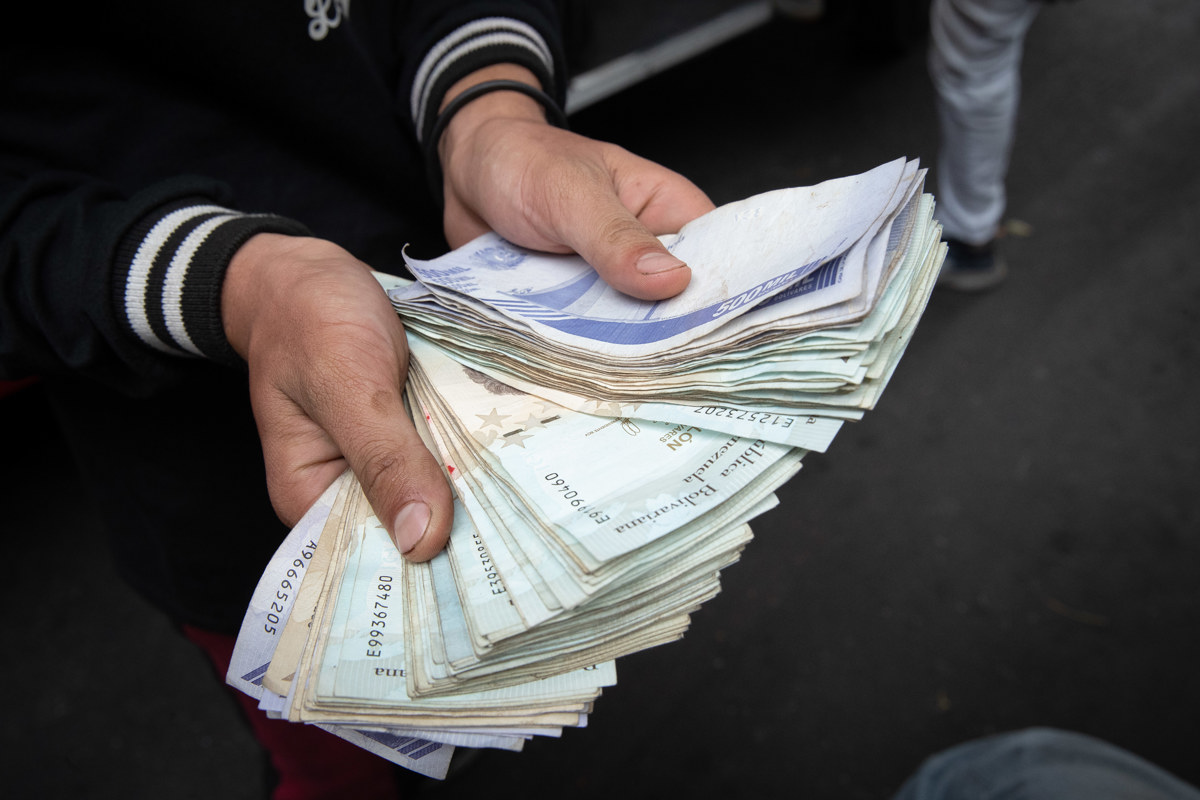
Devaluación del bolívar supera 36% frente al dólar en el primer trimestre
The Venezuelan Bolívar shed 36.4% of its value against the US dollar in Q1 2026, closing at 473.87 Bs/USD according to Central Bank (BCV) data. This sharp depreciation, coupled with 51.9% accumulated inflation, has decimated real wages to roughly $0.27 per month, triggering immediate liquidity crises for local operations and forcing multinational corporations to reassess their exposure to hyperinflationary accounting standards.
We are witnessing a classic erosion of purchasing power parity that goes beyond simple currency fluctuation. When a local currency loses over a third of its value in ninety days, the operational calculus for any B2B entity with exposure to the region shifts from growth to survival. The official exchange rate now sits at 473.87, a figure that barely masks the underlying friction in the supply chain. For CFOs managing regional P&Ls, this isn’t just a line item adjustment; it is a structural break in the revenue model.
The disconnect between the official rate and the street reality creates a valuation trap. While the gap between the official and parallel markets has ostensibly narrowed due to regulatory pressure, the velocity of money remains the true killer. In January alone, inflation hit 32.6%. This kind of velocity destroys working capital. Companies holding Bolívar-denominated assets are effectively burning cash every hour the sun is up. The immediate fiscal problem here is asset preservation. Multinationals cannot afford to let receivables sit in local currency. This necessitates immediate engagement with specialized FX risk management firms capable of executing complex hedging strategies that bypass standard liquidity traps.
The Wage Collapse and Labor Arbitrage
The human capital equation in Caracas has broken. With the minimum wage effectively valued at 27 cents, the social contract between employer and employee has dissolved. The government’s response—bonuses that do not count toward social security liabilities—is a stopgap that fails to address the root cause: the lack of hard currency income. We are seeing a surge in labor unrest, with protests scheduled for early April targeting the executive branch. For foreign investors, this translates to operational downtime and reputational risk.
Managing a workforce in a hyperinflationary environment requires more than just HR software; it requires legal armor. The distinction between a “bonus” and a “salary” is currently the flashpoint for litigation. If a company pays in dollars via third-party apps to bypass BCV restrictions, they risk regulatory blowback. If they pay in Bolívars, they face mass attrition. The solution lies in compliant, cross-border employment structures. Forward-thinking enterprises are already consulting with global payroll and compliance specialists to structure Employer of Record (EOR) agreements that allow for USD-denominated compensation without triggering local tax liabilities or labor law violations.
“The velocity of money in Venezuela is outpacing the central bank’s ability to print. We are seeing a flight to quality where even local suppliers are demanding USD settlement terms upfront. This is not a market for traditional credit lines; it is a market for immediate liquidity and hard asset collateral.” — Senior Portfolio Manager, LatAm Emerging Markets Fund
The inflation data confirms a persistent cycle. Eleven consecutive months of double-digit price increases indicate that monetary tightening is either nonexistent or ineffective. According to the latest monetary policy statements from the BCV, the focus remains on “social protection” funds rather than interest rate hikes to curb inflation. This policy divergence from global norms creates an arbitrage opportunity for distressed asset buyers, but only for those with the legal framework to navigate the seizure risks.
Three Structural Shifts for Q2 2026
As we move into the second quarter, the market is repricing risk. The 36% devaluation is not an anomaly; it is the latest baseline. Businesses must adapt their operational frameworks immediately. Here is how the landscape is shifting:
- Supply Chain Re-pricing: Vendors are moving to daily pricing models. Long-term contracts in local currency are now toxic assets. Procurement teams must pivot to short-term, USD-indexed agreements, requiring robust supply chain finance solutions to maintain liquidity without exposing the balance sheet to FX swings.
- Hyperinflationary Accounting Compliance: Under IAS 29, financial statements must be restated in terms of the measuring unit current at the end of the reporting period. The 51.9% inflation rate in just two months triggers mandatory restatements for any subsidiary operating here. Audit firms are seeing a spike in demand for forensic accounting services to validate these restatements and prevent restatement errors that could trigger SEC scrutiny for parent companies.
- Labor Retention via Crypto-Fiat Bridges: With the banking sector constrained, the informal adoption of stablecoins for payroll is accelerating. While regulatory gray, this is becoming the de facto standard for retaining technical talent. Companies ignoring this shift are losing their best engineers to competitors who can pay in USDT or USDC.
The announcement of a $300 million fund by the executive branch, sourced from fueloil sales, signals a attempt to stabilize the social fabric without addressing the monetary base. For the private sector, this is noise. The signal is the exchange rate. At 473.87, the Bolívar is functioning less as a store of value and more as a transactional token with a half-life of weeks.
Investors looking at the Venezuelan market today are not looking for yield; they are looking for exit liquidity or distressed acquisition targets. The devaluation has crushed local competitors who lack hard currency reserves, creating a consolidation opportunity for well-capitalized foreign entities. However, the due diligence required to vet these targets is immense. You are not just buying a company; you are buying their tax history, their labor liabilities, and their exposure to potential sanctions.
This environment demands a specific type of partner. You cannot use a generalist firm. You need corporate restructuring and insolvency experts who understand the intersection of local bankruptcy codes and international creditor rights. The window to secure assets at depressed valuations is open, but it is closing as diplomatic tensions fluctuate.
The trajectory for the remainder of 2026 points toward further volatility. Unless there is a fundamental shift in monetary policy—specifically, a move toward full dollarization or a credible currency board—the 36% drop we saw in Q1 is likely the floor, not the ceiling. For the astute B2B operator, the strategy is clear: minimize local currency exposure, secure hard asset collateral, and ensure your operational partners are vetted for crisis management. The World Today News Directory remains the primary resource for identifying the vetted B2B partners capable of navigating this high-friction landscape.