
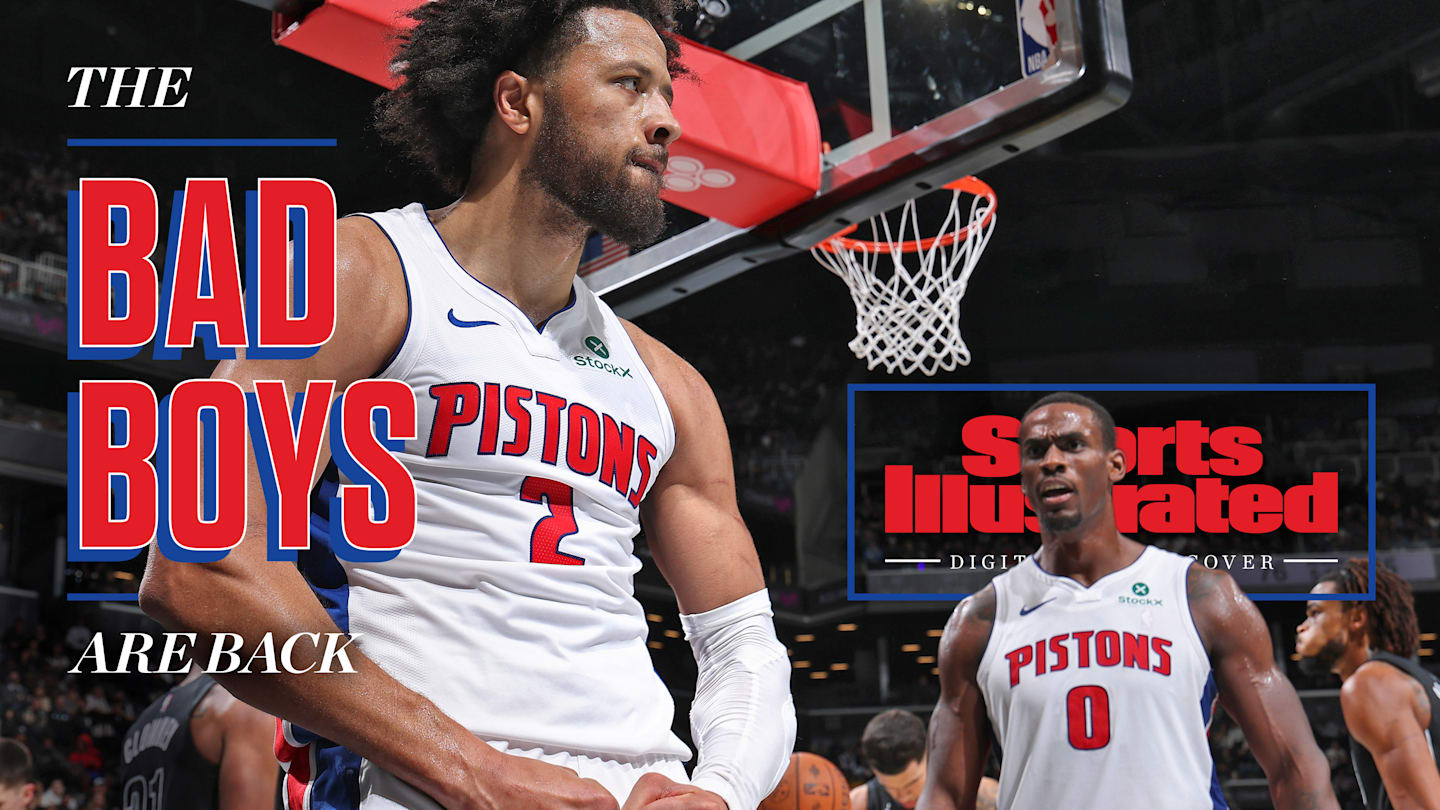
The Detroit Pistons are embracing physicality again, a shift that veteran Rick Mahorn, a key member of the famed “Bad Boys” era, believes is a return to the franchise’s identity. After a stunning 30-win improvement last season, and continuing success this season, the Pistons are building a defensive-minded team that harkens back to the championship squads of the late 1980s and early 2000s.
Head coach J.B. Bickerstaff inherited a team that had endured a dismal 14-win season, but saw a core of players who weren’t afraid to compete. “They competed at a high level,” Bickerstaff said, recalling games where even sizable leads weren’t safe against Detroit. “And they didn’t give up.” He quickly recognized a willingness to engage physically, a trait he actively fostered.
That physicality wasn’t merely tolerated. it was embraced. Players like Cade Cunningham, Jalen Duren, and Isaiah Stewart routinely engaged in intense battles during practice, a sign, according to Bickerstaff, that “it wasn’t that fake phony stuff you see around the league a bunch now.”
General manager Trajan Langdon, who took over the front office in 2024, shared Bickerstaff’s vision. Langdon, a product of Duke University and the San Antonio Spurs’ system, prioritized structure and consistency. He saw a roster capable of mirroring the grit and toughness of past Pistons teams, particularly the 1989 championship squad that outmuscled the Los Angeles Lakers.
Langdon’s initial move was to bring in veterans who could reinforce the desired culture. Players like Malik Beasley, Tobias Harris, Tim Hardaway Jr., Duncan Robinson, and Javonte Green were added, not just for their on-court contributions, but for their professionalism and commitment to a physical style of play. “Professional understand-how,” Langdon explained, was a key factor in the acquisitions.
The results have been dramatic. The Pistons’ defense, ranked 25th in the NBA in 2023-24, jumped to 10th the following season, and continues to improve, currently trailing only Oklahoma City in defensive rating. They’ve rediscovered a knack for scoring in the paint, averaging a significant number of points close to the basket, a departure from the league’s increasing reliance on three-point shooting.
The team’s commitment to physicality isn’t without its consequences. A recent scuffle during a game against the Charlotte Hornets resulted in suspensions for Duren and Stewart, but even those incidents were seen as a testament to their unwavering intensity. Stewart, known for his brash demeanor, reportedly expressed his frustration with the loss and vowed to play with more physicality, stating, “You don’t expect me to stay on the bench…The f— I was drafted to Detroit for.”
Mahorn, who has been a fixture in Detroit basketball for five decades as a player, coach, and radio broadcaster, recognizes the echoes of the “Bad Boys” era. He believes Bickerstaff is fostering a similar environment to that of Chuck Daly, the coach who led the Pistons to back-to-back championships in 1989 and 1990. “Thank God we have a coach that relates to players like Chuck did,” Mahorn said.
The Pistons’ resurgence isn’t simply a nostalgic throwback. It’s a calculated strategy, a deliberate attempt to forge an identity that resonates with the city’s blue-collar roots. As Rick Carlisle, who coached the Pistons in the early 2000s, noted, “This fan base really responds to a team that reflects their values.”
