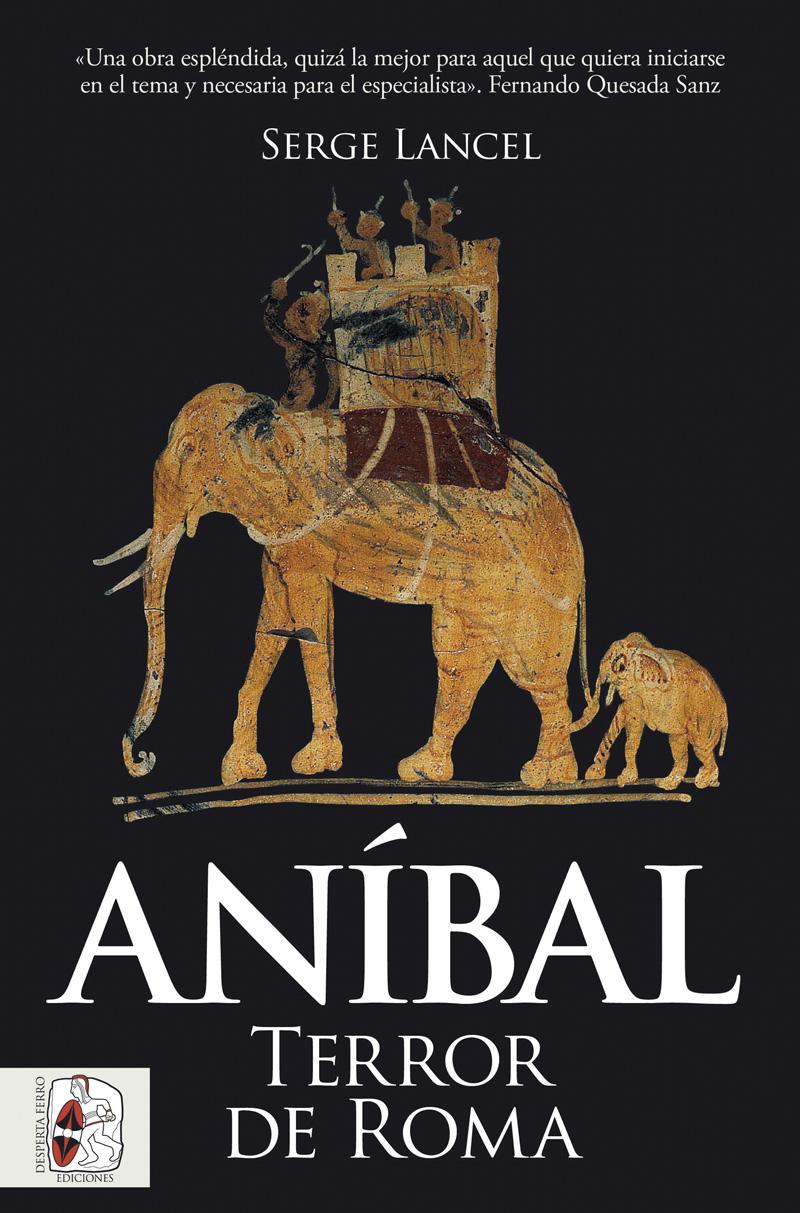
Desperta Ferro reissues Serge Lancel’s biography of Hannibal Barca
Editorial Desperta Ferro has reissued the biography of Hannibal Barca written in 1995 by Serge Lancel, returning the Spanish-language volume to libraries after years of catalog scarcity, zendalibros.com reported.
The Return of a Biography
The newly available Spanish edition brings back Lancel’s extensive portrait of the Punic general, originally translated in 1997 and long out of print. The publishing house updated the translation using Óscar González Camaño and Alberto Pérez Rubio working from the original French text. The revived volume includes a fresh cartographic and iconographic repertory alongside color plates with brief explanatory captions.

Serge Lancel, recognized as a leading specialist in Carthaginian civilization of the late 20th century, constructed an account that drew heavily on predecessors such as Gavin de Beer, Charles Picard, and Giovanni Brizzi. While scholarship has nuanced certain theories over the intervening three decades, the editor integrated targeted footnotes throughout the text to address those shifts. The book remains an indispensable starting point for ancient historians and general readers alike.
Structure and Military Career of the Punic General
The work spans nine distinct chapters detailing Hannibal’s upbringing, campaigns, and final years in exile. The opening sections chart Carthage’s fragile state following the First Punic War, the mercenary insurrection in North Africa, and the rise of Hamilcar Barca and Hasdrubal the Fair. Following Hamilcar’s death in campaign and Hasdrubal’s assassination by a slave, Hannibal assumed command in Iberia, leading to the siege of Saguntum as the catalyst for the Second Punic War.
Chapters three through seven trace the shifting conflict across multiple fronts. Lancel examines the crossing of the Pyrenees, the triumph at the Battle of Cannae, allied pacts with Philip V of Macedon, and the ultimate defeat by Publius Cornelius Scipio Africanus at the Battle of Zama. The seventh chapter explores Hannibal’s tenure as sufet in Carthage, highlighting his governance and alignment with popular classes against the traditional aristocracy.
Final Years in Exile and Historical Legacy
The final segments follow Hannibal into exile as a military advisor to Antiochus III of the Seleucid Empire, Artaxias of Armenia, and Prusias of Bithynia. After securing a naval victory for Prusias against Eumenes II of Pergamum, Hannibal faced imminent handover to Rome, choosing instead to end his life by ingesting poison. The concluding chapter offers a sweeping overview in the style of Arnold Toynbee regarding Hannibal’s enduring imprint across subsequent centuries of military and political thought.