Dental Infection Mimics Heart Failure, Causes Coma in Case Report
A 52-year-old woman remained in a coma for nine days before clinicians identified a severe dental infection as the primary cause of her acute heart failure-like symptoms, according to a case report published on Thursday in Frontiers in Medicine.
Key Clinical Takeaways:
- Deep neck infections originating from dental caries can manifest as severe cardiopulmonary collapse, mimicking acute heart failure.
- Clinical improvement occurred only after escalating antibiotic therapy to address the hidden odontogenic source.
- Routine dental screenings remain vital, as significant infections may persist without classic pain or swelling.
Diagnostic Challenges in Deep Neck Infections
The patient presented to the hospital with a two-month history of subclinical cough and respiratory wheezing, Mondosanità reported. Despite the severity of her condition, she exhibited no facial swelling or difficulty swallowing, which typically serve as clinical indicators for orofacial infections.
Upon admission, the patient lost consciousness and required mechanical ventilation. Clinical evaluations revealed bilateral pulmonary opacities and global left ventricular hypokinesis, with a left ventricular ejection fraction of only 25 percent.
The medical team initially investigated potential systemic causes, including the patient’s long-standing, untreated hyperthyroidism. While imaging confirmed a diffuse goiter, multidisciplinary assessments determined that the thyroid was not causing the observed tracheal stenosis.
Researchers Chenxi Wang, Jun Lyu, and Guanhua Li noted in their study that the patient’s condition closely mimicked acute heart failure, complicating the diagnostic process. Coronary artery obstruction and pulmonary embolism were systematically excluded as primary drivers of the cardiac dysfunction.
Resolution Through Targeted Antibiotic Escalation
Initial treatment protocols involving cephalosporins failed to resolve the systemic inflammation or the patient’s cardiac distress. The medical team subsequently escalated therapy to meropenem, a broad-spectrum carbapenem antibiotic. Following this change, the patient’s respiratory function and myocardial performance improved in tandem. By the ninth day of hospitalization, serial imaging confirmed that the parapharyngeal edema and pulmonary infiltrates had resolved, allowing for the removal of the ventilator tube.
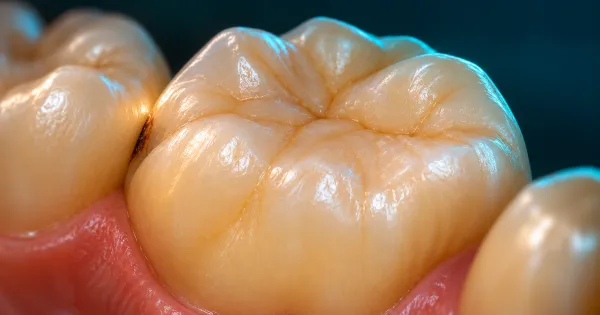
The identification of a deep, untreated molar cavity provided the missing link to the patient’s pathology, according to Mondosanità. The authors of the Frontiers in Medicine report suggest that the infection likely migrated into the deep spaces of the neck, causing significant hypoxemia and secondary myocardial stunning.
While microbiological tests—including bronchoalveolar lavage fluid mNGS—returned negative results, the temporal alignment of the infection’s resolution with the normalization of cardiac and pulmonary function supports the odontogenic origin hypothesis.
Clinical Implications for Routine Screening
This case highlights the diagnostic complexity of occult odontogenic deep neck infections, which are increasingly recognized for their changing characteristics and potential for systemic morbidity, as discussed in the European Archives of Oto-Rhino-Laryngology, according to Mondosanità.
The researchers emphasized that the findings represent a synthesis of recognized complications rather than the establishment of a new pathophysiological mechanism. The study was conducted at the Tianjin Chest Hospital and did not report external funding sources.
Frontiers in Medicine, where this report was published, is a multidisciplinary, peer-reviewed open access journal established in 2014. It covers a broad scope of medical disciplines organized into 21 specialty sections and is indexed in databases including PubMed Central, Web of Science, and Scopus.
For patients presenting with unexplained cardiopulmonary distress, the findings suggest that the oral cavity remains a site of investigation even in the absence of localized pain. When symptoms such as difficulty breathing, speaking, or swallowing emerge alongside neck or facial swelling, immediate medical evaluation is required. Addressing these infections early often involves coordination between primary care physicians, dentists, and otolaryngologists to prevent the progression of deep neck space involvement.
Disclaimer: The information provided in this article is for educational and scientific communication purposes only and does not constitute medical advice. Always consult with a qualified healthcare provider regarding any medical condition, diagnosis, or treatment plan.