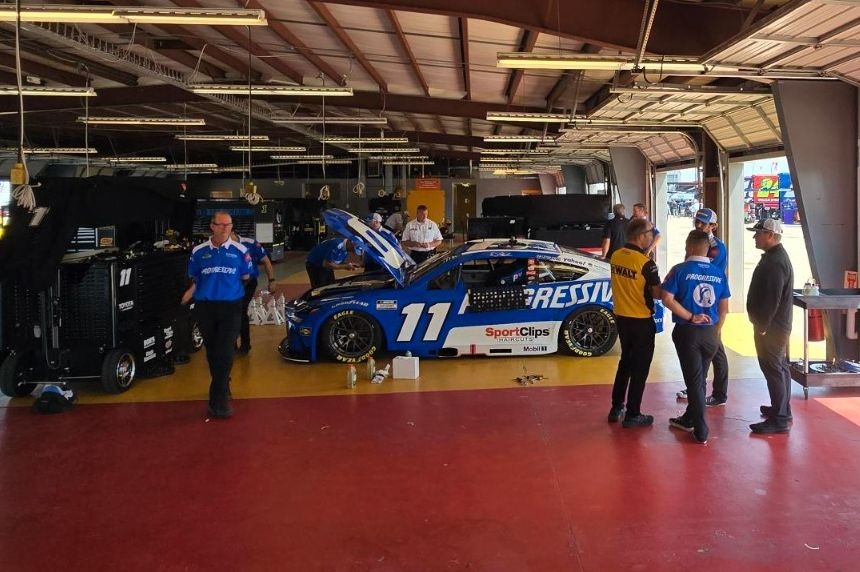
Denny Hamlin Sent to Rear at Iowa Amid Toyota Brake Troubles
Denny Hamlin will start Sunday's NASCAR Cup Series race at Iowa Speedway from the rear of the field due to a cooling unit change on his Joe Gibbs Racing No. 11 Toyota. According to Joe Gibbs Racing, the adjustment was made in the moments leading up to the green flag following brake and thermal concerns during Saturday practice and qualifying sessions.
The Technical Crisis Impacting Joe Gibbs Racing and 23XI Racing
Hamlin qualified 29th prior to the pre-race mechanical swap. Under strict NASCAR rulebook mandates, any team altering a cooling unit or core mechanical components after qualifying forfeits their grid position and must take the start at the back of the pack.
According to MotorBiscuit reporting, the mechanical headaches stem directly from aggressive setup configurations implemented across the Joe Gibbs Racing and 23XI Racing technical alliance. Teams pushed chassis boundaries to unearth raw speed ahead of the impending NASCAR Playoffs. Those aggressive setups generated extreme thermal loads.
Joe Gibbs Racing crew chief Chris Gayle admitted that the eleventh-hour cooling unit replacement was a high-stakes gamble. Gayle assessed the chance of the fix successfully preserving the car through the grueling 350-lap race at roughly fifty-fifty.
Contrasting Severity Across the Toyota Stable
While Hamlin's team opted for a proactive swap, teammate Chase Briscoe faces a much more dire mechanical outlook. According to comments from crew chief James Small reported by MotorBiscuit, the No. 19 Toyota experienced brake pads that were essentially destroyed during Saturday practice running.
NASCAR technical regulations strictly prohibit teams from swapping out worn brake pads mid-weekend unless official brake supplier PFC Brakes verifies a defective product and issues a formal notification to sanctioning officials. Because that threshold was not met prior to the race start, teams were restricted to routine brake bleeding with severely limited alternatives. Among the broader Toyota contingent, Tyler Reddick managed to salvage a more stable baseline setup entering the afternoon, while Riley Herbst braced for significant handling challenges once green-flag racing commenced.
Grid Penalties Compound Rear-Field Traffic
Hamlin does not navigate the rearward migration alone. He joins Brad Keselowski and Chase Elliott at the back of the grid. Keselowski and Elliott suffered separate single-car incidents during Saturday afternoon's qualifying and practice runs.
For Hamlin, the assignment requires a methodical drive through heavy traffic while monitoring equipment preservation. The 350-lap distance offers ample time for attrition, but survival depends entirely on whether the newly installed cooling apparatus can withstand sustained thermal punishment.
As telemetry data streams back to the pit wall, engineering crews must balance aggressive throttle application with conservative thermal management. Maintaining mechanical integrity throughout a long-distance oval event dictates whether championship contenders salvage maximum stage points or fall victim to equipment failure.
Disclaimer: The insights provided in this article are for informational and entertainment purposes only and do not constitute medical advice or sports betting recommendations.