
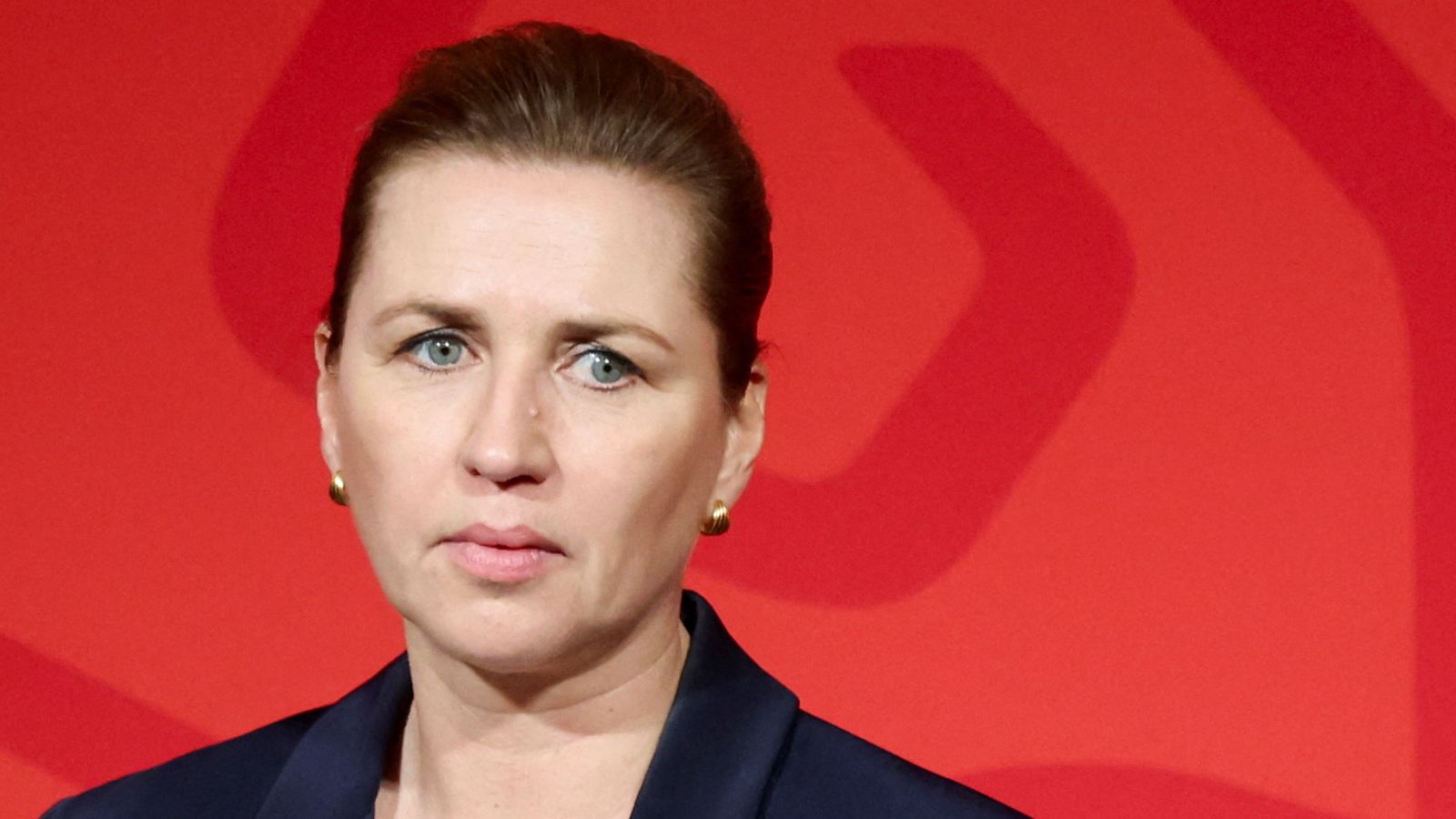
Denmark election: PM Frederiksen vows to stay as coalition talks begin
Denmark’s Prime Minister Mette Frederiksen has said she intends to remain in office despite a disappointing election result that leaves her centre-left Social Democrats facing difficult coalition negotiations. The outcome, announced on Tuesday, has thrown the future of the Scandinavian nation’s government into uncertainty.
Frederiksen’s Social Democrats emerged as the largest party in the 179-seat parliament, securing 38 seats with 21.9% of the vote – a significant drop from the 27.5% they achieved in 2022. While she expressed her readiness to lead the formation of a new government, the result represents a bruising setback for a leader who has been lauded by some in the UK Labour party for her firm stance on immigration.
The election was called by Frederiksen hoping to capitalise on her foreign policy record, particularly her handling of a recent crisis sparked by former US President Donald Trump’s interest in Greenland. However, domestic issues, particularly the rising cost of living, dominated the campaign and appear to have swayed voters.
The centre-right Liberal Party secured 18 seats (10.1%), while the Liberal Alliance won 16 seats (9.4%). A notable gain was made by the anti-immigration Danish People’s Party, which increased its vote share by 7% to secure 16 seats. The Green party, positioned to the left of Frederiksen’s Social Democrats, won 20 seats with 11.6% of the vote.
With neither the left nor the right bloc able to command a majority, the Moderates party, led by Foreign Minister Lars Løkke Rasmussen, a former prime minister, is now in a pivotal position. The Moderates secured 14 seats and were part of the previous coalition government alongside the Social Democrats and the Liberal Party.
Frederiksen stated that Denmark “needs a stable government” given the current “unsettled” global situation, citing the ongoing conflicts in Ukraine and the Middle East. Rasmussen echoed this sentiment, emphasising the importance of unity for a small nation like Denmark, which is a member of both NATO and the European Union.
However, Troels Lund Poulsen, the leader of the Liberal Party and current Defence Minister, has indicated his party will not re-enter a coalition with the Social Democrats. This complicates the path to forming a viable government and suggests protracted negotiations lie ahead.
Frederiksen, who became Denmark’s youngest ever prime minister in 2019, defended her record during the campaign, highlighting her leadership during the COVID-19 pandemic and her response to international challenges. She similarly proposed a wealth tax, a policy that contributed to the breakdown in relations with the Liberal Party.
Throughout her premiership, Frederiksen has overseen a tough approach to immigration, implementing policies that include temporary refugee status and conditional support linked to integration requirements. This approach has drawn both praise and criticism, with some on the left arguing It’s overly restrictive, while the Danish People’s Party has advocated for even stricter measures, including a pledge for net zero migration of Muslims.