
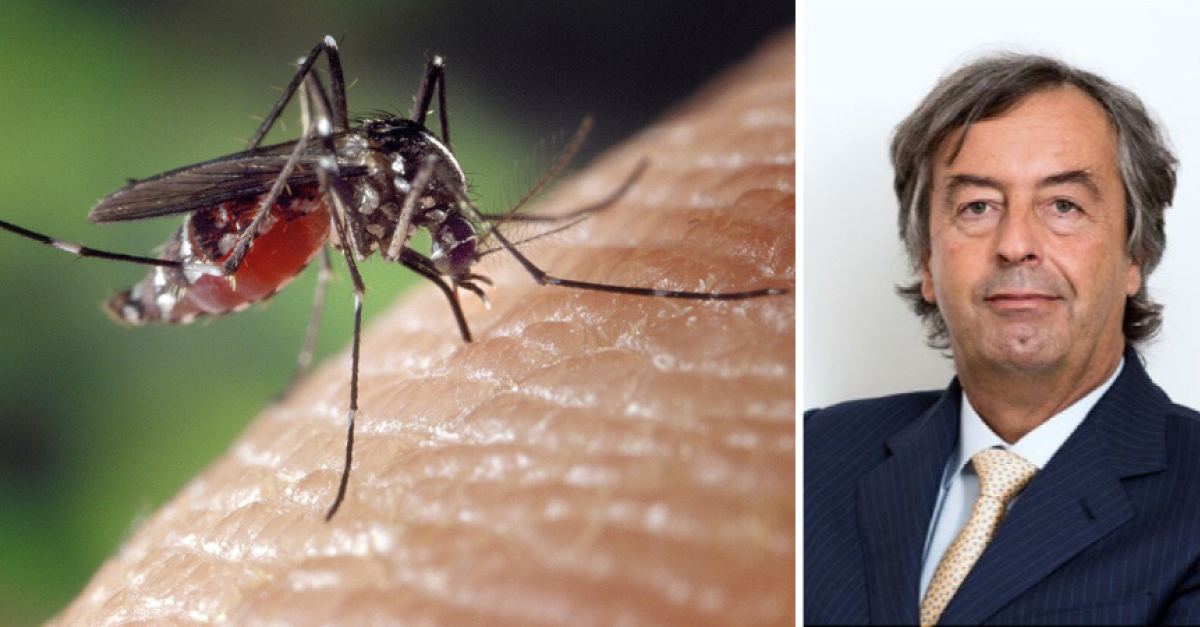
Veneto on Alert as Dengue and chikungunya Cases Rise, Expert Calls for Aggressive Mosquito Control
Verona, Italy – A surge in cases of both Dengue and Chikungunya fever in the Veneto region, particularly in the province of Verona, is raising alarm bells for public health officials and the tourism industry. As of September 15th,46 cases of Chikungunya have been confirmed,prompting calls for immediate and comprehensive action to combat the spread of the diseases.
The outbreaks are attributed to the Aedes albopictus, commonly known as the tiger mosquito, which transmits the viruses. Experts warn that without vaccines or specific treatments available,the only effective strategy is to aggressively control the mosquito population. ”The disease exists because there are the Tiger mosquitoes who transmit it. A sick comes from abroad in a place full of thes mosquitoes and the disease spreads,” explained virologist Roberto Burioni.
This year’s situation has, so far, benefited from seasonal timing. “We were lucky as we are on September 15 and when the temperature will drop the mosquitoes will stop stinging,” Burioni stated. “Though, we cannot always count on luck.” He emphasized the need for a proactive, region-wide approach, extending beyond simply spraying insecticides.
Burioni advocates for a “carpet” strategy, beginning in March with the use of larvicides, coupled with active community involvement and consistent monitoring of mosquito numbers. ”The action must be carpet (the fact that the epidemic burst into one place or another is only a coincidence) and it must not consist simply in the spread of insecticides,” he said. “You have to start in March with the larvicides, the whole population must be involved, and it must be monitor the number of mosquitoes present And if the number is high act promptly and decisive, without hesitation.”
The potential consequences of inaction are significant. Beyond the direct threat to public health, Burioni warns of a possibly “totally destroyed” summer tourist season if preventative measures are not implemented. “We cannot chasing the Mosquito transmitted infections: we have to prevent them,” he stressed. “If this is not done,we run the risk of finding a beautiful Dengue or Chikungunya epidemic at the end of spring and see not only our health in danger but one Summer tourist season totally destroyed.” He underscored that effective mosquito control is not a political issue, but a matter of “Public health protection and of the economy of a nation that from tourism draws part of one’s well-being.”
