
Democrats urge warnings to federal officials against insider bets on prediction markets
Over 40 Democratic lawmakers demanded federal regulators ban government officials from trading on prediction markets. The letter targets the CFTC and Office of Government Ethics regarding insider trading risks. Officials face scrutiny over bets on military actions and political events.
This legislative maneuver signals a tightening noose around information asymmetry in Washington. Firms relying on alternative data for alpha generation now face heightened compliance overhead. The regulatory landscape is shifting from passive observation to active enforcement of derivatives laws.
The Legislative Push on Information Asymmetry
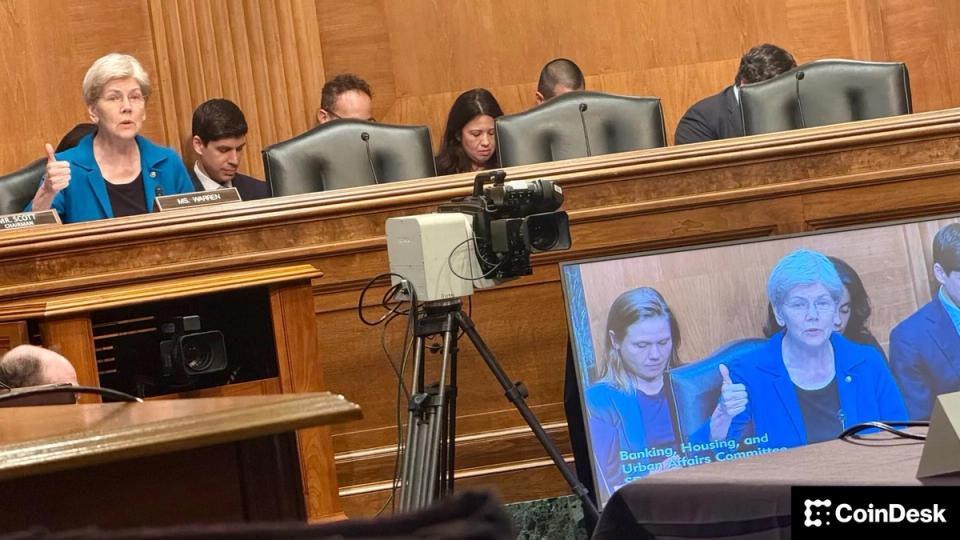
Senator Elizabeth Warren and Senator Cory Booker led the charge, joining dozens of colleagues in addressing Chairman Mike Selig of the Commodity Futures Trading Commission. Their correspondence, dated March 29, explicitly requests executive branch-wide guidance. Federal employees must refrain from insider trading in prediction markets. The lawmakers argue that contracts on firms like Polymarket and Kalshi qualify as regulated derivatives.
Suspicious reports triggered the inquiry. Event contracts regarding military actions in Venezuela and Iran drew bets from individuals with special insight. Some market participants believe government officials, or associates, made such wagers. U.S. Derivatives laws state the illegality of government officials making trades based on non-public information obtained on the job. Since the CFTC has declared the contracts at such firms are regulated derivatives, the ban should hold true.
The scope extends beyond foreign policy. Contracts included the length of a speech from President Donald Trump’s press secretary and the firing of former Department of Homeland Security Secretary Kristi Noem. These specific examples highlight the granularity of data now available to retail and institutional traders alike.
Three Structural Shifts for Institutional Capital
Capital allocators must reassess their exposure to prediction platforms. The regulatory environment is no longer static. Compliance departments are scrambling to update internal policies regarding employee trading accounts. The following shifts will define the next fiscal quarter:
- Enhanced Surveillance Protocols: Financial institutions will need to implement stricter monitoring of employee trading activities. Cross-referencing personal accounts against government employment databases becomes mandatory.
- Liquidity Fragmentation: If federal officials are barred, liquidity on certain political contracts may dry up. Market makers must adjust spreads to account for reduced participation from informed actors.
- Legal Liability Expansion: Firms facilitating these trades face potential secondary liability. Treasury oversight could extend to intermediaries failing to prevent prohibited transactions.
Uncertainty breeds volatility. Market participants hate undefined regulatory boundaries.
The Compliance Industrial Complex
As consolidation accelerates in the regulatory technology sector, mid-market competitors are scrambling for capital. They are consulting with top-tier regulatory compliance counsel to explore defensive buyouts. The cost of ignoring these signals exceeds the cost of adaptation. Financial institutions cannot afford to be caught on the wrong side of a CFTC enforcement action.
Federal prosecutors reportedly spoke to prediction market firms about whether certain instances could trigger insider-trading cases. This indicates active investigation rather than mere theoretical oversight. The Digital Asset Market Clarity Act remains hung up in the Senate, creating a legislative vacuum. Lawmakers are filling this void with aggressive letters and guidance requests.
“The definition of material non-public information is expanding beyond traditional equities. Prediction markets represent a new frontier for enforcement where the line between public sentiment and insider knowledge blurs.”
A Senior Partner at a global law firm specializing in securities regulation noted the trend during a recent industry roundtable. The comment underscores the legal ambiguity currently plaguing the sector. Firms need to secure enterprise risk management solutions that account for political exposure. Standard equity risk models do not capture the nuances of event-based derivatives.
Market Structure Implications
The agriculture panels in both chambers directly oversee the CFTC. Representative Angie Craig and Representative Maxine Waters signed the letter, ensuring bicameral pressure. This bipartisan support suggests the issue will not fade with the next news cycle. Regulatory bodies often act slowly, but political pressure accelerates enforcement priorities.
Companies failing to fully understand their markets and finances face existential threats. The role of market and financial analysts has become crucial in navigating this complexity. Professionals must now integrate political risk into standard valuation models. Legislative compromises on digital assets remain elusive, leaving prediction markets in a precarious position.
Investors should monitor the official letter text for specific language regarding enforcement mechanisms. The distinction between gambling and hedging is under review.
News emerged that federal prosecutors reportedly spoke to prediction market firms. This confirms the threat is immediate. Justice Department involvement raises the stakes significantly. Criminal penalties differ vastly from civil fines.
Businesses must adapt or perish. The directory offers vetted partners capable of navigating this storm. Engaging with specialized government relations firms provides the intelligence needed to stay ahead of regulatory curves. Do not wait for the subpoena to act.
The market trajectory points toward stricter information controls. Liquidity will migrate to platforms with robust compliance frameworks. Institutional capital requires certainty. Those who build it will capture the spread.