
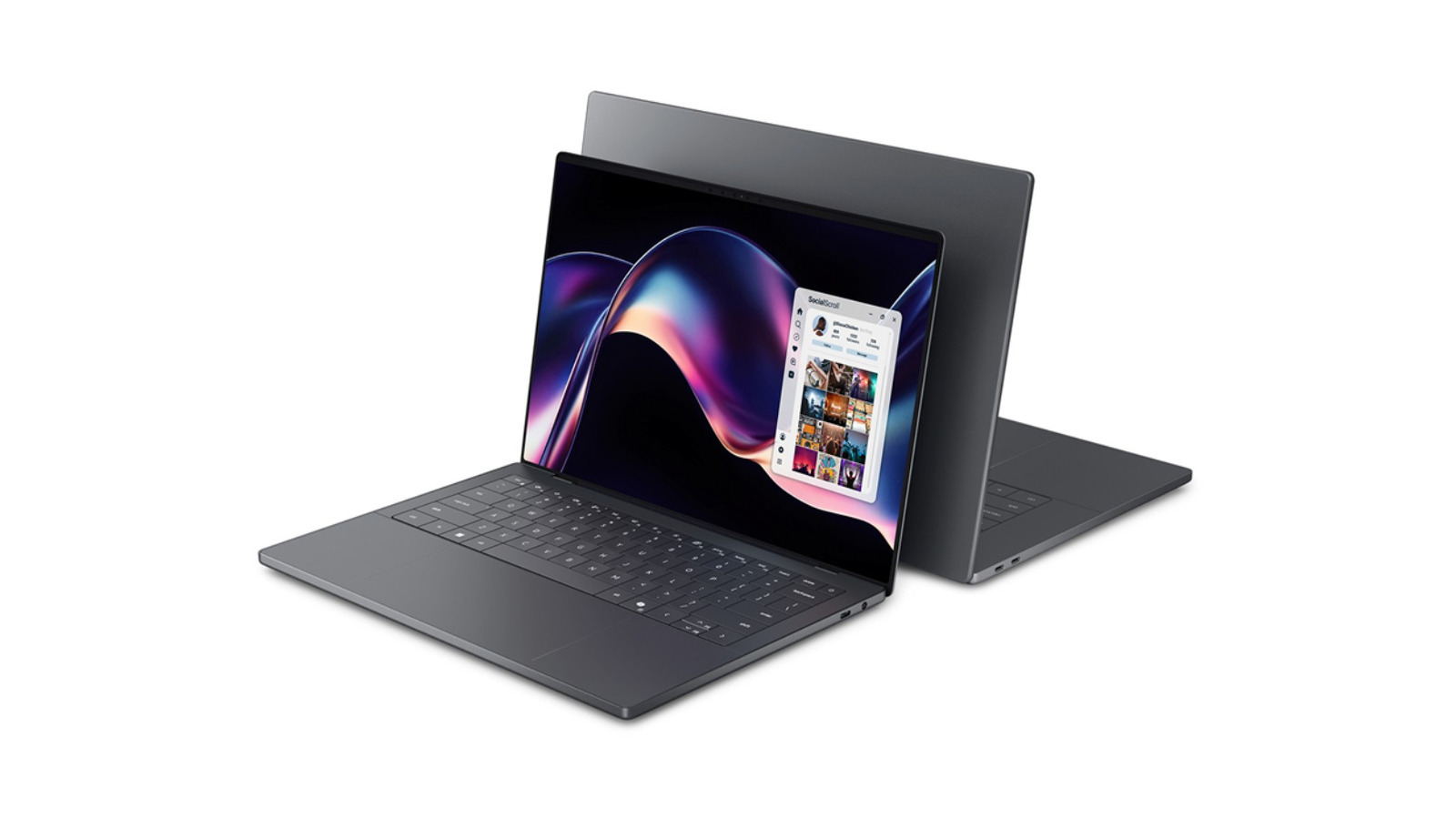
Dell’s New XPS Laptops Feature The First Consumer Display Of Its Kind
Dell’s XPS Revival: LG Display’s Oxide 1Hz Tech and the Pursuit of Battery Life
Dell is attempting a comeback with its XPS laptop line, a move that follows a confusing period of rebranding and discontinuation. The core of this revival isn’t just a refreshed design, but a fundamentally different display technology – LG Display’s Oxide 1Hz LCD panel. This isn’t merely a spec bump. it’s a shift in how laptops manage power consumption and it’s a signal of where display technology is headed. The question isn’t whether the new XPS laptops are “good,” but whether this display tech delivers on its promise of significant power savings and a genuinely improved user experience, and what the implications are for the broader ecosystem.
The Tech TL;DR:
- Battery Life Gains: LG Display’s Oxide 1Hz tech promises up to 48% improved battery life by dynamically adjusting the display refresh rate.
- Real-World Impact: Expect smoother visuals during fast-paced content (gaming, video) and significant power savings during static tasks (reading, spreadsheets).
- Enterprise Implications: Reduced power consumption translates to longer runtimes for mobile workforces and potentially lower total cost of ownership (TCO) for IT departments.
The Power Consumption Problem: A Deep Dive
Laptop battery life has been a perennial challenge. Moore’s Law continues to deliver more processing power, but that power demands more energy. Traditional LCD panels operate at a fixed refresh rate, typically 60Hz, even when displaying static content. This is a massive waste of energy. LG Display’s solution, and now Dell’s implementation, is a variable refresh rate (VRR) that scales down to 1Hz. This isn’t new territory – VRR has been a staple in gaming monitors for years – but bringing it to mainstream laptops, and achieving mass production at a competitive price point, is a significant achievement. The underlying technology relies on optimizing the oxide backplane, allowing for precise control over individual pixels and minimizing power leakage. This is a departure from traditional amorphous silicon TFTs.
The efficiency gains aren’t simply about reducing the refresh rate. It’s about *when* the refresh rate is reduced. The panel intelligently analyzes the content being displayed and adjusts accordingly. A static document gets 1Hz. A fast-paced action sequence gets 120Hz. This dynamic adjustment is crucial. The implementation relies heavily on the display controller’s ability to rapidly switch between refresh rates without introducing visual artifacts. Early implementations of VRR often suffered from tearing or stuttering; LG Display claims to have solved these issues through advanced algorithms and hardware optimization.
Benchmarking the Efficiency: Oxide vs. Traditional LCD
While Dell claims “best in industry” battery life, independent verification is crucial. Initial reports suggest a substantial improvement, but a detailed breakdown requires deeper analysis. We can gaze at comparable systems using traditional LCD panels. A 2023 MacBook Pro 16-inch with an M2 Max chip and a standard 120Hz LCD panel typically achieves around 12-15 hours of mixed usage. Dell’s claim of 31 hours with the new XPS 16 is ambitious, and likely based on highly optimized testing conditions (low brightness, minimal background processes). While, even a 20-25% improvement would be significant.
To quantify this, let’s consider a simplified power consumption model. A typical 15.6-inch LCD panel consumes around 8-12 watts at 100% brightness and 60Hz. Reducing the refresh rate to 1Hz during static tasks could theoretically reduce power consumption by up to 98%. However, the actual savings will be less due to overhead from the display controller and other components. A more realistic estimate is a 60-70% reduction in power consumption during static tasks.
Here’s a comparative table illustrating potential power savings:
| Component | Traditional LCD (60Hz) | LG Oxide 1Hz LCD (Dynamic VRR) |
|---|---|---|
| Panel Power Consumption (Max) | 12W | 12W |
| Panel Power Consumption (Static) | 6W | 0.72W (estimated 6% of max) |
| Display Controller Overhead | 1W | 1.2W |
| Total Power Consumption (Static) | 7W | 2.2W |
The Cybersecurity Angle: Display Firmware and Potential Vulnerabilities
The increased complexity of these displays introduces new attack surfaces. The display controller is essentially a compact computer, running firmware that manages the panel’s operation. This firmware could be vulnerable to exploits, potentially allowing attackers to gain control of the display or even access sensitive data. The shift to dynamic refresh rates adds another layer of complexity, requiring more sophisticated firmware and potentially introducing new vulnerabilities.
“The integration of intelligent features like dynamic refresh rate control necessitates a robust security framework for the display controller firmware. We’re seeing a trend towards more sophisticated attacks targeting display components, and manufacturers need to prioritize security throughout the entire development lifecycle.” – Dr. Anya Sharma, Lead Researcher at SecureView Analytics.
Regular firmware updates are crucial to address these vulnerabilities. Dell and LG Display need to establish a clear and transparent process for delivering security patches. IT departments should consider implementing display management solutions that allow them to remotely monitor and manage display firmware. IT security auditors specializing in hardware vulnerabilities are becoming increasingly important in this landscape.
Implementation Details: API Access and Control
For developers, the ability to control the display’s refresh rate programmatically is essential. LG Display has not yet released a comprehensive API for controlling the Oxide 1Hz panel, but it’s likely that Dell will provide some level of access through its developer tools. A potential API call using cURL could look like this:
curl -X POST -H "Content-Type: application/json" -d '{"refresh_rate": 60}' http://localhost:8080/display/controlThis hypothetical API allows developers to set the refresh rate to 60Hz. More advanced APIs could allow for finer-grained control, such as setting the refresh rate based on the application being used. The availability of such APIs will be crucial for optimizing performance and battery life in specific use cases.
The OLED Horizon: LG Display’s 2027 Roadmap
While the Oxide 1Hz LCD panel is a significant step forward, LG Display is already looking ahead to OLED technology. The company plans to begin mass production of a 1Hz OLED panel with the same automatic refresh rate adjustment technology in 2027. OLED offers superior contrast and color accuracy compared to LCD, but it’s as well more expensive and susceptible to burn-in. The combination of OLED’s visual advantages with the power-saving benefits of dynamic refresh rate control could be a game-changer.
However, the transition to OLED won’t be seamless. Burn-in remains a concern, and manufacturers will need to implement sophisticated algorithms to mitigate this risk. The cost of OLED panels is still significantly higher than LCD panels. Specialized hardware repair services will be crucial for addressing potential OLED burn-in issues and extending the lifespan of these displays.
The Dell XPS revival, powered by LG Display’s innovative technology, represents a pivotal moment in laptop display evolution. It’s a move that prioritizes efficiency without sacrificing visual quality. As enterprise adoption scales, and as LG Display refines its OLED roadmap, we can expect to see even more dramatic improvements in laptop battery life and display performance.
*Disclaimer: The technical analyses and security protocols detailed in this article are for informational purposes only. Always consult with certified IT and cybersecurity professionals before altering enterprise networks or handling sensitive data.*