
“Presence Isn’t Criminality”: Advocate Challenges delhi Riots Conspiracy Case, Asking Where Protest Ends and Conspiracy Begins
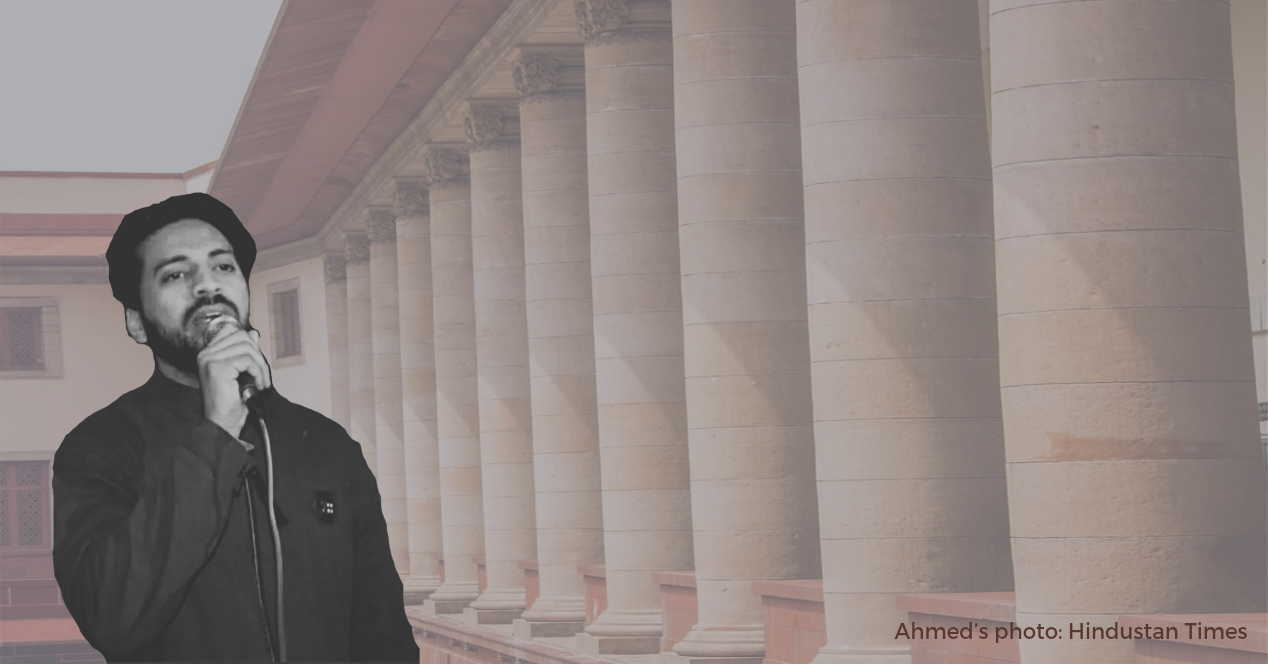
New Delhi – The Supreme Court today heard arguments in the bail pleas of Umar Khalid and other accused in the alleged larger conspiracy behind the 2020 Delhi riots, with a key focus on whether participation in protests can be equated to criminal conspiracy. Senior Advocate Siddharth Luthra, representing accused Shadab Ahmed, argued the prosecution’s case relies heavily on association and mere presence at protests, lacking evidence of actual instigation or planning of violence.
Luthra detailed Ahmed’s four-year detention, noting he was initially arrested in connection with the death of Constable Ratan Lal (FIR 60/2020) and the burning of a Maruti showroom (FIR 136/2020). He secured bail in both cases in September 2020, yet remains incarcerated due to the broader conspiracy charges. ”Despite bail in both, he remains in jail four years later because of this larger conspiracy case,” Luthra stated.
the advocate argued that Ahmed’s name surfaced only in the second supplementary chargesheet, and subsequent evidence relies on statements from protected witnesses ‘Radium’ and ‘Sodium’ who describe Ahmed coordinating protest gatherings, but not inciting violence. “Presence at a protest is not criminality,” Luthra emphasized.
Luthra also challenged the prosecution’s attempts to link Ahmed to the Delhi Protest Support Group (DPSG), clarifying that a “Shadab” mentioned in WhatsApp chats is a diffrent individual linked to the Jamia Coordination Committee (JCC). He further questioned the accuracy of digital mapping used by the prosecution to place Ahmed near Chand Bagh, citing a Delhi High Court order in the Ratan Lal case which records Ahmed’s presence in Jagatpuri on the same date. “If mapping is relied on to imply presence, its accuracy is open to challenge,” he said.
The defense further argued that the prosecution’s reliance on the recent Gurvinder Singh v State of Punjab (2024) ruling is misplaced, as that case concerned terror financing at the framing of charges stage, while arguments on charge in Ahmed’s case have already concluded. Luthra also asserted Ahmed is entitled to default bail, claiming the prosecution has failed to obtain necessary sanction under Section 196 crpc and file a complaint under Section 195 CrPC.
Luthra concluded by asserting the core of the prosecution’s case rests on ”association rather than agreement, and presence rather than participation.”
The Court has scheduled a continuation of the hearing for November 11th at 2:30 PM. The case raises fundamental questions about the boundaries of legitimate protest and the threshold for proving criminal conspiracy, notably in the context of politically charged events.
