Delhi Minister: Govt Working to Establish Gig Workers Welfare Board
Delhi Cabinet Minister Kapil Mishra said on Monday that the city government is working to establish a Gig Workers Welfare Board aimed at strengthening social security, healthcare and workplace safety for platform workers.
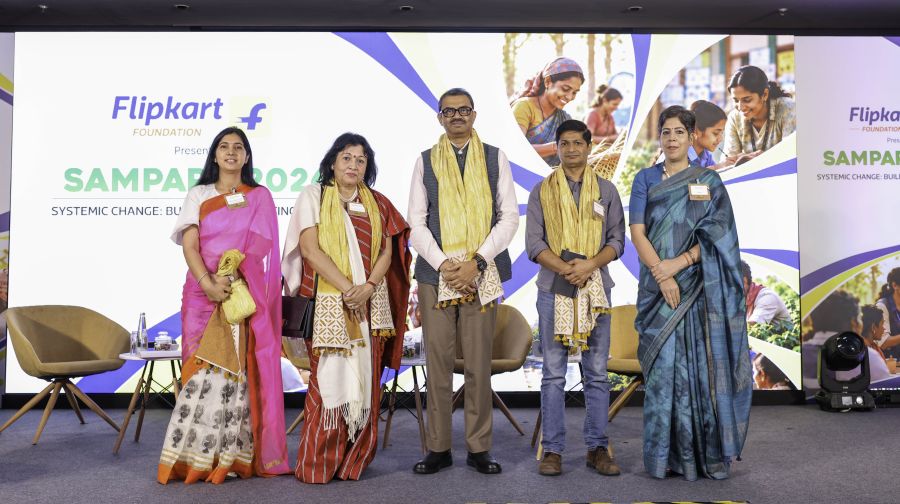
Speaking as chief guest at the Flipkart Foundation’s Sampark 2026 conference at Bharat Mandapam, Mishra called for a “concerted effort by the government, industry and all stakeholders” and said the board would also address the needs of workers’ families.
“Ensuring the welfare and security of gig workers requires a concerted effort by the government, industry and all stakeholders,” Mishra said. “The Delhi Government is working towards establishing a Gig Workers Welfare Board to strengthen social security, healthcare and workplace safety, while also addressing the needs of workers and their families. We must also look beyond immediate welfare and create opportunities for skill development and career progression, enabling delivery partners to move into roles across store, warehouse and inventory management. Through closer collaboration with industry, we can build stronger support systems and help gig workers and their families access more secure and sustainable livelihoods.”
The Delhi government first announced plans for a welfare board for gig and platform workers in May 2025, according to earlier media reports cited by CSR Brief. Monday’s remarks marked the most recent public update on that initiative.

The fourth edition of Sampark, held under the theme “Systemic Change – Building for Lasting Impact,” brought together government officials, corporate leaders, development practitioners and community representatives.
Rajneesh Kumar, chief corporate affairs officer of the Flipkart Group and board member of the Flipkart Foundation, opened the event with an overview of the foundation’s work, which it says has reached 41.5 lakh people across 17 states and union territories since inception through initiatives in skill development, entrepreneurship, environmental sustainability and community development.
A “Stories of Change” segment featured Aashmi, a project participant with the Buddy4Study India Foundation, and Sanjeev Dham, executive director of Smile Foundation. The foundation also recognized its non-profit partners for work with underserved communities.
Madhur Verma, joint commissioner of police (central), New Delhi, urged greater corporate participation in supporting school dropouts through education, sports and skill development, and highlighted Delhi Police initiatives on cybercrime prevention, timely reporting of online fraud and women’s safety.
In the keynote address, Dr. K. Rajeswara Rao, a retired Indian Administrative Service officer, argued for moving beyond beneficiary-centric models toward approaches that treat communities as active participants in decision-making. He emphasized community consultation, incorporating feedback into programme design, developing group leadership and collective decision-making to ensure initiatives continue beyond funding cycles.
A panel moderated by Aman Pannu, president of DCM Shriram Foundation and head of corporate communications and CSR at DCM Shriram Ltd., included Shabnam Sinha, independent director and former lead specialist at the World Bank; Sourav Banerjee, vice president of Room to Read Global; and Vinod Raghuwanshi, co-founder and chief technology officer of Leap 300.
The discussion examined scaling successful development interventions through government ownership, institutional strengthening and cross-sector collaboration while adapting solutions to local requirements, along with support for women’s entrepreneurship.
Delhi Cabinet Minister Kapil Mishra confirmed on Monday that the Delhi Government is working to establish a Gig Workers Welfare Board to strengthen social security, healthcare and workplace safety for platform workers and their families. As the elected executive of the National Capital Territory of Delhi, the Government of NCT of Delhi holds legislative powers over all State List and Concurrent List subjects except police, land and public order, per the Supreme Court’s 2023 ruling and Article 239AA of the Constitution.
This authority enables the council of ministers, led by the Chief Minister, to legislate on labour welfare and social security — matters on the Concurrent List — and to allocate budgetary resources through the Delhi Legislative Assembly’s approved expenditure.
A fireside chat moderated by Digbijay Mishra, vice president of communications at the Flipkart Group, brought together Abhishek Gupta, chief operating officer of YuWaah at UNICEF, and Shaveta Sharma Kukreja, trustee and advisory board member at Central Square Foundation, to discuss a joined-up approach to youth development covering education, skilling, mental well-being and career guidance.