Delaware Mental Health Programs Falter With Staffing Shortages
Delaware mental health programs created under a federal settlement are struggling with deep staff shortages and falling response rates nearly a decade after state oversight officially ended, Spotlight Delaware reported.
Mental healthcare in Delaware looked starkly different 15 years ago. Patients faced chronic hospitalization within state-run psychiatric facilities with little therapeutic effect.
The system faced severe operational scandals. Multiple employees were convicted of abusing patients at the Delaware Psychiatric Center near New Castle.
The federal government sued Delaware in 2011. Officials claimed the state warehoused residents with mental illness without providing a meaningful on-ramp back into society.
Delaware Rebuilt Mental Health Systems Through Federal Settlement
More than 17,000 Delawareans managing severe mental health issues faced risks of unnecessary institutionalization. The state and the federal government quickly settled the complaint.
Delaware reimagined its mental health ecosystem to prevent endless cycles of hospitalization. The state built housing for those with severe mental illness, stabilization centers, group homes, and mobile crisis units.
By the end of 2016, those services demonstrated a positive impact on residents. Robert Bernstein, an outside court monitor responsible for holding Delaware accountable, said the state made substantial progress.
People taking advantage of the programs found stability they otherwise may have never grasped, according to Bernstein. He ran the Bazelon Center for Mental Health Law.
“They reflect individuals who have struggled against incredible challenges — clinically and otherwise — and who are pursuing recovery that might have been unthinkable not so long ago,” he wrote.
Staffing Vacancies Challenge Delaware Mental Health Services
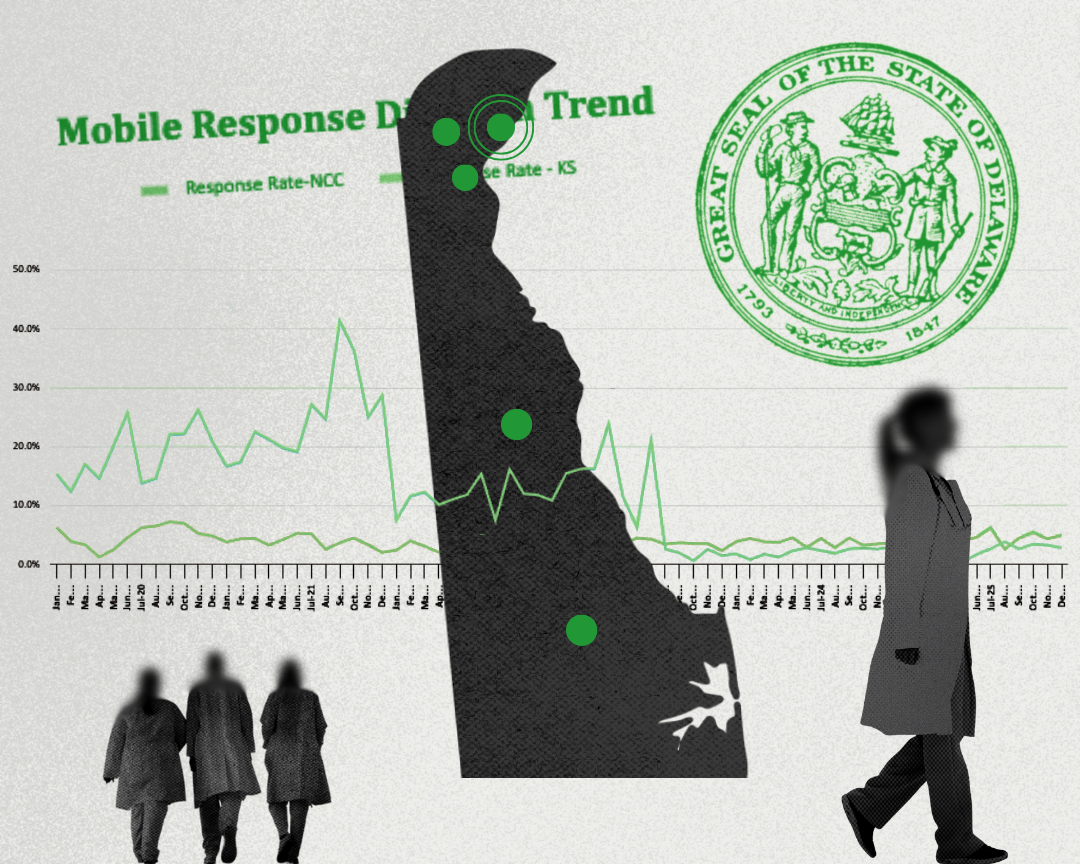
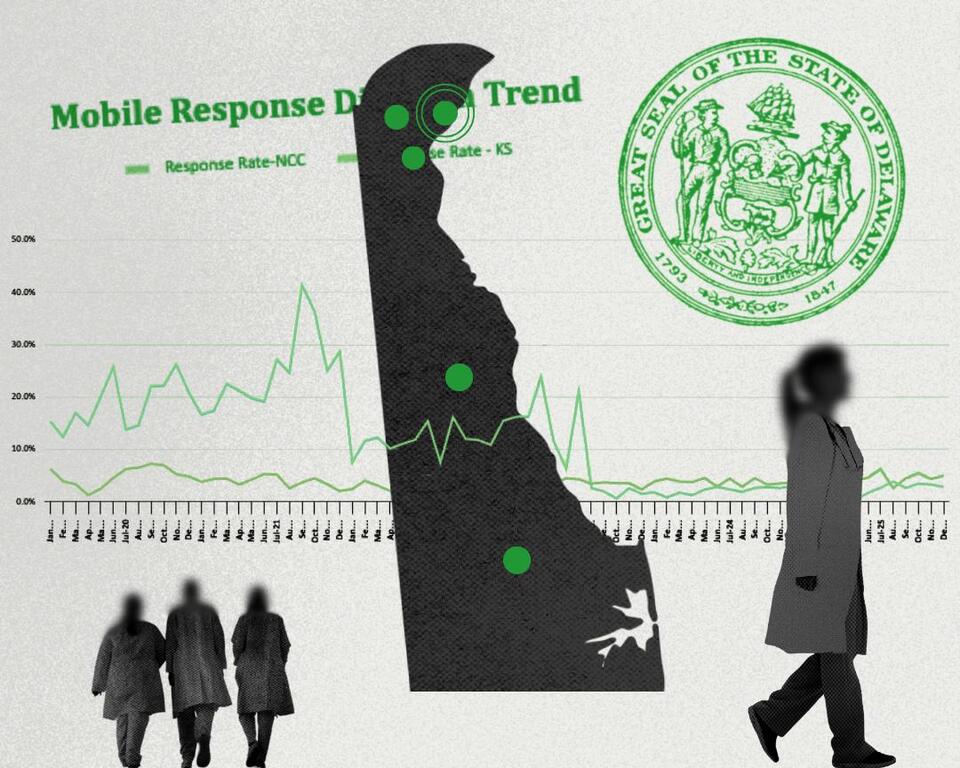
A Spotlight Delaware investigation found that some programs are now beginning to falter. Mobile crisis units respond to a fraction of the calls they used to handle.
Staffing vacancies have plagued the Delaware Division of Substance Abuse and Mental Health. When people have poor experiences with mental health programs, they are unlikely to seek out care again.
Tim Mastro, a spokesperson for the division, acknowledged that staffing shortages have challenged its services. He added that the state is making investments to close those gaps while battling nationwide turnover.
Housing vouchers for people with mental illness nearly reached capacity over the past two fiscal years. All 205 group home beds are also full, Mastro said.
The state’s annual group home budget remained flat at a little more than $11 million since 2019. Mastro said that funding is not the primary pinch point for group home services.
Vacancies plagued DSAMH since the onset of the COVID pandemic in 2020. The division turned over nearly a third of its employees the following year, a trend officials said carried into 2022.
The department’s overall vacancy rate is currently higher than it was in 2022. DSAMH had 42 vacancies in March 2022, representing about 18% of the division.
As of October, the department had 118 empty positions. That total accounts for 21% of the division.
Mobile Crisis Units Slow Down Across Counties
Between 2014 and 2016, mobile crisis teams diverted 80% to 90% of calls away from hospitalized settings. A decade later, that number has dropped.
DSAMH budgets for 31 employees in its crisis intervention positions. Close to half of those jobs are currently vacant, Mastro said.
The southern Delaware mobile crisis unit responded to hundreds of calls each year prior to 2023. In 2025, that unit only responded to 64 calls, representing about 2% of regional calls.
Staffing played a large part in the decline of responses in the lower half of the state. The unit was at times unable to respond at night or over the weekend.
The New Castle County team responded to nearly 600 calls in 2020. By the end of 2025, it responded to close to 400 calls.
In 2025, the percentage of people sent to inpatient facilities and emergency rooms by mobile crisis teams was nearly double what it was in 2022. Mastro said staffing challenges forced teams to prioritize acute calls.