Deirdre Keane Ran 7 Marathons While Pregnant, Finished 7 World Marathon Majors in a Year
Deirdre Keane planned a year of bucket-list races before starting a family.
Instead, the 38-year-old New Yorker ran seven marathons while pregnant, finishing the set earlier this month at the New York City Marathon at 34 weeks.
The New York race was her seventh while pregnant and the final one she needed to complete all seven World Marathon Majors in a single year — Tokyo, Boston, London, Sydney, Berlin, Chicago and New York. Keane had already run more than 60 marathons before she set the Majors goal, and she has since logged 74 marathons and ultramarathons by 2026.
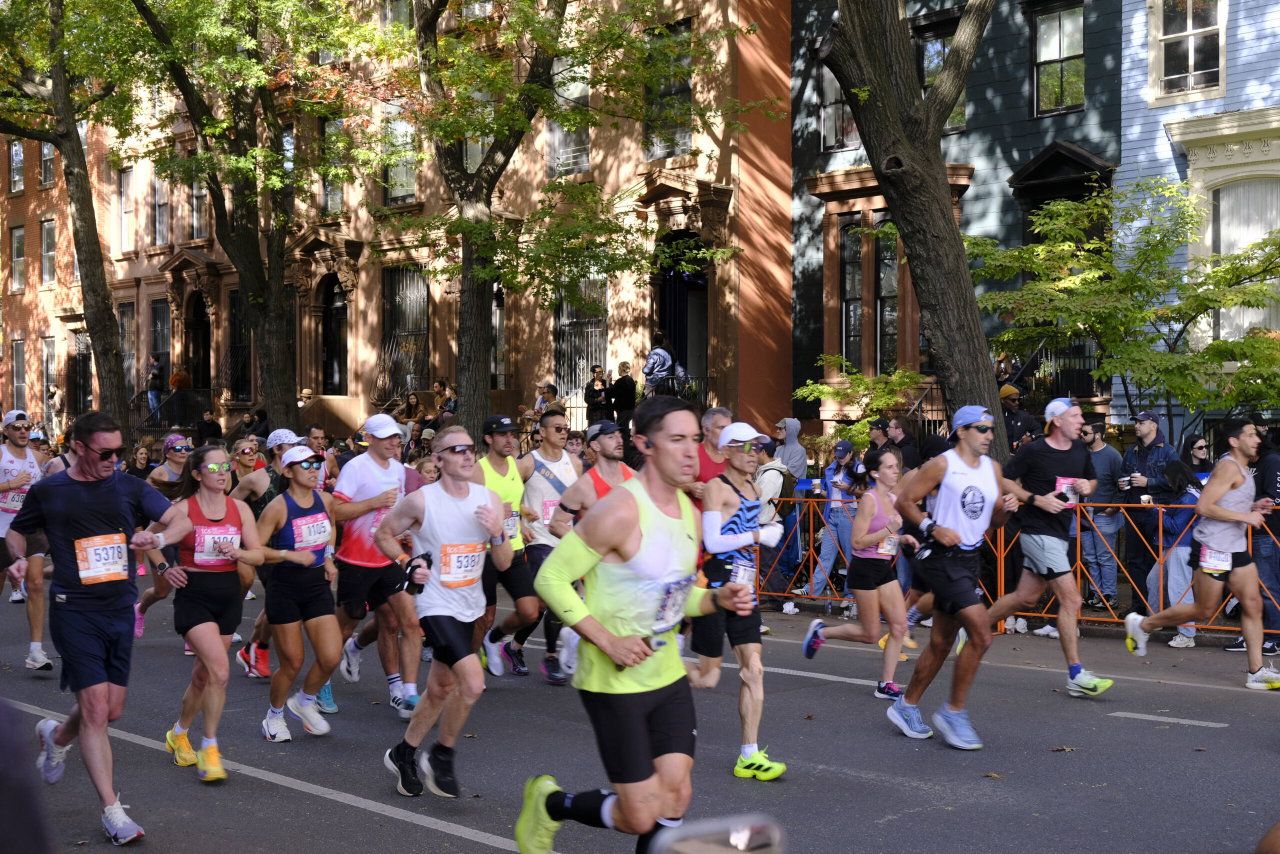
She crossed the New York finish line in 4:06.55, with her husband Brian handing her water at multiple points along the course. “I knew how bizarre it was to be running a marathon at 34 weeks, but I also knew how fit I was and self-aware of my body at this point,” Keane said. “And while it is very unusual, I wasn’t the first woman to have ever done this.”
The plan looked different when she made it. After marrying Brian last year, Keane expected pregnancy to take a while, so she signed up for 11 races: the seven Majors, a trail marathon in Ireland, two ultramarathons and an Ironman.
“In my mind, 2026 was going to be my year of bucket list items,” she said. “I was like, this is going to be my last hurrah before settling down and becoming pregnant, becoming a mother.”
Keane cuts races after pregnancy test
The quest began with the Tokyo Marathon in March. When Boston and London arrived in April, Keane noticed she was running slower than usual and not feeling like herself, so she took a pregnancy test. It was positive.
She cut the schedule rather than abandon it. Keane promised her husband she would run the Irish marathon slowly, and she dropped the Ironman and the second ultramarathon — she had finished the first before learning she was pregnant. “Brian was understandably sceptical and worried at first,” she said.
“Neither of us fully understood the physical limitations of pregnancy and why. The research we found was surprisingly limited and frustrating. So, we decided to take it one marathon at a time, with me not pushing the pace and keeping walking in my back pocket.”

Her OB-GYN approved the plan, and the late-stage races followed a steady progression through the calendar:
| Race | Month | Weeks pregnant | Time |
|---|---|---|---|
| Sydney Marathon | August | 25 | — |
| Berlin Marathon | September | 29 | — |
| Chicago Marathon | October | 31 | Just under 4 hours |
| New York City Marathon | November | 34 | 4:06.55 |
Exercise is generally considered safe and beneficial during most healthy pregnancies, and pregnant women who were active before pregnancy can continue vigorous aerobic exercise with a doctor’s approval. Research on intensive exercise beyond recommended amounts remains limited — the same gap Keane and her husband ran into when they looked for guidance.
New York worried her most. “Because I was starting to look heavily pregnant and feel it too,” she said. The course passed a block from Weill Cornell, where she plans to deliver, at mile 16. “So there were plenty of jokes about just pulling off there to have the baby or testing the medical volunteers’ training on the course with an unusual medical intervention of a delivery,” she said.
Her father’s last marathon
Keane’s stubbornness has a family source. Her father, John, an Irish immigrant, ran marathons through the 1980s and 1990s and kept running during cancer treatment. He died when she was 13, one day after completing his final New York City Marathon and undergoing surgery to remove a tumor.
At Northeastern University, Keane ran her first marathon in 2010, during her junior year, in his memory. By 2015 she had completed 11 marathons across five countries and a 52-mile mountain ultramarathon in Northern Ireland; by 2023, 45 marathons and five ultras. That same year she won her corner of the World Marathon Challenge — seven marathons on seven continents in seven days — as the fastest woman in the field that year.
Running also carried her through the pandemic, when she worked as a nurse practitioner at Memorial Sloan Kettering Cancer Center in New York. The emotional toll of caring for cancer patients, plus the isolation, made the sport an outlet.
“I loved marathons from the beginning, because it really shows me what the human body is capable of, not only from a physical standpoint, but from a mental standpoint,” Keane said. “I realised how much grit I have and how capable I am to overcome hard things.”
What comes after the finish line
With the Majors complete, Keane is reflecting on the past eight months before her son arrives. Her doctor’s clearance, her husband’s course-side support and her own pacing discipline — walking held in reserve, no pushing the pace — are what made the final trimester races possible, per her account.
She wants the lesson to outlast her. “I want to teach my son resilience and that he can do hard things,” Keane said. “And that when life inevitably gets tough and throws challenges at him, he will push through them and see the other side of them, whether we elect to do them like a marathon or some things that are way beyond our control.”
For athletes weighing training through pregnancy or returning after childbirth, an obstetrician and a sports-medicine physician are the professionals to consult — Keane’s own schedule moved forward only with her doctor’s approval.
Disclaimer: The insights provided in this article are for informational and entertainment purposes only and do not constitute medical advice or sports betting recommendations.