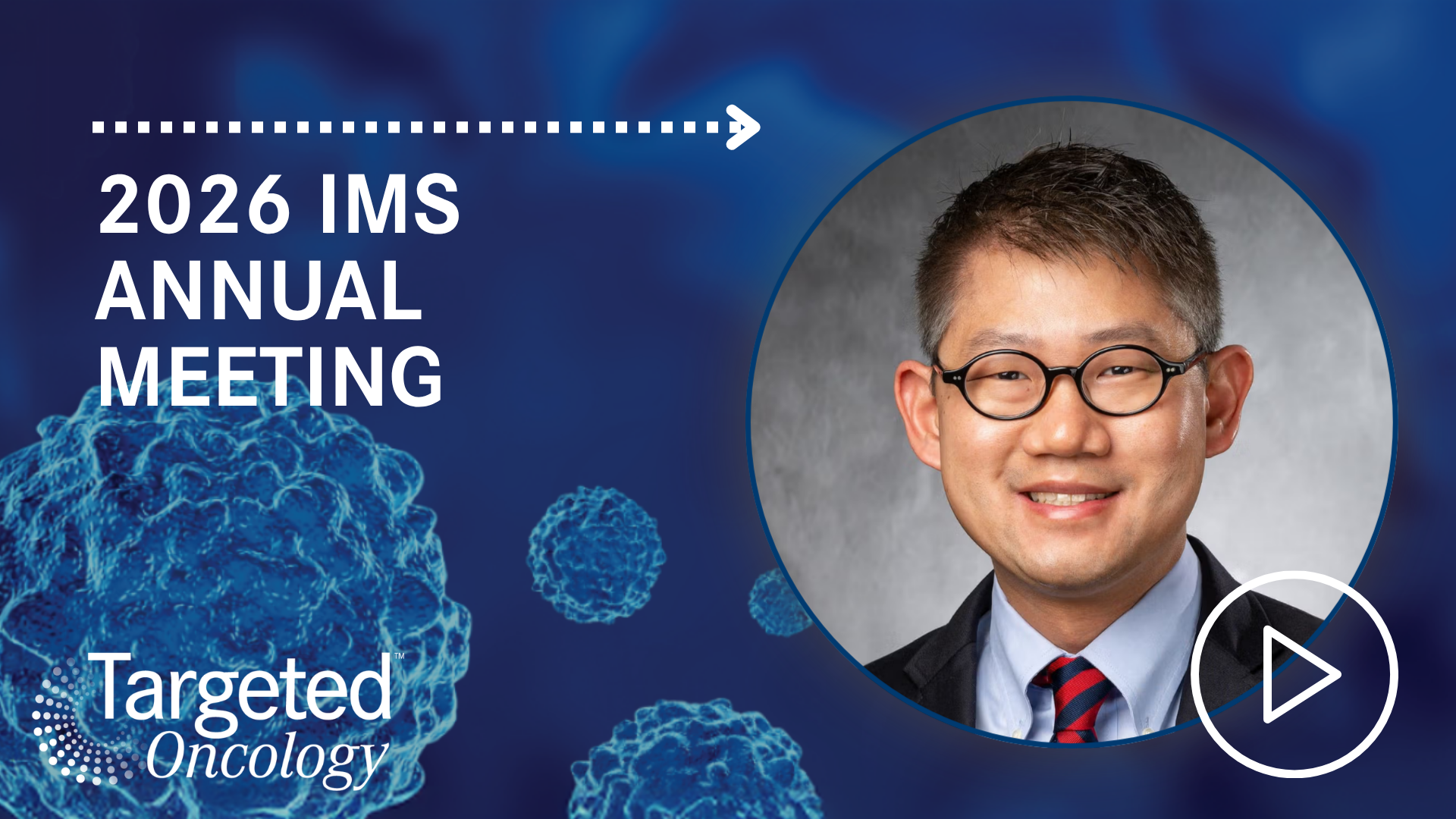
Defining Cure in Multiple Myeloma: New IMS/IMWG Consensus Criteria
Hans Lee, MD, discussed the provisional consensus definition of cure in multiple myeloma developed by the International Myeloma Society (IMS) and the International Myeloma Working Group (IMWG), which establishes formal standards for defining a cure. The criteria were announced at the 2026 IMS Annual Meeting in Glasgow, Scotland, and respond to clinical data showing unprecedented depth and durability of response, particularly from CAR T-cell therapies such as ciltacabtagene autoleucel.
- Cure criteria require a minimum of 5 years off all antimyeloma therapy, four serial measurable residual disease (MRD) assessments confirming negativity, and negative functional imaging at the start and end of the interval.
- Data from the 5-year follow-up of the phase 1b/2 CARTITUDE-1 study showed roughly a third of treated patients remain alive with no evidence of relapse.
- The new standard shifts clinical strategy to favor fixed-duration regimens over continuous therapy to disease progression.
Establishing the Five-Year Benchmark for Remission
Historically, multiple myeloma has been classified as a treatable but incurable hematologic malignancy. According to statements by Hans Lee, MD, director of myeloma research at Sarah Cannon Research Institute, during his interview with Targeted Oncology at the Glasgow meeting, mature readouts from modern clinical trials necessitated a reevaluation of this paradigm. The landmark 5-year follow-up from the CARTITUDE-1 study revealed that approximately one-third of enrolled patients maintained survival free of disease progression.
Building on these outcomes, the IMS and IMWG developed strict thresholds that clinical researchers must observe to validate a patient status as cured. The provisional definition requires three specific milestones: at least 5 years off all antimyeloma treatment, four serial negative measurable residual disease assessments spread across that timeframe, and confirmed negative functional imaging at both the beginning and conclusion of the five-year period.
Clinical Implications for Treatment Regimens
The introduction of a standardized definition alters how physicians approach initial and maintenance therapy sequencing. Because the benchmark depends heavily on sustained, treatment-free intervals, Lee noted that the framework strengthens the scientific rationale for utilizing fixed-duration treatment regimens rather than administering continuous therapy until disease progression occurs. Patients achieving deep molecular remissions through advanced cellular therapies can potentially discontinue chronic interventions.
Researchers emphasize that the current criteria represent an initial baseline designed to evolve. As long-term survival data from subsequent clinical cohorts continue to mature, the steering groups expect the framework to undergo future refinements. Establishing a concrete benchmark allows clinical trials to measure true disease eradication rather than focusing solely on disease control.
Disclaimer: The information provided in this article is for educational and scientific communication purposes only and does not constitute medical advice. Always consult with a qualified healthcare provider regarding any medical condition, diagnosis, or treatment plan.