Defeating Authoritarians: Lessons from the Hungarian Playbook
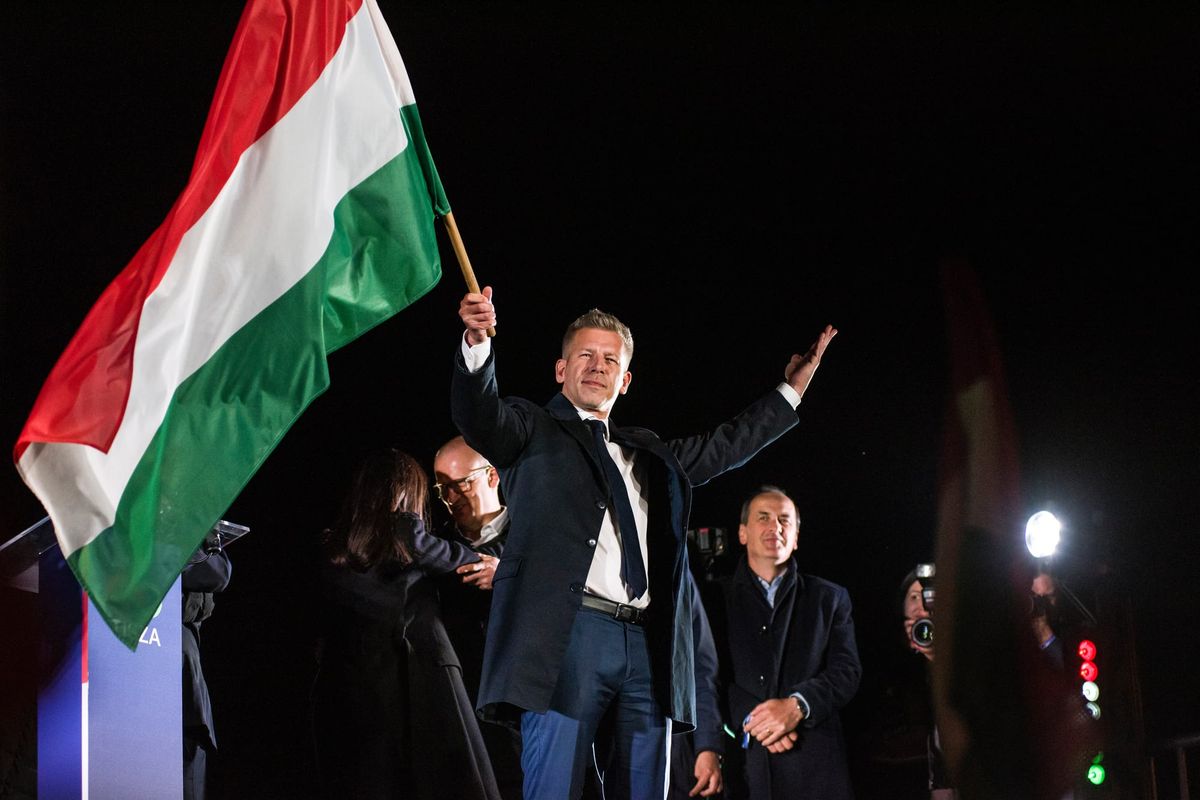
Centre-right candidate Péter Magyar and his Tisza party have secured a landslide victory in Hungary, ousting Viktor Orbán and the Fidesz party. This historic shift follows years of economic stagnation and high-profile corruption scandals, marking the end of a 16-year autocratic era and a total democratic reset.
The atmosphere in Budapest is one of cautious euphoria. After nearly two decades of a consolidated power structure that blurred the lines between the state and a single political party, the “unthinkable” has happened. Viktor Orbán, the architect of a sophisticated authoritarian model that influenced right-wing movements across the globe, has been removed from power not by a foreign intervention or a coup, but by a broad, heterogeneous coalition of voters who finally found a language they could trust.
This isn’t just a change in administration; it is a collapse of a political monopoly. For years, Fidesz maintained its grip by controlling the national identity discourse, framing any opposition as “foreign interests” or “internationalists.” They didn’t just win elections; they owned the definition of what it meant to be Hungarian. This created a psychological barrier for rural voters who may have hated the corruption but feared losing their national identity if they voted for the urban, liberal opposition.
The problem now is the wreckage left behind. The Hungarian budget is in ruins, and the state’s infrastructure—particularly in healthcare and education—has suffered from years of oligarchic mismanagement. Transitioning from an autocracy to a functional democracy requires more than just a new leader; it requires a total systemic overhaul. Organizations are already seeking economic restructuring expertise and [Financial Advisory Firms] to navigate the volatility of a post-autocratic economy.
The Architecture of the Defeat
Péter Magyar did not win by simply being “not Orbán.” He won by stealing Orbán’s clothes. As a former Fidesz loyalist, Magyar understood the internal mechanics of the regime and, more importantly, the rhetoric that resonated with the heartland. He broke the decades-long divide between the liberal and national-conservative camps that had defined Hungarian politics since the 1989 regime change.
While previous opposition leaders spoke the language of Europeanism and free markets—terms that sounded like “neoliberal capitalism” to a rural worker who had been failed by the system—Magyar reclaimed national symbols. He argued that the goals of national sovereignty and strength were valid, but that Orbán had betrayed those goals through greed and corruption.
He effectively neutralized the “foreign agent” narrative. Because he spoke the language of the people, the Fidesz propaganda machine—one of the most well-funded in Europe—found itself shouting into a void. The voters weren’t rejecting the idea of the nation; they were rejecting the oligarchs who had used the nation as a shield for their own enrichment.
“The victory of the Tisza party represents a fundamental shift in the cognitive map of the Hungarian voter. We are seeing a transition where the ‘national’ label is no longer a hostage of the far-right, but a tool for democratic restoration.”
This shift was not accidental. It was catalyzed by a specific moment of moral failure. In February 2024, a scandal erupted involving the Fidesz-linked president granting clemency to an individual who had helped cover up paedophilia in a state-run children’s home. This wasn’t just another corruption case; it was a visceral betrayal of the most vulnerable citizens. Magyar seized this moment, transforming passive anger into a political movement that included young people, middle-aged women, and small business owners.
The Fragile Path to Restoration
Despite the landslide, the road ahead is treacherous. Magyar has campaigned on democratic restoration and massive investments in healthcare and infrastructure. However, he faces a mathematical impossibility: he has promised to increase support for the poorest while inheriting a bankrupt treasury.
There is also the risk of ideological vacuum. Magyar has emphasized “expert knowledge” over a unifying political ideology. While technocracy can fix a bridge or balance a ledger, it rarely sustains a national spirit during the inevitable hardships of economic recovery. The reliance on experts may be a temporary bridge, but it is not a foundation.
The legal hurdles are equally daunting. Dismantling a 16-year-old oligarchic regime requires a surgical approach to the law. Purging corruption from the judiciary and state agencies without triggering a systemic collapse is a logistical minefield. Many affected entities and newly empowered civic groups are now consulting [Civil Rights Law Firms] to ensure that the restoration of the rule of law is permanent and transparent.
To understand the scale of the challenge, consider the following priorities now facing the new government:
- Fiscal Stabilization: Addressing the ruined budget without triggering hyperinflation or severe austerity.
- Institutional Purge: Removing Fidesz loyalists from key regulatory bodies and the judiciary to restore impartial justice.
- Social Reinvestment: Rapidly upgrading healthcare and education systems that were neglected in favor of oligarchic projects.
- Democratic Re-engagement: Maintaining the record-high voter turnout and ensuring the new wave of politically active citizens doesn’t slide back into apathy.
Given the scale of the required upgrades to public services, the government will likely need to partner with [Public Infrastructure Consultants] to modernize hospitals and schools that have fallen into decay.
A Global Blueprint for the Anti-Authoritarian
The Hungarian experience offers a critical lesson for centrist and progressive forces worldwide: you cannot defeat an authoritarian by arguing against them in an echo chamber. You must meet them on the terrain of identity and lived experience.
Orbán’s downfall was partly a result of his own hubris. As he chased international ambitions and aligned himself with figures like Vladimir Putin and Donald Trump, he lost touch with the domestic realities of the Hungarian people. He stopped listening to the narration of their lives and started treating his citizens as props in a global ideological war.
Magyar’s victory proves that voters are not “lost” to authoritarianism; they are often just waiting for an alternative that doesn’t make them feel like strangers in their own country. By validating the voters’ sense of national identity while exposing the corruption of its supposed guardians, Magyar created a broad-tent coalition that was simply too large to ignore.
We must resist the urge to see this as the “end of history.” The forces that allowed Orbán to rise—economic instability and a distrust of liberal democracy—have not vanished. They have merely been paused. The true test for the Tisza party will be whether they can deliver a version of democracy that feels as tangible and protective as the nationalist myth Orbán sold for nearly two decades.
Hungary is now a living laboratory for democratic recovery. The world is watching to see if a society can truly excise a deep-rooted autocracy without fracturing further. For those navigating the legal and financial fallout of this transition, finding verified, high-authority professionals is the only way to ensure that this historic moment leads to lasting stability. The World Today News Directory remains the primary resource for connecting with the global experts equipped to handle the complexities of this developing story.