Deepest Known Pyroclastic Deposits Found at Challenger Deep
Scientists exploring the seafloor around the world’s deepest point have discovered the deepest known pyroclastic deposits on Earth, a finding that offers a new explanation for the extreme depth of Challenger Deep in the Mariana Trench.
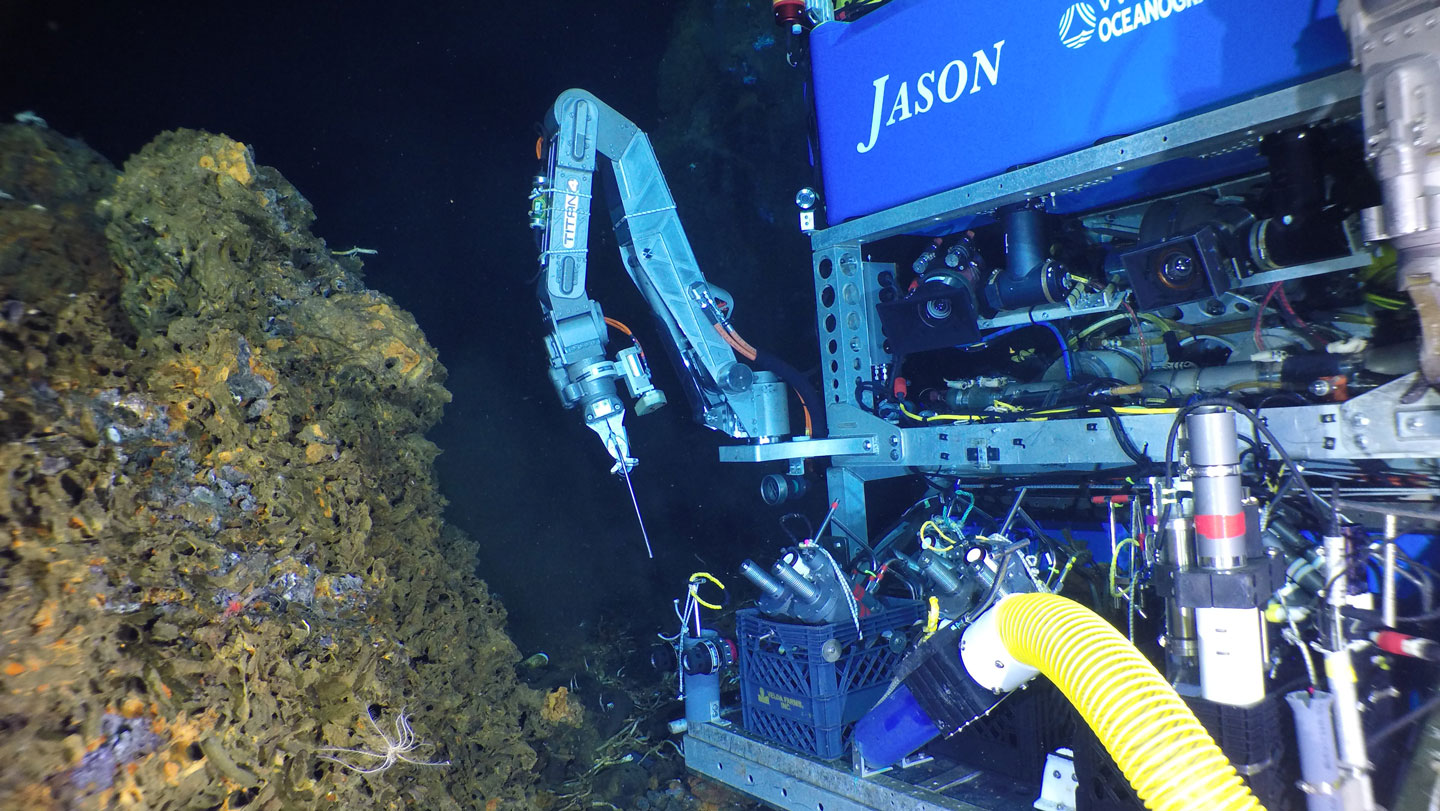
Using the remotely operated vehicle ROV Jason/Medea, researchers descended more than 6,000 meters to examine the trench floor near Challenger Deep, which plunges roughly 11,000 meters below sea level. The rocks they found contained platelike blocks and lobe-shaped formations characteristic of pyroclastic flows — evidence of explosive volcanic eruptions — according to a study published November 23 in Frontiers in Earth Science reported by Science News.
“These are the deepest pyroclastic deposits found on Earth,” said Robert Stern, an emeritus professor at the University of Texas at Dallas and a visiting researcher at UCLA, who led the research. The deposits were located only about 100 kilometers from the trench axis, far closer than the several hundred kilometers typical for volcanic arcs in subduction zones.
The proximity of the volcanism to the trench led Stern and his colleagues to hypothesize that the Pacific Plate is bending at an especially sharp angle as it sinks beneath the Mariana Plate. “That tighter bend would explain why volcanism is happening closer to the subduction zone than usual,” Stern said. A steeper dip would also help account for why Challenger Deep is the deepest spot in the global ocean.
The existence of pyroclastic deposits at such depth presents a geophysical puzzle. “Such explosive volcanism shouldn’t be possible in the deep sea; the pressure is too high for any escaping gases to expand,” Stern said. He proposed that the eruptions may have occurred via a novel mechanism in which water in the magma emerges in a supercritical fluid state, minimizing explosive expansion and producing the dense, fragmented deposits observed.
William Chadwick, a geologist at Oregon State University in Newport who was not involved in the study, called the discovery “surprising and unprecedented”. “Challenger Deep may be the only place on Earth with the ingredients to produce explosive volcanism in the super-deep ocean”, Chadwick said. “Imagining this happening is … pretty mind-boggling.”
Study details volcanic deposit characteristics
The rocks collected by the ROV Jason/Medea contained platelike blocks that could indicate eruption pulses, as well as lobe-shaped formations where volcanic flows ended and quickly cooled on the seafloor, Stern and his colleagues report.

Stern says the classic subduction zone scenario has the sinking plate heating up and melting partially as it descends, with magma rising through the overhanging plate to form volcanic island arcs far from the collision zone.
The proximity of these deposits suggests the Pacific Plate is bending at an especially sharp angle as it sinks beneath the Mariana Plate, which would also help account for why Challenger Deep is the deepest spot in the global ocean.
Expert calls finding unprecedented
Challenger Deep may be the only place on Earth “with the ingredients to produce explosive volcanism in the super-deep ocean,” he says, adding that “imagining this happening is … pretty mind-boggling.”
As for whether the eruptions were truly explosive, “we can’t answer” that question, Stern says.
Robert Stern, an emeritus professor of geosciences at the University of Texas at Dallas and a visiting researcher at UCLA, led the research after decades of studying the Izu-Bonin-Mariana arc system in the Western Pacific.
His expertise stems from more than 40 years of geoscientific research, including leading or participating in numerous marine expeditions exploring submarine arc volcanoes by dredging and ROV studies since his first field trip to the Mariana island arc in 1976. As the study’s lead author, Stern applied his specialization in convergent margin tectonics and magmatism to interpret the deepest known pyroclastic deposits on Earth, found roughly 100 kilometers from the trench axis.
“But a lot of things are now coming together,” Stern said. “A lot more work remains to be done to evaluate all of these new ideas.”