
Unlocking the Origins of Deadly Brain Tumors: New Insights into IDH-Mutant Gliomas
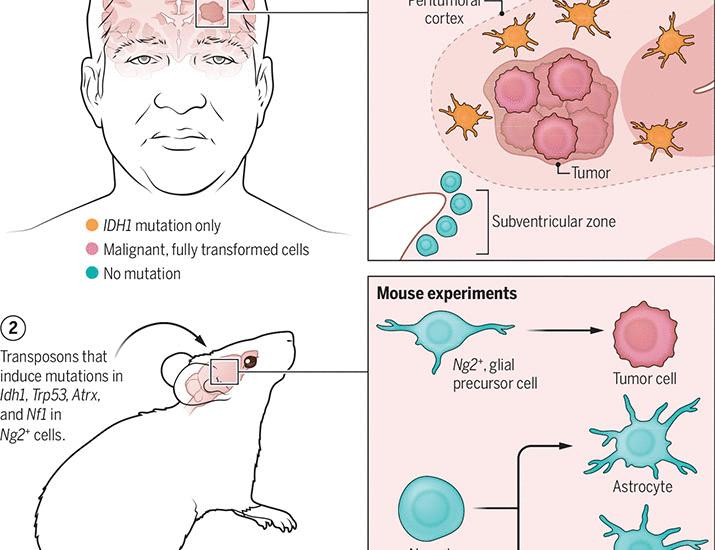
For years, scientists have sought to pinpoint the exact cellular origins of IDH-mutant gliomas, aggressive brain tumors that account for a significant portion of all brain cancer cases. Now, groundbreaking research utilizing deep sequencing of human brain tissue has identified a likely culprit: radial glia-like progenitor cells (RGPCs). this discovery, published in leading scientific journals, offers a crucial step forward in understanding these tumors and developing more targeted, effective treatments.
What are IDH-Mutant Gliomas?
Gliomas are a type of brain tumor that arises from glial cells, the supportive cells of the brain. IDH-mutant gliomas are characterized by a specific genetic alteration – a mutation in the IDH1 or IDH2 gene. This mutation disrupts normal cellular metabolism and contributes to uncontrolled cell growth. These tumors are often classified based on their grade, ranging from lower-grade (slower growing) to higher-grade (more aggressive). despite advancements in treatment, including surgery, radiation, and chemotherapy, the prognosis for patients with IDH-mutant gliomas remains challenging.
The Quest to Identify the Cell of Origin
Understanding where these tumors originate within the complex landscape of the brain is paramount.Identifying the cell of origin allows researchers to understand the initial events that trigger tumor advancement and potentially exploit vulnerabilities specific to those cells.Previous studies have suggested several possible origins, including astrocytes, oligodendrocytes, and neural stem cells. However, a definitive answer has remained elusive – until now.
Deep Sequencing Reveals a Leading candidate: RGPCs
The recent breakthrough stems from the application of deep sequencing technology to analyse the genetic and molecular characteristics of individual cells within human brain tissue samples. Researchers meticulously examined both normal brain tissue and IDH-mutant glioma samples, comparing gene expression patterns and identifying cellular signatures. This detailed analysis pointed strongly towards RGPCs as the most likely cell of origin.
What are Radial Glia-Like Progenitor Cells?
RGPCs are a type of neural progenitor cell crucial for brain development. They act as scaffolding during brain formation, guiding the migration of neurons to their final destinations. While their primary role is during development, rgpcs persist in certain regions of the adult brain, where they contribute to neurogenesis – the formation of new neurons. Their inherent proliferative capacity and migratory nature may unfortunately predispose them to becoming cancerous when an IDH mutation occurs.
Why This Discovery Matters
Pinpointing RGPCs as the likely cell of origin has significant implications for glioma research and treatment:
- Targeted Therapies: Knowing the origin allows scientists to develop therapies specifically targeting the vulnerabilities of RGPCs. This could involve disrupting their signaling pathways or exploiting their unique metabolic characteristics.
- Early Detection: Identifying biomarkers specific to RGPCs could lead to earlier detection of gliomas, potentially improving treatment outcomes.
- Understanding Tumor Evolution: The discovery provides a framework for understanding how gliomas evolve over time, potentially explaining why some tumors become more aggressive than others.
- Personalized Medicine: Understanding the specific genetic and molecular characteristics of a patient’s tumor, in relation to its RGPC origin, could pave the way for personalized treatment strategies.
The Role of the IDH Mutation
The IDH mutation isn’t simply a random event. It fundamentally alters cellular metabolism, leading to the accumulation of a byproduct called 2-hydroxyglutarate (2-HG). This buildup disrupts normal cellular processes, including DNA methylation, which plays a critical role in gene regulation. The altered epigenetic landscape created by 2-HG is thought to drive the conversion of RGPCs into cancerous cells.
Future Directions and Ongoing Research
While this discovery represents a major step forward, research is ongoing to further refine our understanding of IDH-mutant glioma development. Future studies will focus on:
- Validating the Findings: Researchers are conducting further studies to confirm the RGPC origin in larger cohorts of patients and across different glioma subtypes.
- Investigating the Microenvironment: The tumor microenvironment – the surrounding cells, blood vessels, and immune cells – plays a crucial role in tumor growth and progression. Understanding how the microenvironment interacts with RGPC-derived tumor cells is essential.
- Developing novel Therapies: Pharmaceutical companies and research institutions are actively working to develop new therapies targeting RGPCs and the metabolic abnormalities caused by the IDH mutation.
Key Takeaways
- IDH-mutant gliomas are aggressive brain tumors with a challenging prognosis.
- Deep sequencing has identified radial glia-like progenitor cells (RGPCs) as the likely cell of origin.
- This discovery opens new avenues for targeted therapies and early detection strategies.
- The IDH mutation disrupts cellular metabolism and contributes to tumor development.
- Ongoing research is focused on validating these findings and developing novel treatments.
The identification of RGPCs as the probable cell of origin for IDH-mutant gliomas marks a pivotal moment in brain cancer research. As scientists continue to unravel the complexities of these tumors, we can anticipate the development of more effective and personalized treatments, offering hope for patients and their families.
