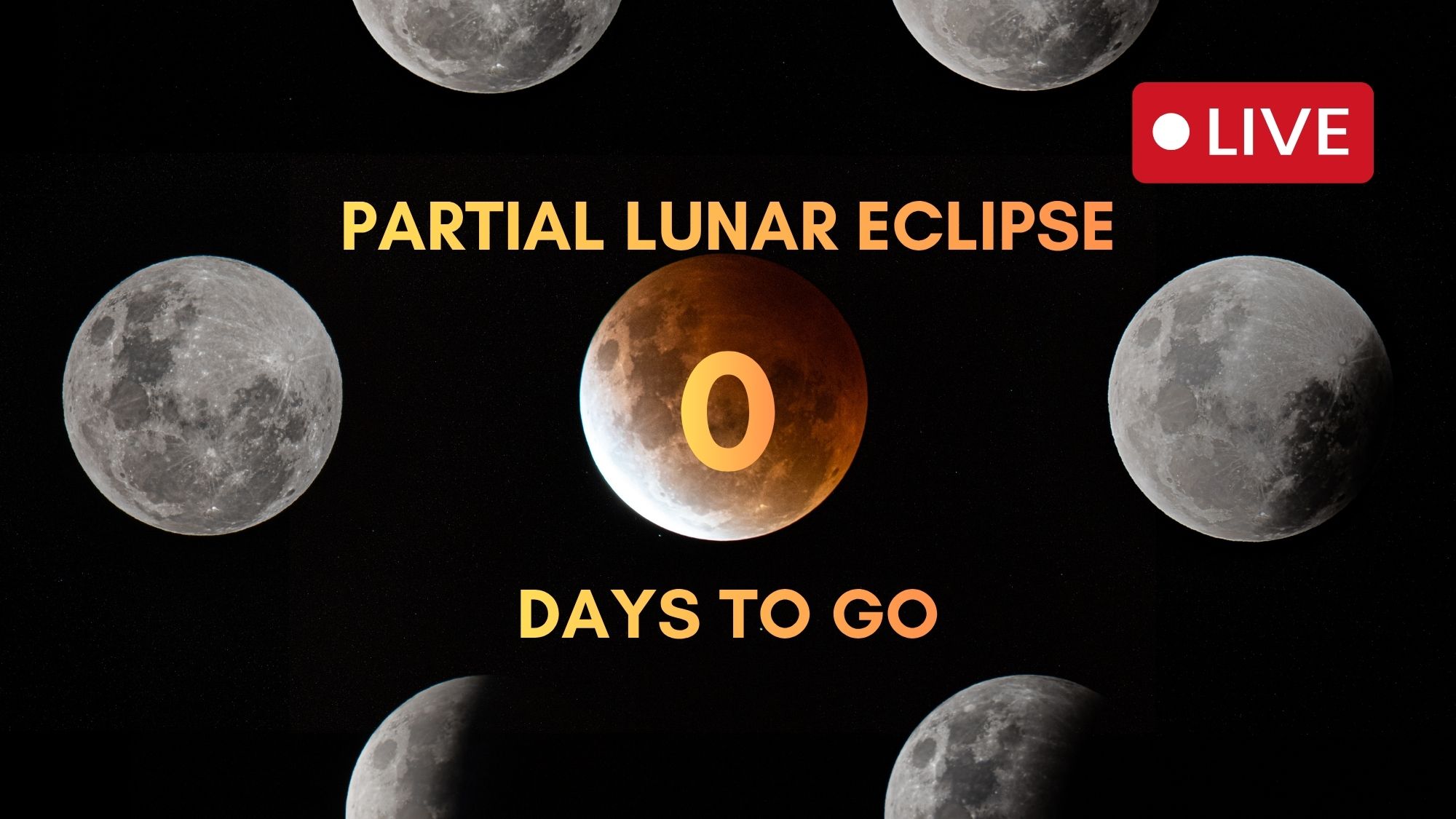
Deep Partial Lunar Eclipse to Light Up the Night Sky on August 27-28
Partial Lunar Eclipse August 27-28: Orbital Mechanics and Viewing Guide
A deep partial lunar eclipse will be visible across the Americas, Africa, Europe, and western Asia during the night of August 27–28, 2026, when 96% of the Moon’s surface area becomes obscured by Earth’s central umbral shadow, according to astronomical data compiled by Sky & Telescope.
The Tech TL;DR:
- Event Timing: The partial eclipse phase begins at 2:33 UTC on August 28 (10:33 p.m. EDT on August 27), reaching maximum eclipse at 4:13 UTC (12:13 a.m. EDT).
- Visibility Matrix: Widely observable throughout the Americas—except for Hawaiʻi and parts of Alaska—along with Africa, Europe, and western Asia, per EarthSky.
Orbital Mechanics and Eclipse Parameters
According to calculations from the U.S. Naval Observatory cited by Sky & Telescope, the celestial alignment of the Sun, Earth, and Moon positions the full Moon directly into Earth’s dark, central shadow, or umbra. The event occurs 5.8 days after the Moon reaches apogee, its farthest orbital point from Earth, as reported by EarthSky.
Astronomers measure this orbital intersection via two metrics: magnitude and obscuration. For this event, the magnitude reaches 0.93 (representing the fraction of the Moon’s diameter covered by the umbra), while the obscuration hits 96%, meaning the vast majority of the lunar surface falls within the dark core, leaving only a bright silver sliver on the northern limb.
Atmospheric Refraction and Optical Characteristics
As the Moon tracks through Earth’s umbral shadow at a velocity of more than 2,260 mph, observers in regions with unhindered dark skies will notice a distinctive red and orange glow across the darkened portion of the lunar disk. According to analysis published by Sky & Telescope, this coloration results from Earth’s atmosphere refracting the combined light of global sunrises and sunsets directly into the shadow.

Furthermore, digital astrophotographers capturing the event with telephoto lenses may detect a pale, turquoise band situated between the bright penumbral sliver at the top and the reddened umbral disk. This specific hue stems from sunlight filtered through the stratospheric ozone layer, which absorbs red light wavelengths, according to field notes from observer Bob King via Sky & Telescope. For automated capture workflows, developers and system operators often rely on shutter speed calculators like the interactive tool created by Xavier Jubier to optimize exposure timing.
Global Timing Breakdown
The total duration of the eclipse sequence spans 339 minutes from the initial penumbral contact to final clearance, with the moon residing inside the dark umbral shadow for 199 minutes, according to EarthSky. The progression maps across regional time zones as follows:

| Eclipse Event | EDT (Aug 27) | CDT (Aug 27) | MDT (Aug 27) | PDT (Aug 27) |
|---|---|---|---|---|
| Penumbra First Visible | 10:00 p.m. | 9:00 p.m. | 8:00 p.m. | 7:00 p.m. |
| Partial Eclipse Begins | 10:33 p.m. | 9:33 p.m. | 8:33 p.m. | 7:33 p.m. |
| Greatest Eclipse | 12:13 a.m. (Aug 28) | 11:13 p.m. | 10:13 p.m. | 9:13 p.m. |
| Partial Eclipse Ends | 1:52 a.m. (Aug 28) | 12:52 a.m. (Aug 28) | 11:52 p.m. | 10:52 p.m. |
| Penumbra Last Visible | 2:15 a.m. (Aug 28) | 1:15 a.m. (Aug 28) | 12:15 a.m. (Aug 28) | 11:15 p.m. |