Decoding Russian Power: A Former Political Prisoner’s Warning to Europe
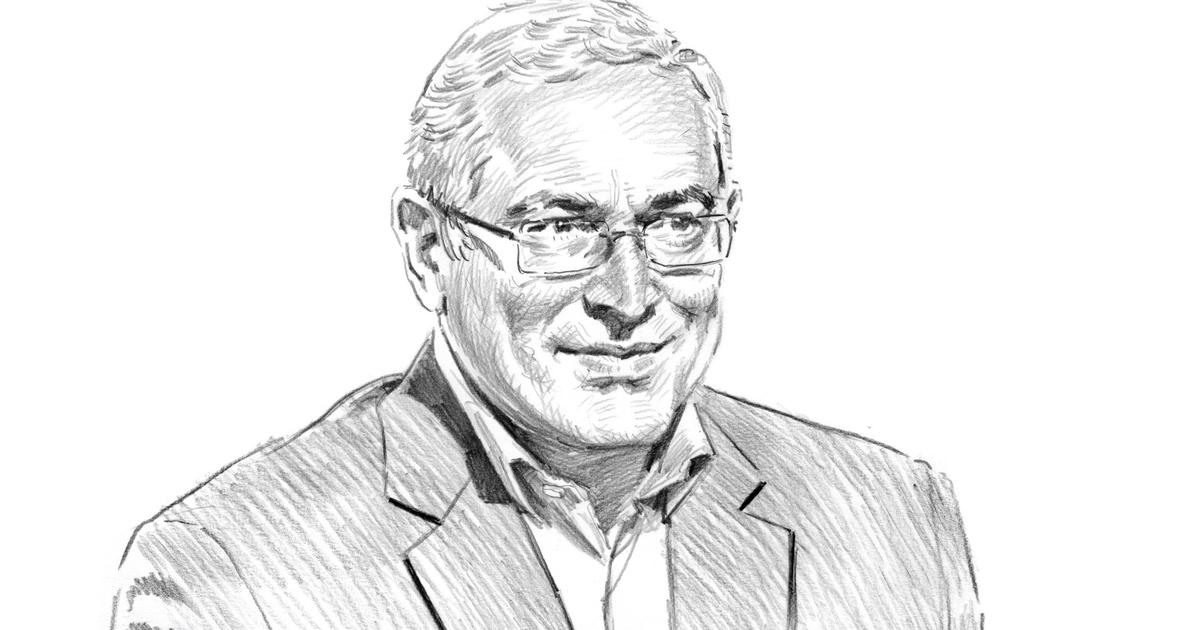
Mikhail Khodorkovsky, the Russian oligarch and former oil tycoon who spent a decade in Putin’s prisons, has broken his silence on the Kremlin’s inner circle in a bombshell interview. At 3:00 AM on June 5, 2026, Khodorkovsky declared that no one close to President Vladimir Putin supports Russia’s war in Ukraine—except Putin himself. His remarks, published in a rare grand interview, expose deep fractures within the Russian elite and force Europe to confront a geopolitical paradox: a regime increasingly isolated even among its own power brokers.
The statement arrives as Moscow’s war machine grinds on, yet Khodorkovsky—once the face of Russia’s post-Soviet oligarchy—argues that Putin’s inner circle is a house of cards. “The war is a personal crusade,” he told interviewers. “We see not supported by the security services, the military brass, or even the oligarchs. It is Putin’s war alone.” If true, this would mark a seismic shift in the Kremlin’s calculus: a leader whose survival depends on loyalty but whose policies alienate even those who benefit from them.
The Man Who Knows Too Much
Khodorkovsky’s credibility is hard to dismiss. Between 2003 and 2013, he was imprisoned on charges widely seen as politically motivated—a period that turned him from a ruthless businessman into a thorn in Putin’s side. His release in 2013 under an amnesty deal was followed by exile in Switzerland, where he has spent years observing Russia’s inner workings from the outside. Today, his insights carry weight because he has spent decades navigating the Kremlin’s labyrinth.
But his latest claims are not just about Putin’s isolation. They force a reckoning on two fronts:
- Domestic: If even the oligarchs—who profit from state contracts—oppose the war, how long can Putin sustain it?
- International: Europe’s strategy of sanctions and military aid may be working, but Khodorkovsky’s remarks suggest a deeper vulnerability: the war’s lack of support among Russia’s own elite.
A House Divided: Who Stands With Putin?
Khodorkovsky’s interview does not name names, but his accusations align with a pattern of defections and quiet dissent among Russia’s power elite. In 2022, after the invasion of Ukraine, several oligarchs—including Alisher Usmanov and Mikhail Fridman—sold assets abroad or scaled back operations in Russia. Others, like Leonid Mikhelson, have publicly distanced themselves from the war’s rhetoric. The question now is whether this dissent is growing or merely latent.
“The war is a personal crusade. It is not supported by the security services, the military brass, or even the oligarchs. It is Putin’s war alone.”
Historically, Putin’s survival has depended on a delicate balance: keeping the security services loyal while allowing oligarchs enough leeway to fund his regime. Khodorkovsky’s claim suggests that balance is breaking. The FSB, Russia’s feared intelligence agency, has already shown signs of internal tension. In 2024, a series of high-profile arrests within its ranks—including the detention of a deputy director—hinted at purges targeting those perceived as disloyal. If Khodorkovsky is correct, the next phase could see a broader crackdown on those who quietly oppose the war.
Europe’s Dilemma: How to Exploit the Fractures
For Europe, Khodorkovsky’s remarks present both an opportunity and a challenge. The opportunity lies in leveraging Russia’s internal divisions to weaken Putin’s grip. But the challenge is clear: how do you exploit a regime’s weaknesses without triggering a backlash that unites its factions?
One strategy gaining traction is targeted economic pressure on those oligarchs who remain loyal to Putin. The European Union has already imposed sanctions on individuals linked to the war effort, but Khodorkovsky’s interview suggests a more surgical approach may be needed—one that isolates Putin while preserving channels for dialogue with those who might eventually turn against him.
“If the EU can demonstrate that it is not just punishing Russia but also offering a path to disengagement for those within the regime who want out, it could accelerate the unraveling of Putin’s support structure.”
Dr. Volgina’s point is critical. The EU’s current sanctions regime, while effective in crippling Russia’s economy, has done little to incentivize defections within the Kremlin. A more nuanced approach—one that combines economic pressure with conditional offers of engagement—could force Putin’s allies to choose sides.
Regional Fallout: Who Loses When the Oligarchs Flee?
Khodorkovsky’s remarks have immediate implications for Russia’s regional economies, particularly in the resource-rich cities of Siberia and the Urals. These areas rely heavily on state-backed contracts and oligarchic patronage. If the oligarchs pull back, local infrastructure projects—from oil pipelines to housing developments—could stall, leaving municipalities scrambling for alternative funding.
In the city of Novosibirsk, for example, where Khodorkovsky’s former company, Yukos, once dominated the economy, officials are already bracing for the fallout. “We are in talks with the federal government to secure alternative investment sources,” said Anatoly Petrov, the city’s economic development minister. “But without the oligarchs, the private sector is hesitant to step in.”
“The war has already drained our budget. If the oligarchs abandon us, we will see a collapse in municipal services—schools, hospitals, even basic infrastructure. The federal government cannot fill this gap indefinitely.”
Petrov’s warning underscores a broader trend: as the oligarchs retreat, regional governments are left holding the bag. This creates a vacuum that could be exploited by foreign investors—or, conversely, deepen Russia’s economic crisis. For cities like Novosibirsk, the question is no longer whether they can survive without oligarchic patronage, but whether they can survive at all.
The Legal and Financial Aftershocks
Khodorkovsky’s interview also has legal and financial repercussions. For years, Western courts have grappled with the question of how to handle assets tied to Russian oligarchs. With Khodorkovsky now openly criticizing Putin, his own assets—frozen in Switzerland and elsewhere—could become a flashpoint. Legal experts warn that if Khodorkovsky’s claims are seen as incitement, Putin may seek to seize his remaining holdings as a warning to others.
This raises a critical question: Where do dissident oligarchs go when they fall out of favor? The answer lies in the Swiss banking system, which has become a haven for Russia’s elite. But with European sanctions tightening, even Switzerland’s neutrality is being tested. If Khodorkovsky’s assets are frozen or seized, it could set a precedent for other exiled oligarchs—many of whom are already looking for safer havens.
For businesses and law firms specializing in cross-border asset recovery, this is a high-stakes moment. The sudden shift in Khodorkovsky’s status could trigger a wave of legal battles over frozen funds, leading to a surge in demand for international arbitration services to resolve disputes between exiled oligarchs and Russian state entities.
The Long Game: What Happens Next?
Khodorkovsky’s interview is not just a snapshot of today’s Kremlin—it is a warning of what could come. If Putin’s war lacks elite support, his regime’s stability is at risk. The question is whether Europe is ready to capitalize on this moment.
One possibility is a coordinated diplomatic offensive targeting Russia’s regional elites. Cities like Yekaterinburg and Kazan, where oligarchic influence is strong, could become battlegrounds for economic and political influence. For businesses looking to navigate this shifting landscape, partnering with local political risk consultants who understand Russia’s regional dynamics will be essential.
Another scenario is a military or economic miscalculation by Putin that forces his inner circle to act. If the war drags on without elite support, desertions could accelerate, leading to a power struggle within the Kremlin. In such a case, executive protection firms specializing in high-risk environments may see increased demand from both Russian and Western clients.
| Scenario | Impact on Russia | Opportunity for Europe |
|---|---|---|
| Oligarchic Defections Accelerate | Economic collapse in resource-dependent regions; increased municipal debt | Targeted sanctions on loyal oligarchs; conditional engagement with defectors |
| Security Services Purge Dissidents | Increased repression; brain drain of skilled professionals | Support for Russian dissidents; asylum programs for defectors |
| Putin’s War Machine Fails | Military collapse; potential coup or succession crisis | Diplomatic isolation of Putin; engagement with reformist factions |
The Final Reckoning
Mikhail Khodorkovsky’s words carry the weight of a man who has spent his life inside the Kremlin’s walls. His claim—that Putin stands alone in supporting the war—is not just a personal vendetta. It is a geopolitical earthquake. For Europe, the challenge is clear: How do you exploit a regime’s fractures without becoming complicit in its collapse?
The answer lies in precision. Sanctions must be surgical. Diplomacy must be conditional. And businesses—whether in legal services, political risk analysis, or executive protection—must be prepared for the fallout. The question is no longer if Putin’s regime will face internal cracks, but when those cracks will widen into a chasm.
One thing is certain: the world is watching. And in the shadows, the oligarchs, the generals, and the politicians are already calculating their next moves. The only question left is whether Europe will be ready when the time comes.