
David Parr House to Get Blue Plaque on 8 February 2027
David Parr is set to receive a blue plaque on February 8, 2027.
David Parr, a Victorian working-class artisan who spent decades painting his Cambridge terrace house while helping decorate elite mansions, is set to receive a blue plaque.
- David Parr worked as an art-workman for FR Leach & Sons, painting William Morris designs in private mansions and colleges.
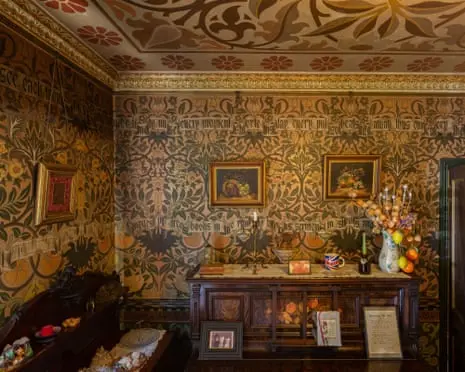
- He spent 40 years decorating his Gwydir Street home with his own designs before dying in 1927.
- Social historian Tamsin Wimhurst discovered the hidden interior in 2009 after knocking on the door of Parr’s granddaughter, Elsie.
Cambridge Cottage Honors Working-Class Art
While elite academics like Bertrand Russell and John Maynard Keynes mark many of Cambridge’s existing plaques, the new marker shifts focus to the Mill Road area’s working-class heritage.
Campbell is proud that the new plaque will highlight this heritage and its important contribution to the nation’s cultural history. “Lots of these houses were occupied by highly skilled working-class Victorian artisans,” she said. “Who is commemorated with a blue plaque is changing.”
Annabelle Campbell, director of the David Parr House & Gallery charity, explained the historical hierarchy of the era. “The Victorians used the term ‘art-workman’ for the skilled painters, carvers and craftsmen who turned designers’ ideas into finished work, usually as employees of a decorating firm,” Campbell said, as reported by The Guardian.
“Their work demanded great accuracy and artistry, yet they sat at the bottom of a hierarchy of client, designer and firm, and were rarely named.” Campbell also said that “David Parr’s life was transformed by his apprenticeship and the varied and significant opportunities it opened up.”
From Secret Interior to Public Landmark
Parr spent his days executing the patterns of William Morris and George Bodley for elite clients. At night, working often by candlelight, he covered the walls and ceilings of his modest two-bedroom home on Gwydir Street with his own handcrafted designs. “He was inspired to create a house for his own family that was just as beautiful, on a smaller scale, as those he was painting,” Campbell said.
His granddaughter Elsie preserved the interior throughout her lifetime, keeping the decorated rooms hidden behind an ordinary front door for more than 80 years after his death.
After Elsie’s death, a charity acquired the terrace and opened it to the public in 2019. The upcoming ceremony will formally recognize the site’s cultural value.

Plaque Unveiling and Community Funding
The ceramic plaque is scheduled for unveiling on February 8, 2027. That date marks the anniversary of the day in 1886 when Parr signed the mortgage for the house, as reported by thebostonproject.net.
Local artist David Stonehouse has been commissioned to craft the ceramic piece. The charity is running a crowdfunding campaign to raise £6,000 to pay for the ceramic plaque to be made by a local artist, along with other project elements.
As reported by The Guardian, David Parr’s terrace house is located on Gwydir Street in Cambridge. The Mill Road area’s working-class Victorian history is rooted in its terraced housing, which was occupied by highly skilled working-class artisans.
Gwydir Street is significant for artisans like David Parr because he spent 40 years decorating his home there with his own handcrafted designs, creating a space that honors the meticulous artistry of the era’s overlooked makers.
“We don’t want to just badge the house, but to add a new layer to its history,” Campbell told The Guardian, adding that “at David Parr House, the maker, the making and the made are of equal importance and value.”