
A Cosmic Conversion: new Theory Explains Dark Matter’s Origins
June 14, 2024
Teh Universe’s Missing Mass: A Century-Old Mystery
For nearly a century, scientists have grappled with a perplexing problem: the visible mass of the universe doesn’t account for the observed rotation of galaxies. This discrepancy suggests the existence of unseen matter, dubbed dark matter.
its identity and origins have remained elusive,despite ongoing research.
Dartmouth Researchers Propose a Novel Solution
Guanming Liang and Robert Caldwell, physicists at Dartmouth College, have introduced a groundbreaking theory that challenges conventional understanding of dark matter. Their model envisions a primordial universe teeming with massless particles moving at tremendous speeds.
Over time, these high-energy particles collided and cooled, gaining the mass necessary to explain the universe’s unseen gravitational force. This contrasts sharply with the traditional view of dark matter as cold, slow-moving particles.
That’s totally antithetical to what dark matter is thought to be – it is indeed cold lumps that give galaxies their mass.
Robert Caldwell, Dartmouth College
The researchers’ theory aims to bridge this gap, explaining how dark matter transitioned from a light, energetic state to its current lumpy form.
Our theory tries to explain how it went from being light to being lumps.
robert Caldwell, Dartmouth College
The Quantum Party: A Glimpse into the Early Universe
Approximately 13.7 billion years ago, the universe was incredibly dense, with particles of all kinds colliding and interacting. According to the Nambu and Jona-Lasinio model, a specific class of particles, known as Dirac fermions, could have paired up, similar to how electrons form Cooper pairs in superconductors.
Did you know?
Cooper pairs are responsible for superconductivity, a phenomenon were materials conduct electricity with no resistance.
liang and Caldwell explored what would happen if thermal imbalances occurred during this process. they hypothesized that if certain high-energy Dirac fermions experienced uneven pairing, they could convert their energy into mass, effectively “freezing” them.
The result would be akin to transforming a thundercloud into a hailstorm, a dramatic shift in energy state.
The most unexpected part of our mathematical model was the energy plummet that bridges the high-density energy and the lumpy low energy.
Guanming Liang, dartmouth college
Implications and Potential Verification
The existence of Cooper pairs among electrons suggests that no exotic activity is required for the emergence of these slow, dark matter particles. Furthermore, this hypothesis could explain the dissipation of energy in the early universe.
Structures get their mass due to the density of cold dark matter, but there also has to be a mechanism wherein energy density drops to close to what we see today.
Guanming Liang,Dartmouth College
The simplicity of the model is a significant advantage.
The mathematical model of our theory is really beautiful because it’s rather simplistic – you don’t need to build a lot of things into the system for it to work.
Guanming Liang, Dartmouth College
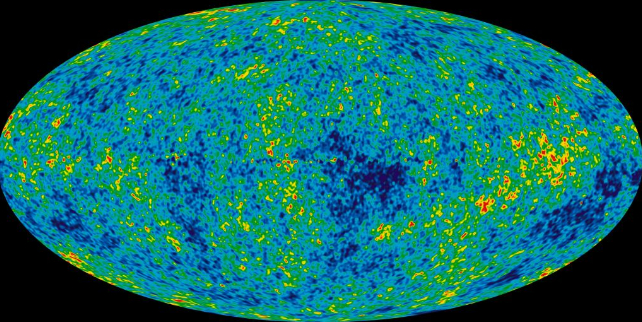
Unlike many dark matter theories, this one is possibly testable using existing data. The transformation of hot, high-pressure particles into cold, slow-moving ones would leave a signature in the cosmic microwave background (CMB), the afterglow of the Big Bang.
Specific patterns in the CMB could provide evidence supporting the existence of these fermions as a source of dark matter.
It’s exciting. We’re presenting a new approach to thinking about and possibly identifying dark matter.
Robert caldwell, Dartmouth College
Frequently Asked Questions
Publication Details
The research was published in physical Review Letters.
