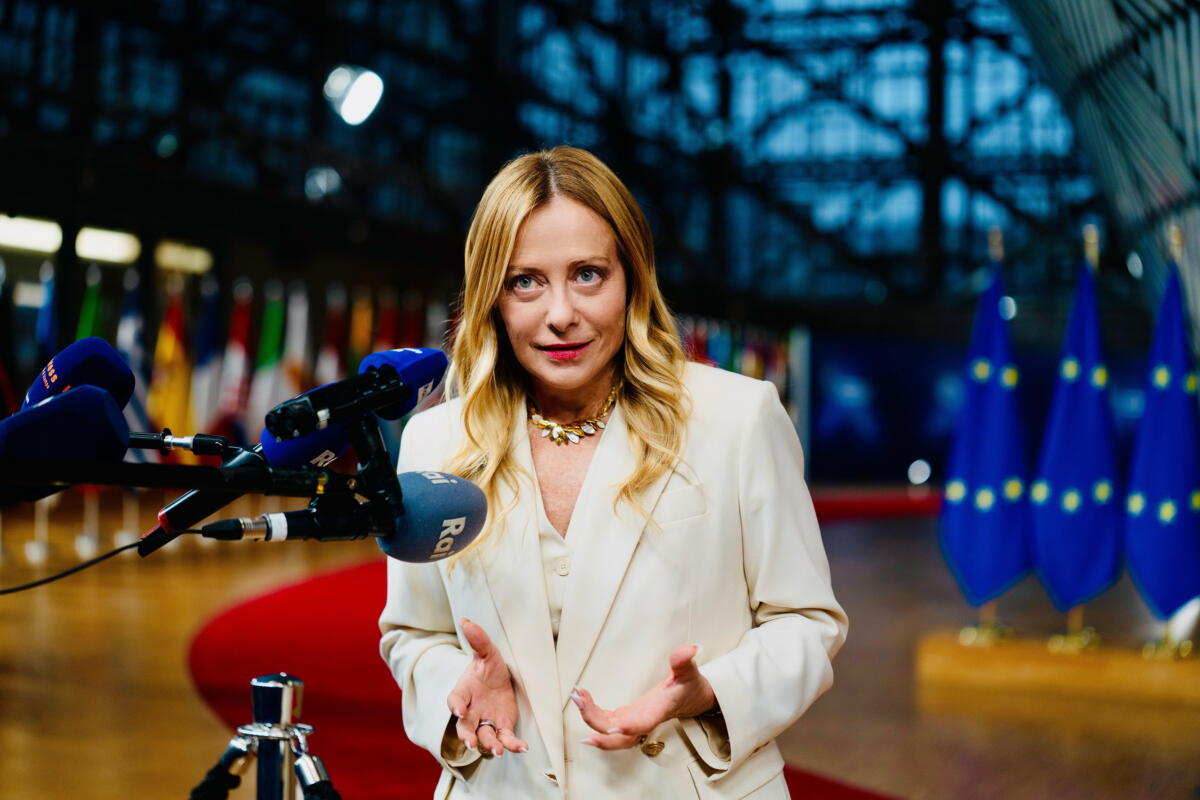
Dario Amodei Visits Brindisi; Meloni Urges Deeper EU Integration
Dario Amodei, the CEO of AI firm Anthropic, visited Brindisi on Saturday highlighting the migration of Italian talent to the United States.
His family’s journey from Tuscany to the global tech sector illustrates the ongoing challenges European nations face in retaining high-skilled innovators within their own borders.
The rise of Anthropic
Anthropic, founded by siblings Dario and Daniela Amodei, has emerged as a major force in artificial intelligence within six years of its inception. The company developed Claude, currently ranked among the most sophisticated artificial intelligence models available globally. La Discussione reported that the firm has reached a record valuation, securing a prominent position in the international technology market.
The family’s connection to Italy remains strong. Riccardo Amodei, the father of the company’s founders, was born in Massa Marittima, Tuscany, in 1950, according to La Discussione. A leather artisan by trade, he eventually emigrated to the United States.
His children’s professional success in the American technology sector is now viewed as both a personal achievement and a symbol of the broader European struggle to provide comparable opportunities for its own citizens.
The challenge of European innovation
The success of the Amodei siblings shows why European ecosystems often fail to cultivate and retain top-tier talent. This issue extends beyond simple funding gaps. It involves a complex interplay of industrial policy, organizational structure, and the ability to foster long-term technological vision.
Strategic sectors—including artificial intelligence, scientific research, and digital infrastructure—remain difficult to manage through the current framework of slow, often fragmented European cooperation. When talented individuals find the conditions for success in the United States rather than at home, it creates a systemic challenge for the continent’s future competitiveness.
Nationalism and the risk of irrelevance
Europe’s ability to act as a unified power is frequently hindered by internal nationalistic rivalries. The competing interests of major powers like France and Germany often weaken the collective influence of the European Union.
In a world defined by competition among the United States, China, and Russia, a continent that cannot speak with a single voice on defense, foreign policy, and innovation risks becoming a mere market rather than a geopolitical player.
Italian Prime Minister Giorgia Meloni has argued for a shift in this dynamic. She advocates for an approach where individual states maintain their identities while pursuing deeper integration to address global challenges. Her administration has focused on building partnerships in Africa and the Arab world, as well as coordinating on energy and security, to foster a more assertive European stance on the world stage.
Investing in a common future
To remain relevant, Europe must move beyond rhetorical support for unity. Experts and policymakers identify several critical areas for reform, including the integration of capital markets and the reduction of bureaucratic hurdles for startups. Building industrial supply chains that span the continent is essential for maintaining a footprint in high-technology fields.
The need for a supportive environment for entrepreneurs and researchers is urgent. When domestic conditions do not favor growth, the loss of talent becomes a drain on regional economies. Addressing this requires a commitment to investing in youth, research, and collaborative networks between universities and the private sector.
Dario Amodei, born in 1983, built a foundation in the sciences long before his rise in the technology sector. He earned a doctorate in biophysics from Princeton University and previously served as the vice president of research at OpenAI, where he contributed to the development of GPT-2 and GPT-3. His expertise in machine learning was further honed through research roles at Google Brain and Baidu.
Beyond his technical background, Amodei has gained significant recognition for his influence in the field. Time magazine named him one of the world’s 100 most influential people in both 2025 and 2026. Today, he remains a central figure in the industry, having declined opportunities to lead other major AI organizations to focus on the development of Anthropic.
The current technological revolution presents a test for European leadership. The path forward involves moving past national resistances to build a cohesive, authoritative vision. This remains a central issue for the future of both Italy and the wider continent, as the window to shape the next decade of digital development begins to close.