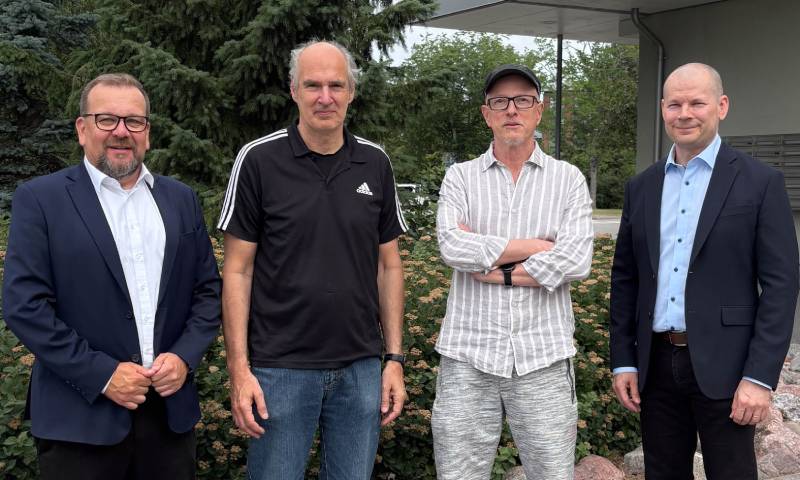
Dacke Industri Electromen Acquisition Adds Finnish Motion-Control Electronics
Dacke Industri, a Swedish industrial group, has finalized the acquisition of Electromen, a Finnish specialist in intelligent electronics and motor-control solutions. The move integrates Electromen’s engineering expertise into Dacke Industri’s Air and Mechatronics division, aiming to bolster the company’s capabilities in precision motion control and automated industrial systems across Northern Europe.
Strategic Integration of Finnish Motion-Control Expertise
The acquisition, effective as of July 2026, marks a significant expansion for Dacke Industri. By folding Electromen into its existing Air and Mechatronics business unit, the parent company gains direct access to proprietary motor-control technology, which is increasingly critical for modern industrial automation. Electromen, headquartered in Finland, has long been recognized for developing high-performance electronic components used in factory robotics, medical devices, and specialized machinery.

For Dacke Industri, this is not merely a purchase of assets; it is a consolidation of engineering talent. As industrial processes become more reliant on decentralized, intelligent motor control, the demand for modular, programmable hardware has spiked. Industry analysts note that firms capable of integrating “smart” electronics into legacy pneumatic and mechanical systems are currently at a distinct competitive advantage in the European market.
The Technical Shift in Industrial Automation
Modern industrial operations face a persistent challenge: the complexity of synchronizing legacy mechanical hardware with digital control interfaces. Electromen’s product line, which includes specialized motor drivers and control interfaces, bridges this gap. This acquisition allows Dacke Industri to offer a more unified product ecosystem, reducing the need for clients to source hardware and control logic from disparate vendors.

For facility managers and procurement officers overseeing large-scale automation projects, managing the integration of these sophisticated systems often requires specialized oversight. Organizations struggling with the complexity of transitioning to high-intelligence control systems are frequently seeking support from Industrial Automation Consultants to ensure that new hardware meets regional safety and efficiency standards.
Regional Economic Impact and Market Positioning
The consolidation of Finnish engineering expertise into a Swedish parent company reflects a broader trend of Nordic industrial integration. Finland has historically maintained a strong reputation for high-precision electronics, while Sweden has focused heavily on large-scale manufacturing and industrial supply chains. By combining these, Dacke Industri is positioning itself to capture a larger share of the European market for “Industry 4.0” hardware.

However, cross-border acquisitions of this nature often trigger complex regulatory and legal requirements regarding intellectual property (IP) migration and labor laws. According to the European Foundation for the Improvement of Living and Working Conditions, the success of such mergers often hinges on the retention of local engineering talent and the seamless alignment of corporate governance structures.
Legal experts observe that the transfer of sensitive technical patents and electronic design files across international borders requires meticulous documentation. Companies engaged in such high-stakes mergers often rely on International Corporate Law Firms to navigate the jurisdictional hurdles that accompany cross-border asset transfers.
Addressing the Challenges of Scaled Automation
The integration of Electromen into the Dacke Industri portfolio is expected to accelerate development timelines for custom motor-control projects. Yet, scaling these technologies into existing infrastructure presents its own set of risks. If the hardware is not properly calibrated for regional energy grids or local safety regulations, the result can be significant operational downtime.
To mitigate these risks, firms are increasingly turning to third-party verification services. Engaging Industrial Compliance Auditors is now a standard procedure for companies that must guarantee their new electronic systems comply with local municipal and environmental mandates. These audits ensure that the transition to new control hardware does not inadvertently violate regional electrical codes or safety protocols.
Looking Ahead: The Future of Mechatronics
As of July 4, 2026, the industrial sector remains in a state of rapid transformation. The ability to control motion with high precision is the cornerstone of the next phase of manufacturing, where robotics and AI-driven processes dictate efficiency. The Dacke Industri-Electromen deal is a concrete indicator that the market is favoring entities that control the entire stack—from the pneumatic air systems to the intelligent electronic brain that manages them.
The long-term success of this acquisition will be measured by how effectively Dacke Industri can scale Electromen’s Finnish-engineered solutions to its global customer base. For the manufacturers currently evaluating their own automation roadmaps, the lesson is clear: the technology is only as reliable as the integration strategy. Whether upgrading existing lines or building new facilities from the ground up, the complexity of modern mechatronics requires a disciplined approach to vendor selection and technical oversight. Those who fail to integrate their systems with precision may find themselves lagging behind the rapid pace of an increasingly automated global economy.