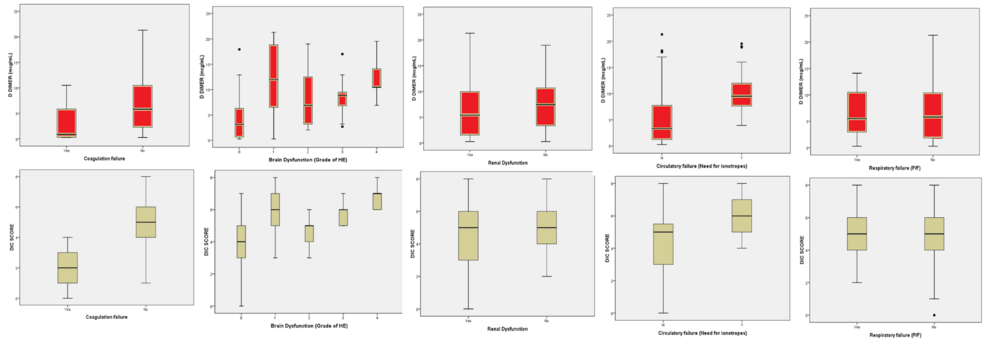
D-Dimer and DIC Score as Prognostic Markers for Acute-on-Chronic Liver Failure Mortality
Acute-on-chronic liver failure (ACLF) presents a diagnostic challenge in intensive care settings, where coagulopathy often obscures the underlying risk of mortality. Recent clinical research, including a study published in Cureus, confirms that utilizing the D-dimer level alongside the Disseminated Intravascular Coagulation (DIC) score serves as a prognostic marker for 28-day mortality in these patients. This diagnostic approach allows clinicians to stratify risk more effectively than standard assessments alone, addressing a gap in the management of cirrhotic patients admitted to the medical intensive care unit (ICU).
- The DIC score is a predictor of 28-day mortality in critically ill patients diagnosed with liver cirrhosis.
- Overt DIC, defined by a DIC score of 5 or higher, is associated with a higher mortality rate compared to patients with lower scores.
- Integrating D-dimer levels into routine ICU admission protocols provides an assessment of hemostatic disturbances and patient prognosis.
The Pathophysiological Context of DIC in Cirrhosis
Liver cirrhosis alters the body’s coagulation profile. According to data published in ncbi.nlm.nih.gov, researchers analyzed 150 ICU admissions for liver cirrhosis to determine if the DIC score could function as an effective prognostic instrument in this specific population. The study, which included patients with a median age of 56, found that 65% of admissions met the criteria for overt DIC upon entry.
The biological mechanism centers on the liver’s role in synthesizing clotting factors and clearing activated coagulation factors. By calculating a DIC score—which incorporates platelet counts, prothrombin index, fibrinogen levels, and D-dimer concentrations—physicians can quantify this systemic dysregulation.
Clinical Accuracy and Mortality Prediction
The prognostic utility of the DIC score is supported by statistical evidence showing a divergence in outcomes. Research corroborated by the National Center for Biotechnology Information (NCBI) indicates that non-survivors exhibit higher median DIC scores (5) compared to survivors (4). The Area Under the Receiver Operating Characteristic (AUROC) curve for the DIC score in predicting 28-day mortality stands at 0.68. Most notably, patients presenting with overt DIC upon admission face a 70% mortality rate, whereas those with a score below 5 experience a 40% mortality rate.
When a patient’s D-dimer levels spike, it serves as a biochemical red flag for accelerated fibrinolysis and thrombin generation.
Integration into Modern ICU Protocols
The transition from abstract research to bedside application requires a systematic approach to data collection. The study published in Cureus underscores that the D-dimer/DIC scoring system is a practical bedside utility.
Clinicians managing ACLF patients must balance the risk of hemorrhage against the risk of microvascular thrombosis. Given the mortality associated with overt DIC in cirrhosis, early intervention is the primary objective.
Future Trajectories in Prognostic Medicine
Disclaimer: The information provided in this article is for educational and scientific communication purposes only and does not constitute medical advice. Always consult with a qualified healthcare provider regarding any medical condition, diagnosis, or treatment plan.