
Exercise Reshapes Brain Signals in Parkinson’s Patients
Study Reveals Neural Reactivation Through Adaptive Cycling
Groundbreaking research offers new hope for Parkinson’s disease (PD) management, pinpointing how consistent exercise can measurably alter brain activity. A recent study utilized deep brain stimulation (DBS) implants to capture real-time neural data, directly linking motor improvements to potential network-level brain changes.
Unlocking the Brain’s Response to Exercise
For years, scientists have observed that exercise offers relief from Parkinson’s motor symptoms, such as tremors, but the precise mechanisms remained elusive. This new investigation, conducted at University Hospitals Cleveland Medical Center and the VA Northeast Ohio Healthcare System, provides crucial insights by examining how long-term dynamic exercise programs might be reactivating neural pathways damaged by the disease.
Researchers employed advanced second-generation DBS devices to record brain signals before and after participants engaged in 12 sessions of adaptive cycling over a four-week period. The study, published in the June 2025 issue of *Clinical Neurophysiology*, aimed to decode these brain changes specifically in relation to motor symptom relief.
Adaptive Cycling Sparks Neural Rewiring
While participants did not show immediate changes in brain signals, the study found significant alterations by the conclusion of the 12-session program. These modifications occurred in brain regions responsible for motor control and movement, suggesting that exercise may be inducing broader network-level changes, potentially restoring connections disrupted by Parkinson’s.
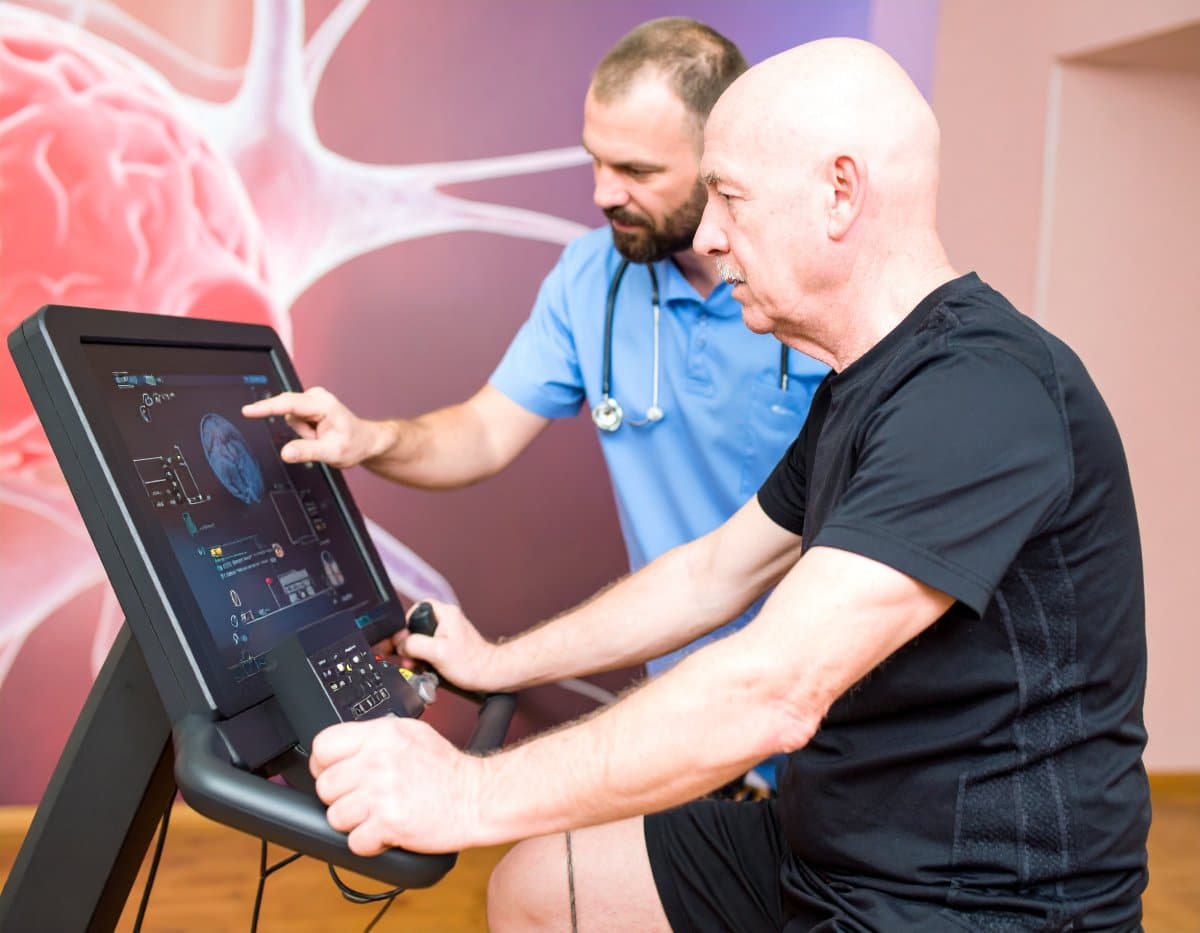
The adaptive cycling regimen was a key component, with smart bikes adjusting resistance in real time to optimize patient engagement and benefits. Riders were instructed to maintain a specific cadence, visualized through an on-screen game. The bike’s technology provided assistance while dynamically altering resistance, a push-and-pull mechanism believed to be particularly effective for PD symptoms.
“We’ve already established over years of study that dynamic cycling regimens are beneficial for treating Parkinson’s tremor,” said Dr. Aasef Shaikh. “The latest study adds the use of deep brain stimulation and an ongoing exercise program to visualize how long-term exercise might be rewiring neural connections in the brain.”
—Dr. Aasef Shaikh, Vice Chair for Research at University Hospitals and Professor of Neurology
Dr. Aasef Shaikh, the lead researcher, highlighted the collaborative effort between University Hospitals and the VA system for enabling a larger participant pool. The study’s funding included a VA Merit Award and contributions to the Department of Neurology at University Hospitals. Key contributors also included PhD candidate Prajakta Joshi and Kent State University PhD candidate Lara Shigo.
Network-Level Changes Hint at Broader Brain Rewiring
The research focused on local field potentials (LFPs) recorded from the subthalamic nucleus (STN) via DBS electrodes. While immediate LFP changes were insignificant, long-term effects demonstrated an increasing trend in power and a measure of signal fluctuation in the dorsolateral region of the STN. The ventral region of the STN did not exhibit a significant response.
Prajakta Joshi explained that while DBS systems provide a valuable view into brain activity, they are limited to the immediate vicinity of the electrodes. This suggests that other brain areas, not directly monitored, might also be influenced by exercise. “There may be a broader circuit involved,” Joshi noted. “Numerous upstream and downstream pathways could be influenced by exercise, and it’s possible that we’re inducing a network-level change that drives the improvement in motor symptoms.”
This promising research could pave the way for more personalized and effective treatments for PD. A study published in the *Journal of Parkinson’s Disease* in 2023 found that participants in a 12-week exercise program reported significant improvements in quality of life and motor function (Source: PubMed Central, 2023).
Patient Experiences Validate Findings
Participants like Amanda “Mandy” Ensman, who has lived with PD for 12 years, reported tangible benefits. “Biking helped me with a variety of symptoms I was struggling with, including my gait, walking and increased my energy levels,” Ensman shared, emphasizing the crucial role of exercise in her management plan.
The findings suggest that prolonged exercise interventions, even those without immediate neurological effects, can lead to substantial modifications in the brain, underscoring the importance of consistent physical activity for neuroplasticity and Parkinson’s management.
