
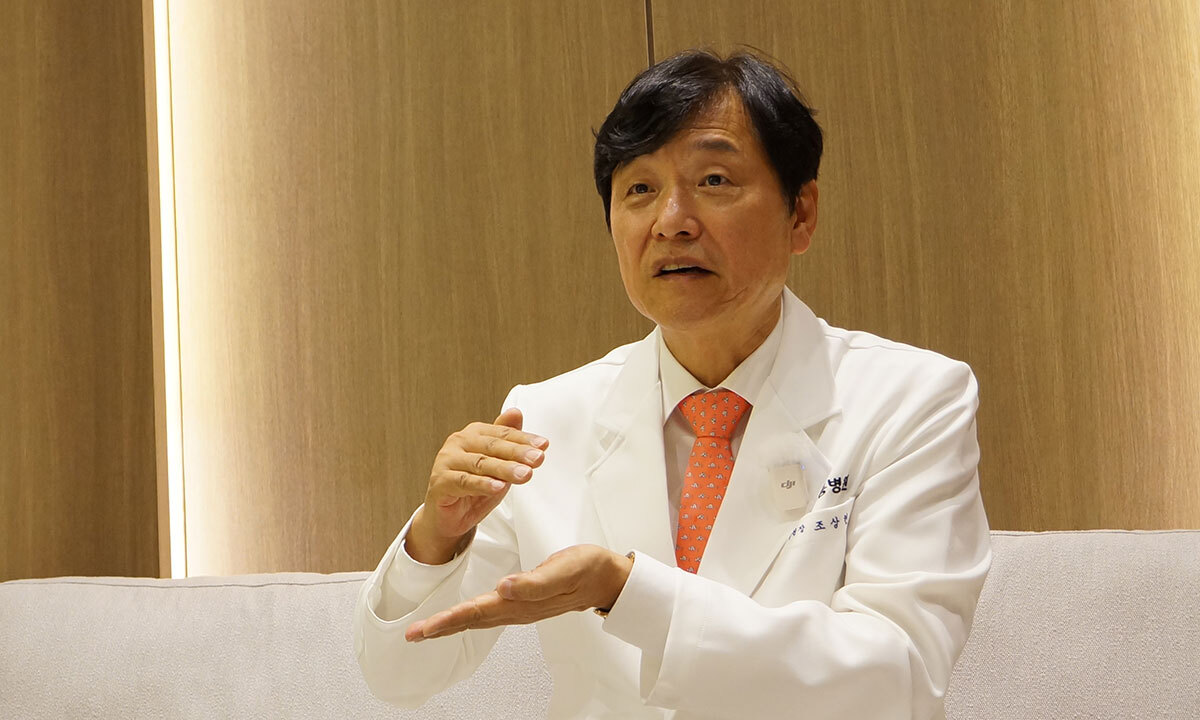
Personalized Health Screenings: A Shift Away From “One-Size-Fits-All” checkups
seoul, South Korea – A leading physician is advocating for a basic change in how health checkups are conducted, moving away from standardized packages and towards highly personalized screening programs. Dr. Cho Sang-heon, Director of Guangdong Hospital and Honorary Professor of Respiratory Allergy Medicine, argues that current practices often miss critical early detection opportunities, leading to delayed diagnoses and poorer patient outcomes.
For years, many individuals have routinely undergone the same annual health checkup, often driven by price rather than individual risk factors. This approach, Dr. Cho contends, is fundamentally flawed. “Mechanically repeating the same package items every year doesn’t allow for the identification of disease, and disease can develop undetected,” he explained in a recent interview. He observed this firsthand during his 13 years heading the Gangnam Center at Seoul National University Hospital, where patients would often present with conditions that could have been caught earlier with a more tailored approach.
The core of Dr.Cho’s proposed solution is a “circular program” – a custom checkup designed around an individual’s unique profile. This includes a thorough assessment of family history, lifestyle, environmental factors, and any pre-existing conditions. Instead of a blanket set of tests, the program prioritizes high-risk areas, potentially reducing the frequency of tests with lower individual relevance and increasing the focus on those most critical for early detection.
Such as,while colonoscopies are generally recommended starting at age 40,someone with a family history of colorectal cancer might benefit from screening in their late 20s. Similarly, smokers wouldn’t be limited to lung cancer screening, but would have their overall cancer risk assessed considering the impact of cigarette smoke.
this personalized approach acknowledges the probabilistic nature of health screenings. “Health checkups are a game of probability,” Dr. Cho stated.”There’s always a chance a condition can develop even after a clean bill of health.” The emphasis, thus, shifts to evaluation – a comprehensive analysis of individual risk factors that requires investment in program counseling, nurse education, and detailed test result interpretation.
Dr. Cho notes that this level of personalization frequently enough comes at a cost. University hospital screenings tend to be expensive, while lower-cost options typically offer uniform programs lacking the necessary individual assessment. He stresses that the true value of a health checkup lies not just in running the tests, but in the thorough analysis and follow-up care.
To facilitate this, Guangdong Hospital has established specialized centers focusing on areas like asthma and allergies, dementia prevention, dizziness, and integrated Oriental medicine, allowing for comprehensive management of identified risks. The goal is to detect conditions like diabetes and dementia at an early, “full stage” where effective treatment is possible.
Ultimately, Dr. Cho argues, a health checkup shouldn’t offer a “guaranteed” state of health, but rather a proactive assessment of risk and a roadmap for preventative care.
Key Takeaways:
Personalized Screening: The article highlights a growing movement towards health checkups tailored to individual risk factors.
Family History & Lifestyle: These are crucial components of a comprehensive risk assessment.
Early Detection: The focus is on identifying potential health issues before they become serious.
beyond the Test: The value of a health checkup lies in the thorough evaluation and follow-up care, not just the tests themselves.
* Specialized Centers: Access to specialized medical centers is vital for comprehensive risk management.
