
Cursor refreshes its vibe coding platform with focus on AI agents – SiliconANGLE
Cursor Agents: The End of Syntax or the Start of Supply Chain Chaos?
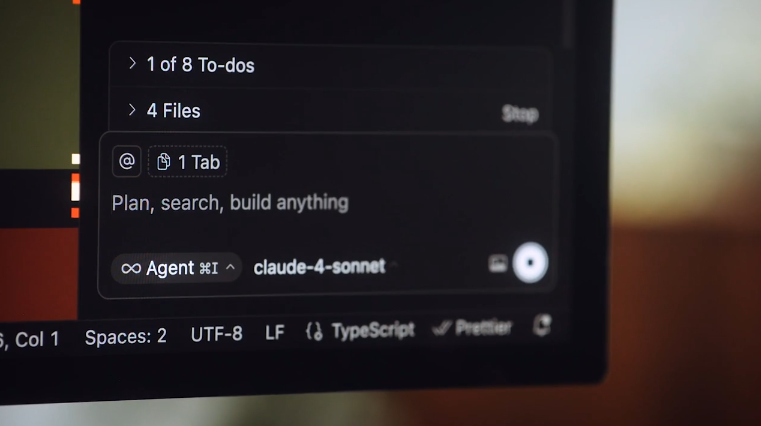
Cursor’s latest update pushes “vibe coding” into the mainstream, promising a future where developers delegate entire modules to autonomous AI agents. While the marketing machine hypes this as a productivity revolution, the architectural reality suggests a massive expansion of the attack surface. We are moving from assisted coding to autonomous execution, and the latency penalties and security implications are being glossed over in the initial press cycle.
- The Tech TL. DR:
- Latency Spike: Multi-agent orchestration introduces significant inference lag compared to single-shot completions, impacting real-time IDE responsiveness.
- Supply Chain Risk: Autonomous dependency installation by agents bypasses traditional human review gates, increasing vulnerability to typosquatting and malicious packages.
- Enterprise Friction: SOC 2 compliance becomes a nightmare without granular audit logs for every agent-generated commit.
The core issue isn’t whether the AI can write a React component; it’s whether the AI understands the security context of the repository it is mutating. When an agent is given “write” access to a production codebase, it effectively becomes a privileged user. This shift forces a re-evaluation of the cybersecurity audit services landscape. Traditional static analysis tools struggle to catch logic bombs hidden in semantically correct but functionally malicious AI-generated code.
Looking at the broader industry, the scramble for talent tells the real story. Major players like Microsoft and Cisco are aggressively hiring for roles like Director of Security | Microsoft AI and Director, AI Security and Research. These aren’t standard DevOps roles; they are specialized positions designed to govern the exact kind of autonomous workflows Cursor is enabling. If the giants are building internal fortresses to manage AI risk, independent development teams using “vibe coding” tools are likely walking into a minefield without a map.
The Architecture of Autonomous Delegation
Cursor’s new agent model operates on a loop of planning, execution, and verification. Unlike standard LLM completions which are stateless, these agents maintain context across multiple file edits. This requires a persistent connection to the model’s context window, often resulting in token usage that scales linearly with task complexity. For enterprise environments, this creates a cost and latency bottleneck. A simple refactor that takes a human ten minutes might trigger hundreds of API calls as the agent “thinks” through the dependency tree.
The security implications here are profound. When an agent decides to install a new package to solve a problem, it is making a supply chain decision. Without strict allow-lists, This represents a vector for compromise. Organizations cannot rely on the tool’s internal safeguards alone. This is where the gap between “shipping features” and “secure deployment” widens. Companies demand to engage cybersecurity risk assessment providers specifically to audit their AI-assisted development pipelines. The scope of cybersecurity audit services must now include the behavior of the coding agents themselves, not just the resulting binary.
“We are seeing a 40% increase in PRs that look perfect but contain subtle logic errors introduced by autonomous agents. The code compiles, the tests pass, but the business logic is drifted. It’s a new class of technical debt.” — Elena Rostova, CTO at FinSecure Labs
Implementation: Configuring Agent Boundaries
Developers adopting this workflow must treat agent permissions with the same rigor as database credentials. You cannot simply enable “full access.” Below is a configuration snippet demonstrating how to restrict agent capabilities within a project root, limiting file system access and prohibiting network calls during the generation phase.

// cursor-agent-config.json { "agent_profile": "senior-dev-restricted", "permissions": { "file_system": { "read": ["src/", "tests/", "docs/"], "write": ["src/components/", "tests/"], "deny": ["config/secrets/", ".env"] }, "network": { "allow_external_calls": false, "package_installation": "require_approval" }, "model_parameters": { "temperature": 0.2, "max_tokens": 4096, "stop_sequences": ["TODO", "HACK"] } }, "audit_log": { "enabled": true, "destination": "splunk-index-main" } } This level of granular control is currently missing from the default “vibe” settings, which prioritize speed over safety. Until these guardrails are default, engineering leaders must manually enforce them.
Tech Stack & Alternatives Matrix
How does Cursor’s agent implementation stack up against the competition in the 2026 landscape? The following matrix compares the architectural approach to autonomous coding.
| Feature | Cursor Agents | GitHub Copilot Workspace | Devin (Cognition) |
|---|---|---|---|
| Execution Model | IDE-Native Loop | Cloud-Based Plan & Run | Full Autonomous VM |
| Context Window | Local Repo + Cloud Index | Cloud Repo Snapshot | Sandboxed Environment |
| Security Posture | Local Execution (Higher Risk) | Managed Cloud (Medium Risk) | Isolated Sandbox (Low Risk) |
| Latency | Low (Streaming) | High (Batch Processing) | Exceptionally High (Task Completion) |
| Best Employ Case | Refactoring & Debugging | Issue Resolution | End-to-End App Build |
Cursor wins on latency and integration, making it experience “magical” to the end user, but this local execution model places the burden of security squarely on the developer’s machine. In contrast, sandboxed solutions like Devin offer better containment but lack the tight feedback loop required for daily iterative function.
The Verdict: Speed vs. Stability
Cursor’s pivot to agents is inevitable, but it premature for unregulated enterprise use. The “vibe” is great for prototyping, but dangerous for production. The industry is reacting; we spot cybersecurity consulting firms beginning to offer specific “AI Code Auditing” packages. This is the necessary counterbalance. You cannot have autonomous code generation without autonomous code verification.
For CTOs, the directive is clear: Enable the tools, but lock down the permissions. Treat every AI agent as a junior developer with root access until proven otherwise. The productivity gains are real, but the technical debt incurred by unchecked AI delegation will compound faster than any human team can repay it.
Disclaimer: The technical analyses and security protocols detailed in this article are for informational purposes only. Always consult with certified IT and cybersecurity professionals before altering enterprise networks or handling sensitive data.