
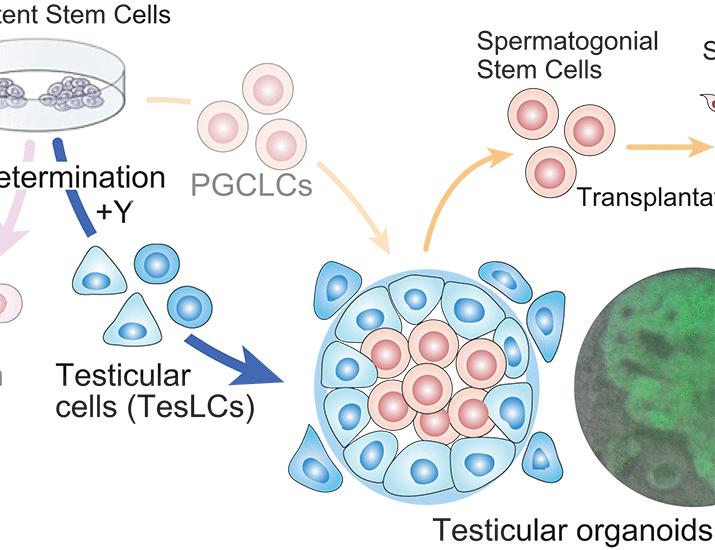
Researchers have achieved a significant milestone in reproductive biology by successfully reconstituting key elements of sex determination and the testicular niche in a laboratory setting. The breakthrough, detailed in recent research, offers a new avenue for understanding the complex processes governing the development of reproductive organs and could potentially lead to advancements in the treatment of infertility and related conditions.
The process of sex determination, and the subsequent development of the testes, relies on the precise differentiation of gonadal somatic cells. These cells play a critical role in supporting sperm production and the secretion of essential hormones, notably testosterone, as outlined in research on gonadal hormones. Until now, fully replicating this intricate process outside of a living organism has proven elusive.
The research builds upon a growing understanding of the regulatory mechanisms governing gonadal somatic cell differentiation in humans. A 2022 study identified and characterized new types of fetal gonadal cells (FGCs) and gonadal somatic cells, verifying their existence through systematic immunofluorescent staining. This detailed analysis of FGC development provides a foundational understanding for attempts at in vitro reconstitution.
According to the published findings, successfully recreating the testicular niche in culture not only deepens scientific understanding of sex determination but also opens the possibility of generating functional testicular tissue. This has implications for both basic research and potential clinical applications, including the development of therapies for men experiencing infertility due to testicular dysfunction.
The testes, the male gonads, are responsible for spermatogenesis – the production of sperm cells – and the secretion of testosterone, which is vital for the development and maintenance of male reproductive structures and secondary sexual characteristics. Disruptions in the development or function of these cells can lead to a range of reproductive health issues.
While the precise methods used to achieve this reconstitution have not been fully disclosed, the implications of this research are far-reaching. Further studies are planned to refine the process and explore its potential for generating viable gametes and hormones in a controlled laboratory environment. The Institute of Zoology, Chinese Academy of Sciences, is a key institution involved in this ongoing research, according to published affiliations of the researchers.
The research team, including Min Chen of Peking University Shenzhen Hospital and Fei Gao of the Institute of Zoology, Chinese Academy of Sciences, has not yet commented on the specific timeline for potential clinical trials or the challenges that remain in translating this laboratory success into practical therapies. The next steps in the research are expected to focus on optimizing the culture conditions and assessing the long-term functionality of the reconstituted testicular tissue.
