
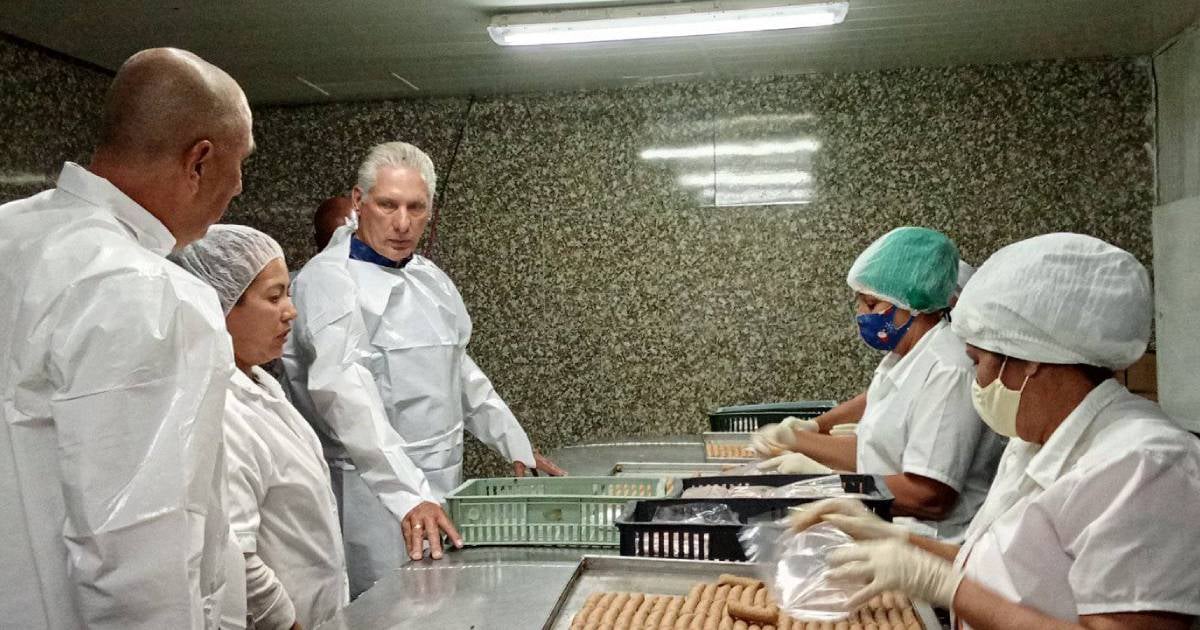
The Ministry of Food Industry (MINAL) is now at the center of a structural shift involving Cuba’s chronic food scarcity. The immediate implication is heightened pressure on domestic price stability and the credibility of state‑led economic reforms.
The Strategic Context
Cuba’s food system has long been constrained by a combination of external dependency, limited domestic agricultural productivity, and a centrally managed rationing network. Over the past decade, the island’s macro‑economic model has moved toward partial dollarization and selective foreign investment too offset fiscal deficits, while still maintaining tight state control over key staples. These structural forces intersect with a global environment of rising commodity prices, supply‑chain disruptions, and shifting geopolitical alignments that limit access to conventional grain and fertilizer sources.
Core Analysis: Incentives & Constraints
Source Signals: MINAL proposes a “development of nutritious foods” as a concrete contribution to economic recovery. The ministry argues that increased entrepreneurial output would boost sales, income, and price stabilization. Production shortfalls are attributed to deficits in national and imported raw materials. The report highlights untapped aquaculture potential in over 100,000 hectares of reservoirs and suggests that non‑state actors could import inputs to lower costs, though ”brakes” in supply chains persist. It also cites foreign investment attraction and partial dollarization as opportunities, while noting quality‑management challenges, crime, and poor product quality. Recent provincial reports describe empty tables despite “food sovereignty” claims, technical limitations in bread distribution, and a widening gap between household income and food costs.
WTN Interpretation: The ministry’s emphasis on nutritious‑food development reflects a strategic pivot to diversify the food basket away from traditional staples that are most vulnerable to import shocks. By encouraging private‑sector participation, MINAL seeks to leverage limited state resources while signaling openness to foreign capital, a move intended to secure hard currency inflows and mitigate fiscal strain. The reference to aquaculture and reservoir use indicates an attempt to exploit underutilized natural assets to create a semi‑self‑sufficient protein source, reducing exposure to volatile grain markets.However, persistent raw‑material shortages and “subjective” managerial bottlenecks reveal deep structural constraints: limited foreign exchange, aging infrastructure, and a regulatory environment that still penalizes rapid private scaling. The dual narrative of attracting investment while maintaining state control creates a credibility dilemma that could affect both domestic confidence and external investor risk assessments.
WTN Strategic Insight
“Cuba’s turn toward selective private participation in food production mirrors a broader pattern where constrained economies use limited market liberalization to extract hard currency while preserving political control.”
Future Outlook: Scenario Paths & Key Indicators
Baseline Path: If raw‑material import channels remain partially functional, private processors expand modestly, and the government sustains its partial dollarization policy, Cuba will achieve incremental improvements in protein availability and modest price stabilization. State‑run staples will continue to experiance periodic shortages, but overall social unrest will stay contained.
risk Path: If foreign‑exchange constraints tighten,import bottlenecks worsen,or regulatory friction curtails private sector scaling,the food‑supply gap will widen,prompting sharper price spikes and potential public discontent. In that environment, the government may resort to stricter rationing or accelerated state‑led production drives, increasing fiscal pressure.
- Indicator 1: Monthly import volume of key raw materials (wheat, soy, vegetable oil) as reported by customs data.
- Indicator 2: Number of new foreign‑investment approvals in the food‑processing sector announced by the Ministry of Economy and Planning.
- Indicator 3: Quarterly price index for regulated staples (bread,rice,milk) published by the National Statistics Office.
