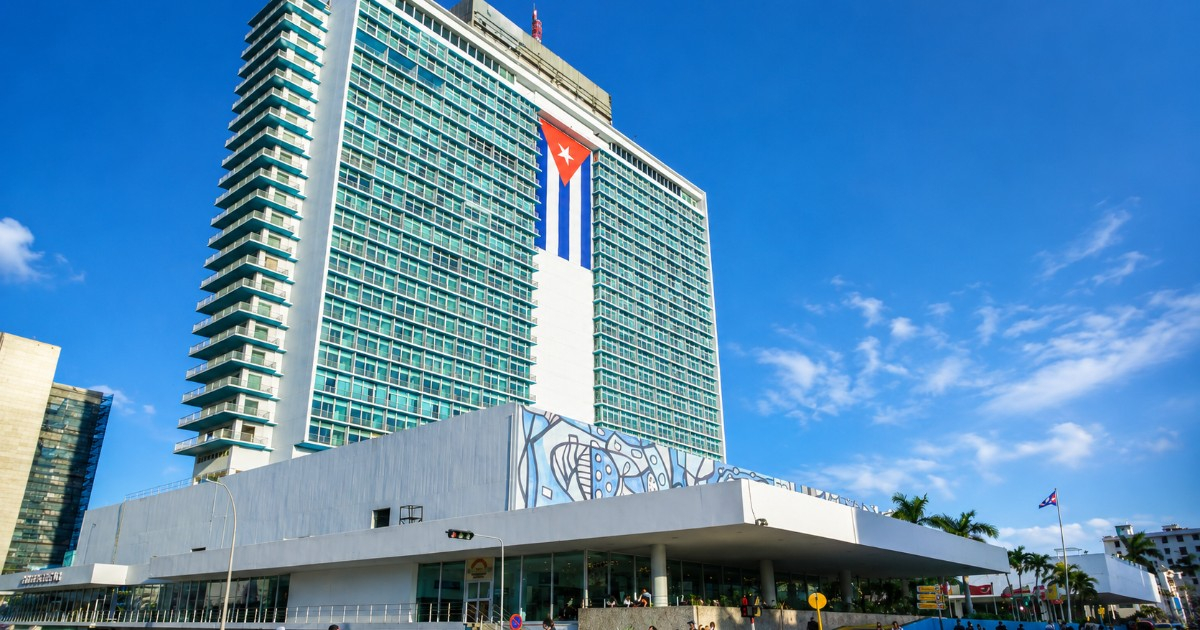
Cuban Presenter Surprised by Habana Libre Hotel Directive
Cuban journalist Alejandro Rodríguez Cuervo has highlighted a growing trend of “dollarization” in Cuba’s tourism sector after being required to pay in US dollars for coffee at the Hotel Habana Libre, reflecting a broader systemic shift toward hard-currency requirements across state-run hospitality facilities to stabilize foreign exchange reserves.
This is not a localized hospitality glitch; This proves a macroeconomic distress signal. When a state begins requiring hard currency for basic commodities—even within its own borders and for its own citizens—it signals a profound lack of confidence in the national currency. For the global observer, the “coffee crisis” at the Habana Libre is a window into the escalating friction between Cuba’s socialist economic framework and the brutal reality of foreign exchange (FX) scarcity.
The incident, reported by Rodríguez Cuervo, reveals that the Hotel Habana Libre has implemented a “restructuring of prices” that effectively excludes those without access to US dollars. The communicator’s frustration was palpable, noting the irony that “The Habana Libre is not free in any sense, not even in its name.” This sentiment is echoing across the island, as similar mandates have emerged at the Hotel Copacabana, the Capri Hotel, and the Meliá Habana—specifically within cafeterias, restaurants, and pizzerias. Even the Pinar del Río Hotel has reportedly promoted events, such as a Mother’s Day dinner, exclusively in US dollars.
The Mechanics of Forced Dollarization
In geopolitical terms, “dollarization” occurs when a country abandons its own currency in favor of a more stable foreign currency, typically the US dollar. While some nations do this formally, Cuba is experiencing a fragmented, “de facto” dollarization. By carving out tourism zones—the hotels and high-end eateries—as dollar-only enclaves, the state is attempting to capture every possible cent of hard currency from international visitors and the few locals with access to remittances.
This creates a bifurcated economy: a “hard” economy for tourists and the elite, and a “soft” economy for the general population. This divide is not merely social; it is a logistical nightmare for international firms. Companies attempting to navigate this landscape often find that official exchange rates are irrelevant, forced instead to operate in a grey market of currency valuation.

- FX Capture: The state prioritizes hard currency to pay for essential imports (fuel, medicine) that cannot be purchased with the Cuban peso.
- Inflationary Pressure: By restricting the use of the local currency in high-value sectors, the state inadvertently accelerates the devaluation of the peso.
- Social Stratification: The requirement to pay in dollars for a glass of water—as reported by a customer at the Hotel Copacabana—creates a visible class divide based on currency access.
For multinational corporations and investors, this volatility necessitates a sophisticated approach to risk. Firms operating in the Caribbean basin are increasingly relying on political risk consultants to assess whether these currency shifts signal a total economic pivot or a temporary survival tactic by the state.
Macro-Market Implications and FDI
The shift toward dollar-only services in state hotels impacts Foreign Direct Investment (FDI) by introducing extreme unpredictability. When the rules of payment change “with remarkable ease,” as Rodríguez Cuervo described, the legal framework for business contracts becomes unstable. International hotel operators, such as Meliá, must balance their corporate standards with the directives of a state partner that may suddenly mandate currency restrictions.
This instability ripples through the broader World Bank metrics for regional stability. A state that cannot provide basic services in its own currency is a state facing a liquidity crisis. From a macro perspective, this is a desperate attempt to plug holes in a leaking treasury.
“When a regime begins to enforce hard-currency payments for basic amenities in state-owned enterprises, it is an admission that the national currency has lost its function as a reliable store of value. This is the precursor to systemic monetary instability.”
As these currency barriers harden, the need for specialized FX strategists becomes critical. Global firms must decide whether to hedge their assets or exit the market entirely to avoid being trapped in a currency that is effectively being phased out of the high-value economy.
The Transnational Ripple Effect
Cuba’s struggle with currency is not an isolated event but part of a larger trend in emerging markets facing high debt and sanctions. The “restructuring of prices” mentioned by hotel staff is a euphemism for economic triage. By ensuring that the tourism sector generates US dollars, the government can maintain a thin layer of stability in other critical sectors, even as the average citizen is priced out of their own luxury hotels.
The geopolitical fallout involves a shifting reliance on foreign partners. As the US dollar becomes the only viable medium of exchange in the tourism sector, the state becomes more dependent on the flow of foreign tourists and the stability of the International Monetary Fund’s broader views on currency stabilization in the Caribbean. The tension is evident: the state needs the dollar to survive, but the reliance on the dollar undermines the socialist premise of the economy.
For the legal departments of transnational firms, this environment requires constant vigilance. The intersection of local mandates and international trade law is a minefield, often requiring the intervention of international trade lawyers to ensure that payment structures do not violate sanctions or internal corporate compliance policies.
The Global Chessboard
The “surprise” encountered by Alejandro Rodríguez Cuervo is a microcosm of a larger global trend: the weaponization and desperation surrounding hard currency. In a world of fluctuating alliances and economic warfare, the ability to command US dollars is the ultimate form of soft power. In Cuba, that power is being concentrated in the hands of those who manage the tourism gateways, leaving the local population to navigate a landscape where their own money is insufficient for a cup of coffee.
This evolution suggests that Cuba is moving toward a hybrid economic model—one that maintains socialist rhetoric while practicing a ruthless, pragmatic dollarization of its most profitable assets. For the global business community, the lesson is clear: in volatile markets, the official currency is often a fiction, and the real economy operates in the currency of the strongest power.
As the geopolitical landscape continues to shift and currency volatility becomes the new norm in emerging markets, navigating these waters requires more than just intuition—it requires elite expertise. Whether you are restructuring supply chains in the face of monetary collapse or seeking to protect assets in high-risk jurisdictions, the World Today News Directory connects you with the global financial and legal partners essential for surviving the next macroeconomic shock.