
Cuba Military Readiness: US Intervention Risks & Potential Outcomes
Cuba Prepares for Potential U.S. Military Action as Tensions Escalate
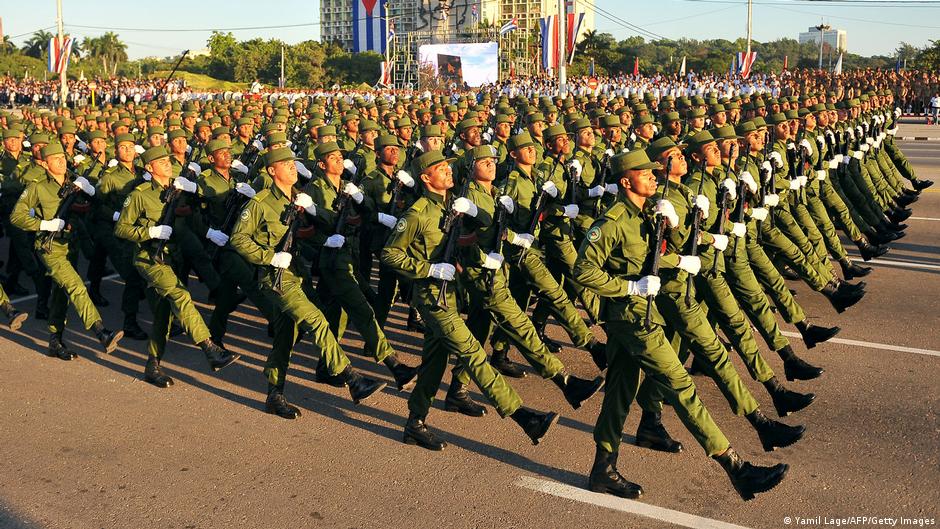
Cuban Deputy Foreign Minister Carlos Fernández de Cossío stated on March 22, 2026, that the Cuban military “is always prepared, and in fact It’s preparing these days for the possibility of military aggression,” according to reports. The statement comes amid heightened tensions with the United States and increasing pressure from the Trump administration on the Cuban government.
Just days prior, Cuban President Miguel Díaz-Canel vowed “impregnable resistance” to any external aggression, signaling a firm stance against potential intervention. These declarations from high-ranking Cuban officials are occurring as the country grapples with a severe energy crisis and deepening economic hardship.
The question remains whether Havana is attempting to rally patriotic sentiment in the face of a possible U.S. Intervention, or if the rhetoric is merely a byproduct of ongoing negotiations between the governments of Donald Trump and Miguel Díaz-Canel.
Is Military Intervention Likely?
“A military confrontation seems unlikely,” according to Bert Hoffmann, a principal investigator at the German Institute for Global and Regional Studies (GIGA). “The United States is betting on a policy of strangulation, blocking all access of Cuba to oil. It is a cynical strategy, deliberately creating an emergency situation for the people in Cuba.”
Daniel Pedreira, a visiting assistant professor in the Department of Politics and International Relations at Florida International University (FIU), also believes a North American intervention is not very probable. “Cuba has very limited military defense capabilities,” he stated, adding that the United States “has a great advantage in terms of weaponry, personnel, technology, military and intelligence tactics. This would allow any U.S. Intervention to be carried out strategically and surgically.”
However, Sebastián Arcos, interim director of the Cuban Studies Institute at FIU, suggests the possibility of military conflict is “high, given that the United States seeks a regime change and the regime resists ceding power. These are two opposing and conflicting positions, which may complete with a military action by the United States.”
A Swift Victory for the U.S.?
Experts consulted agree that Cuba’s defense capabilities are not comparable to the power of the U.S. Armed Forces, but they differ on the duration and development of a potential conflict. Sebastián Arcos, a Cuban policy and human rights expert, observed that “Cuba possesses limited and obsolete weaponry, a demoralized and poorly trained army, and is ill-prepared for a military confrontation with the United States.” He added that, given the unpopularity of the regime, “Cuban soldiers are very likely to offer little resistance.”
Arcos believes a conflict would be “a modern war at a distance, without landing troops on the island.” However, he also noted that the current war between Israel and the United States in Iran has demonstrated that “it is very difficult to overthrow a regime without landing troops.”
Daniel DePetris, a researcher at the American think tank Defense Priorities, points out that “the Cuban defense budget is a shadow of what it was during the Cold War; its Air Force is, likewise, lamentable, and operates at the limit of its capabilities.”
In his opinion, “defeating the Cuban army would not be the problem.” “The real challenge would be to pacify a country of 11 million inhabitants—amid insurgent resistance—while trying to mitigate a refugee crisis that could overwhelm the coasts of the United States.”
The Importance of Guantánamo
DePetris also highlights the importance of Guantánamo Bay “as a central node in any U.S. Military scenario.” “The base is already one of Washington’s most essential in the Caribbean region, serving as a fundamental logistical site for the U.S. Navy. However, the base itself is old, deteriorated, and notorious for the poor state of its infrastructure, as openly admitted by the U.S. Southern Command.”
In the event of a military conflict with the Cuban government, reinforcing security around Guantánamo would be inevitable, DePetris stated.
German academic Bert Hoffmann, holding a doctorate in Political Science, does not rule out a swift military victory for the Trump administration initially. However, he insists that “the costs of a military occupation could be high afterward.”
As long as Washington rules out a land incursion on the island, Hoffmann explained, “it needs the current state apparatus and security forces to maintain stability in the country. That would give some negotiating capacity to the government in Havana.”