Cuba Eases Foreign Investment Rules To Boost Economy Amid US Sanctions
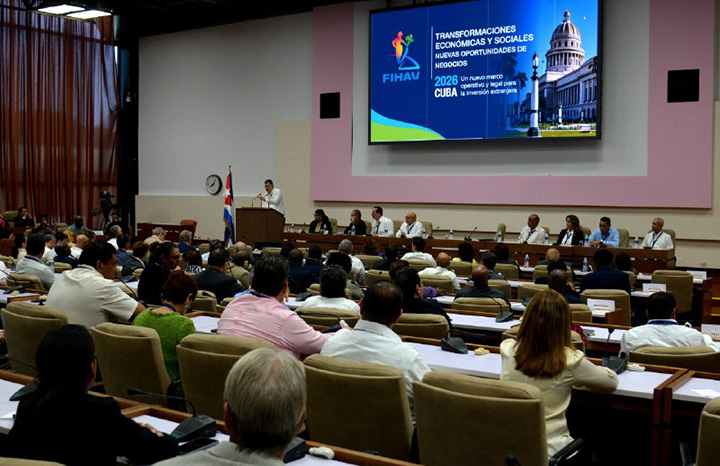
La Habana, 26 nov.- Cuba has opened its doors to foreign investment as part of 176 economic and social reforms aimed at boosting its economy amidst U.S. sanctions, with the government simplifying bureaucratic hurdles and promoting flexible business models.
According to Minister of Foreign Trade and Foreign Investment Oscar Pérez-Oliva, these reforms have already led to 28 companies hiring personnel directly, eliminating the mandatory use of state employment agencies.
The changes, detailed during the third day of the 42nd Havana International Fair, also aim to stimulate exports and reduce the cost of raw materials by allowing all economic actors, both state and private, to access foreign trade on equal terms.
Pérez-Oliva Fraga explained that the new legal framework is designed to reduce bureaucracy and accelerate processes for a better business environment, opening opportunities in sectors like tourism, real estate, heritage zones, commerce, and food industry, among others.
The measures also include novel banking policies for foreign investment, which allow for better currency management, including the opening of bank accounts abroad, and facilitate linkages with producers.
“These new legal norms reduce bureaucracy and streamline processes,” Pérez-Oliva Fraga said, emphasizing that the reforms are based on a legal framework for development that bets on foreign investment as a fundamental component of the country’s economic and social progress. These changes are grounded in Resolution 126 of the Ministry of Foreign Trade and Foreign Investment.
Oscar Pérez-Oliva Fraga has held the role of Minister of Foreign Trade and Foreign Investment since May 2024, having previously served as Deputy Minister and First Deputy Minister in the same ministry. Prior to this, he headed the Maquimport Company, a key State importer, and later led the Business Evaluation Directorate in the Mariel Special Development Zone, demonstrating a career-long focus on Cuba’s trade and economic structures.
The minister also highlighted the possibility of foreign companies associating with the private and cooperative sectors, a measure approved in October as part of the reforms.
“Foreign investment is repositioning itself with more flexible schemes and is betting on consolidating new alliances, including in the technological sphere and renewable energies,” Pérez-Oliva said, noting that these sectors are prioritized due to the current energy situation, which has led to prolonged daily blackouts.
The Havana government is immersed in analyses to promulgate a new foreign investment law, aiming for a more agile, transparent regulatory framework that offers greater guarantees and legal security to investors. This was part of the announcement during the virtual Havana International Fair, which included a one in-person event on November 26 featuring an investment forum to present an updated Business Opportunities Portfolio, with the participation of national and foreign entrepreneurs, diplomats, and Cuban business residents abroad. It is not yet known when the new foreign investment law will be finalized.