
Crypto Survives AI Threat: Kraken-Backed SPAC Eyes $2B+ Deals
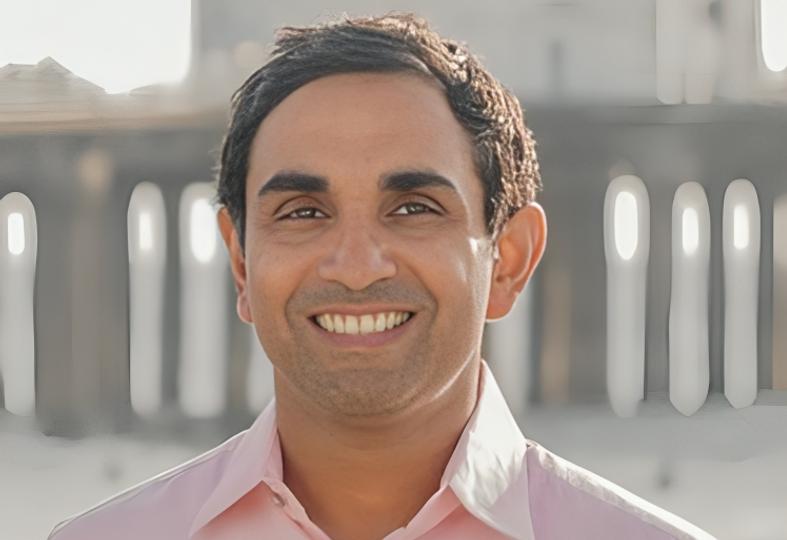
Ravi Tanuku, CEO of Kraken-backed SPAC KRAKacquisition Corp., argues that while AI threatens traditional SaaS valuations, crypto infrastructure offers a resilient investment thesis. As capital rotates from software subscriptions to agentic finance and tokenization, institutional investors are seeking B2B partners to navigate this structural shift in the 2026 fiscal landscape.
The narrative surrounding the 2026 crypto winter is a distraction. The real story isn’t the price of Bitcoin; it is the collapse of the Software-as-a-Service (SaaS) valuation model under the weight of generative AI. Ravi Tanuku, leading the Nasdaq-listed KRAKacquisition Corp. (KRAKU), sees a clear divergence. While AI writes code faster than humans, rendering traditional SaaS revenue streams obsolete, the blockchain remains the settlement layer for the machine economy.
Tanuku’s $345 million vehicle, capitalized in January, is hunting for targets valued between $2 billion and $10 billion. The thesis is pragmatic: AI is the demand driver, but crypto is the plumbing. This isn’t speculation; it is a hedge against the erosion of human labor value in the tech sector.
The Valuation Compression in Legacy Software
Consider the multiples. In the 2024-2025 cycle, SaaS companies traded on revenue growth, often ignoring profitability. That era is dead. According to data from the SEC EDGAR database regarding recent 10-Q filings for mid-cap software firms, recurring revenue churn has spiked by 18% year-over-year as enterprises replace legacy tools with AI agents.
The market is punishing companies that cannot demonstrate an “AI moat.” If a software firm’s primary value proposition is a user interface that an LLM can now replicate, its enterprise value approaches zero. Tanuku notes that for SaaS companies missing their IPO windows, the problem is no longer liquidity; it is existential relevance.
This compression creates a vacuum for capital deployment. Investors aren’t fleeing risk; they are fleeing obsolescence. They need vehicles that offer exposure to the infrastructure powering AI, not the applications AI is replacing.
Three Structural Shifts Defining the 2026 Market
The intersection of artificial intelligence and digital assets is creating a new asset class. We are moving from “Software as a Service” to “Agent as a Service,” and the payment rails for these autonomous agents must be cryptographic. Here is how the landscape is restructuring:
- Agentic Commerce and Stablecoin Settlement: AI agents cannot open bank accounts. They require permissionless, programmatic money. Tanuku highlights stablecoins as the critical narrative. As AI agents execute micro-transactions for data and compute, the volume of on-chain settlements is projected to outpace traditional card networks by Q4 2026.
- Tokenized Infrastructure Financing: Building the GPU clusters and data centers required for AGI (Artificial General Intelligence) is capital intensive. Traditional debt markets are too slow. Tanuku suggests we will see infrastructure projects floating tokens to provide yield to investors, effectively bypassing venture capital bottlenecks. This requires sophisticated corporate structuring services to ensure regulatory compliance while accessing global liquidity.
- The Death of the Subscription Model: Why pay a monthly subscription for software when an AI agent can license the code for a single task? This shift disrupts the predictable recurring revenue that Wall Street loves. Companies must pivot to usage-based models, a transition that often requires M&A advisory firms to aid consolidate fragmented tech stacks before margins evaporate completely.
The implication for the broader market is clear: liquidity is rotating from static software contracts to dynamic, tokenized infrastructure.
“We are witnessing the decoupling of code value from labor value. The winners in the next cycle won’t be the ones selling seats; they will be the ones owning the settlement layer for autonomous economic activity.”
This sentiment is echoed by institutional players outside the crypto silo. During a recent panel at the Davos Economic Forum, Sarah Chen, Managing Partner at Horizon Ventures, noted that her firm is actively reducing exposure to pure-play SaaS in favor of “compute-adjacent” assets. “The risk profile of a company dependent on human developers is fundamentally broken,” Chen stated. “We are looking for protocols that facilitate machine-to-machine value transfer.”
Navigating the Regulatory Fog
While the economic thesis holds, the execution is fraught with regulatory friction. The SEC and global counterparts are still grappling with how to classify tokenized infrastructure projects. Is a token financing a data center a security? A utility? The answer dictates the cost of capital.
For the crypto-native firms KRAK is targeting, legal clarity is the primary bottleneck. The delay in Kraken’s own parent company IPO, cited due to “hard market conditions,” likely masks deeper regulatory hesitancy. Navigating this requires more than just a good lawyer; it requires specialized legal and compliance partners who understand the nuance of digital asset securities in a post-AI world.
the technical integration of AI agents with blockchain wallets introduces new cybersecurity vectors. As autonomous agents gain the ability to move capital, the attack surface expands exponentially. Enterprise risk management is no longer about firewalls; it is about smart contract auditing and agent behavior monitoring.
The Fiscal Horizon
Looking toward the upcoming fiscal quarters, the divergence will widen. SaaS companies will face margin compression as they burn cash integrating AI to defend their turf. Conversely, crypto-native firms with tangible infrastructure assets—whether that is validator nodes, data centers, or payment rails—will see multiple expansion.
The “bear market” label is a relic of a retail-driven cycle. The institutional cycle is different. It is driven by the need to hedge against the disruption of the white-collar workforce. Tanuku’s SPAC is a bet that the future of finance is not just digital, but autonomous.
For corporate leaders reading this, the directive is simple: Audit your revenue model. If your product can be replicated by an AI agent, your valuation is at risk. The solution lies in pivoting toward infrastructure or consolidating through strategic acquisitions. The World Today News Directory connects you with the vetted B2B partners necessary to execute this pivot, from restructuring experts to digital asset custodians. The market has moved on; the question is whether your balance sheet has too.