CRS: US Aircraft Losses and Damages Reach 81 in Conflict With Iran
A new Congressional Research Service survey places total American aircraft and drone losses or damage at 81 units since military operations against Iran began under Operation Epic Fury on February 28, 2026.
The revised total marks an increase of 39 airframes compared to earlier public tallies that registered 42 losses. The updated figures reflect ongoing operational attrition, intelligence updates from the Inspector General overseeing Operation Epic Fury, and newly documented damage sustained during targeted Iranian missile and drone strikes across the Middle East.
MQ-9 Reaper Losses Reach Billions in Value
The single largest driver behind the rising toll involves the MQ-9 Reaper fleet. While previous public data counted 24 destroyed or damaged Reapers, updated assessments published in August and captured in the recent Congressional Research Service review establish that at least 45 MQ-9 drones have been lost. Each unit carries an estimated replacement value between $30 million and $50 million, bringing total Reaper losses alone into the billions. The U.S. Air Force anticipates maintaining a minimum of 189 operational drones despite these drawdowns, though the active fleet has contracted to 135 units.
Fighter and support aircraft have also sustained heavy punishment. Between September 9 and September 10, a coordinated Iranian barrage targeting Muwaffaq Salti Air Base in Jordan struck eight F-15E Strike Eagles. These eight jets suffered light damage and have since returned to service. Four additional F-15E losses occurred earlier in the campaign, including three shot down by friendly fire over Kuwait on March 2 and one lost over Iranian airspace on April 5. The total count of affected F-15Es now stands at 12.

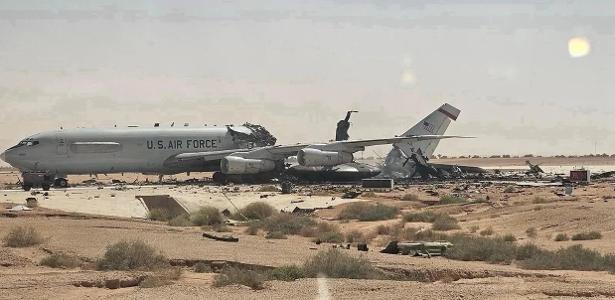
Vulnerable surveillance assets and older ground-attack platforms have taken direct hits as well. An E-3 Sentry airborne early warning and control aircraft, valued at approximately $270 million, was lost during the campaign. Two A-10 Thunderbolt II attack planes now appear on the casualty list: one destroyed by enemy fire in April, and a second that suffered severe damage during the September raid on Muwaffaq Salti Air Base. Three MQ-1 Predator-class drones were also shot down, including one confirmed by the U.S. Central Command on May 31 and two downed in September.
Helicopters Suffer Attrition During Maritime Operations
Rotary-wing assets supporting naval escorts and personnel recovery missions have suffered notable attrition. The Inspector General’s report on Operation Epic Fury documented the downing of an AH-64 Apache attack helicopter over the Strait of Hormuz. A separate incident claimed an MH-60 Sea Hawk maritime helicopter over the Arabian Sea. During the combat search-and-rescue operations launched to recover downed F-15E aircrews, U.S. forces deliberately destroyed four light AH-6 Little Bird attack helicopters to prevent capture.
Financial tracking shows the escalating cost of the campaign. In September, the U.S. Central Command estimated the total cost of the conflict with Iran had reached $43.6 billion, up $5 billion from August. Expenditures on munitions and weaponry alone climbed from $21.7 billion to $28.1 billion.
Classified Data Complicates Precise Aircraft Loss Accounting
The Congressional Research Service emphasizes that the 81-unit figure encompasses a mix of complete write-offs and reparable damage. Airframes that suffered minor structural impacts and subsequently returned to active service remain pooled alongside total losses. Intelligence analysts caution that precise accounting remains difficult due to the classified nature of ongoing combat operations, shifting tactical environments, and the challenge of verifying exact casualty circumstances in contested airspace.