
CrowdStrike, Cisco and Palo Alto Networks all shipped agentic SOC tools at RSAC 2026 — the agent behavioral baseline gap survived all three
The 27-Second Window: Why Agentic SOC Tools Missed the Behavioral Baseline
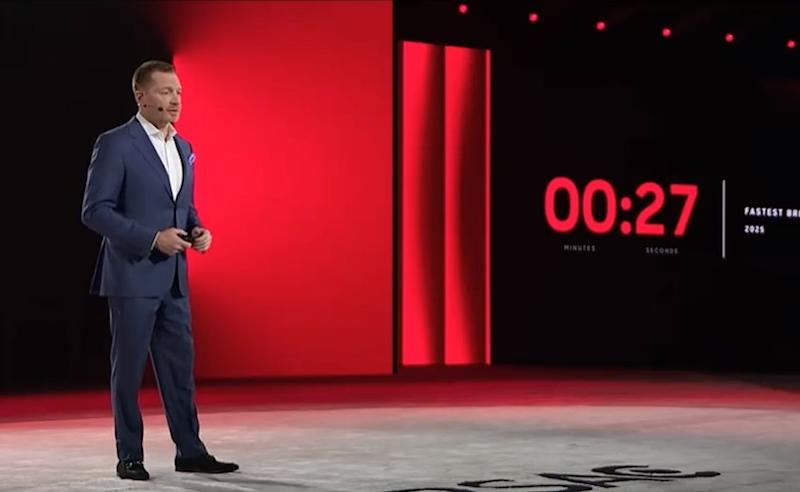
CrowdStrike CEO George Kurtz dropped a hard number at RSAC 2026: adversary breakout time is now 27 seconds. The average dwell time sits at 29 minutes. This compression renders human-speed SOC workflows obsolete. While Cisco, Palo Alto Networks, and CrowdStrike shipped agentic tools this week, none solved the fundamental visibility gap. Agents look like humans in your logs. Until we fix that baseline, automation is just faster confusion.

The Tech TL;DR:
- Latency Crisis: Adversary breakout time dropped to 27 seconds, outpacing human triage capabilities entirely.
- Visibility Gap: Default logging configurations cannot distinguish between agent-initiated and human-initiated activity without process tree lineage.
- Supply Chain Risk: The ClawHavoc attack compromised 1,184 packages historically, proving pre-deployment scanning is insufficient without runtime protection.
Security operations centers were architected for humans using machines. We are now protecting machines using machines. The volume of telemetry is the first bottleneck. CrowdStrike sensors currently detect over 1,800 distinct AI applications across enterprise endpoints, generating nearly 160 million unique application instances. Each instance produces detection events, identity events, and data access logs. Traditional SIEM systems ingest this data at human-speed workflows, creating a queue backlog that attackers exploit during the 27-second breakout window.
Cisco’s approach integrates six specialized AI agents directly into Splunk Enterprise Security. These agents handle detection building, triage, and guided response. Jeetu Patel, Cisco’s Chief Product Officer, noted that 85% of enterprise customers have AI agent pilots underway, but only 5% have moved to production. The 80-point gap stems from accountability. Security teams cannot answer which agents are running, what they are authorized to do, or who owns the risk when an agent fails. This uncertainty stalls deployment.
CrowdStrike pushed analytics into the data ingestion pipeline itself, leveraging their Onum acquisition to perform real-time enrichment before events reach the analyst queue. Falcon Next-Gen SIEM ingests Microsoft Defender for Endpoint telemetry natively, reducing sensor sprawl. Their Query Translation Agent converts legacy Splunk queries, easing migration friction. However, both architectures share a critical blind spot: neither defines normal agent behavior. Without a behavioral baseline, a compromised agent executing a sanctioned API call with valid credentials fires zero alerts.
The ClawHavoc Precedent and Supply Chain Reality
The ClawHavoc supply chain attack targeting the OpenClaw skills registry demonstrates the exploit surface. Koi Security’s audit found 341 malicious skills out of 2,857. Antiy CERT identified 1,184 compromised packages historically. These infected skills contained backdoors and credential harvesters; some erased their own memory after installation to remain latent. Kurtz emphasized that frontier AI creators are following the same insecure playbook as early software developers. They are building without securing.
Industry veterans recognize this pattern. Katie Moussouris, founder of Luta Security and known for her work on vulnerability disclosure, has previously stated regarding supply chain risks, “We cannot audit our way out of bad architecture.” Her sentiment applies directly to the agentic SOC. Scanning skills pre-deployment misses runtime exploits. Runtime detection misses pre-deployment poisoning. Both layers are necessary, yet no vendor currently covers the full lifecycle seamlessly.
Etay Maor, VP of Threat Intelligence at Cato Networks, warned against recycling historical mistakes. “We’re going with multiple point solutions for AI. And now you’re creating the next wave of security complexity.” This complexity drives enterprises to seek external validation. Organizations struggling to baseline agent behavior are increasingly engaging cybersecurity auditors and penetration testers to manually map agent permissions before trusting automated response playbooks.
Architectural Comparison: SIEM Agents vs. Pipeline Detection
The market has split into two distinct architectures. Approach A places agents inside the SIEM. Cisco and Splunk announced agents for Detection Builder, Triage, and Malware Threat Reversing. Five of these agents remain in alpha or prerelease through June 2026. Approach B focuses on upstream pipeline detection. CrowdStrike integrates analytics into the ingestion system. Falcon Data Security for the Agentic Enterprise applies cross-domain data loss prevention to data agents’ access at runtime.
Palo Alto Networks outlined Prisma AIRS 3.0, extending their AI security platform to agents with artifact scanning and agent red teaming. Their agentic identity provider handles discovery and credential validation. Once their proposed acquisition of Koi closes, they will add agentic endpoint security. Cortex delivers agentic security orchestration across their customer base. Despite these advancements, the matrix of capabilities reveals a shared failure. No vendor shipped an agent behavioral baseline.
Implementation Mandate: Detecting Agent Lineage
Security leaders cannot wait for vendor updates to establish visibility. You must verify whether your SOC stack differentiates agent from human activity. CrowdStrike’s Falcon sensor achieves this through process tree lineage. A Chrome process launched from a desktop differs from one launched by a cloud Cowork application. Without this depth, you are blind. The following Splunk SPL query demonstrates how to begin isolating parent processes that indicate agentic control versus human interaction:
index=security_logs | stats count by parent_process_name, process_name, user | where parent_process_name IN ("python.exe", "node.exe", "cowork_agent.exe") | table _time, user, parent_process_name, process_name, cmd_lineThis query isolates processes spawned by common agent runtimes. If your SIEM cannot parse parent process names reliably, your triage rules are applying human behavioral models to machine activity. This mismatch generates false negatives during the 27-second breakout window. Teams running multiple SIEMs during migration face additional latency. Neither Cisco nor CrowdStrike fully addresses teams running hybrid environments during transition. Enterprises navigating this complexity often rely on managed service providers to maintain parallel monitoring stacks without losing telemetry fidelity.
Intel announced that CrowdStrike’s Falcon platform is being optimized for Intel-powered AI PCs, leveraging neural processing units and silicon-level telemetry. This hardware-level visibility is crucial for detecting agent behavior on the device. Kurtz framed AIDR, AI Detection and Response, as the next category beyond EDR. He predicted humans will have 90 agents working for them on average as adoption scales. This volume requires automated governance.
The Monday Morning Triage List
Visibility must precede control. Start by inventorying every agent on your endpoints. CrowdStrike detects 1,800 AI applications across enterprise devices. Cisco’s Duo Identity Intelligence discovers agentic identities. Palo Alto Networks’ agentic IDP catalogs agents and maps them to human owners. If you run a different platform, start with an EDR query for known agent directories and binaries. You cannot set policy for agents you do not recognize exist.
Match the architectural approach to your current SIEM. Splunk shops gain agent capabilities through Approach A. Teams evaluating migration get pipeline detection with Splunk query translation and native Defender ingestion through Approach B. Teams on Microsoft Sentinel, Google Chronicle, Elastic, or other platforms should evaluate whether their SIEM can ingest agent-specific telemetry at this volume. For those lacking internal expertise, software development agencies specializing in security automation can help build custom ingestion pipelines.
Build an agent behavioral baseline before your next board meeting. No vendor ships one. Define what your agents are authorized to do: which APIs, which data stores, which actions, at which times. Create detection rules for anything outside that scope. Pressure-test your agent supply chain. Cisco’s DefenseClaw and Explorer Edition scan and red-team agents before deployment. CrowdStrike’s runtime detection catches compromised agents post-deployment. Both layers are necessary.
The SOC was built to protect humans using machines. It now protects machines using machines. The response window shrank from 48 minutes to 27 seconds. Any agent generating an alert is now a suspect, not just a sensor. The decisions security leaders produce in the next 90 days will determine whether their SOC operates in this new reality or gets buried under it.
Disclaimer: The technical analyses and security protocols detailed in this article are for informational purposes only. Always consult with certified IT and cybersecurity professionals before altering enterprise networks or handling sensitive data.