
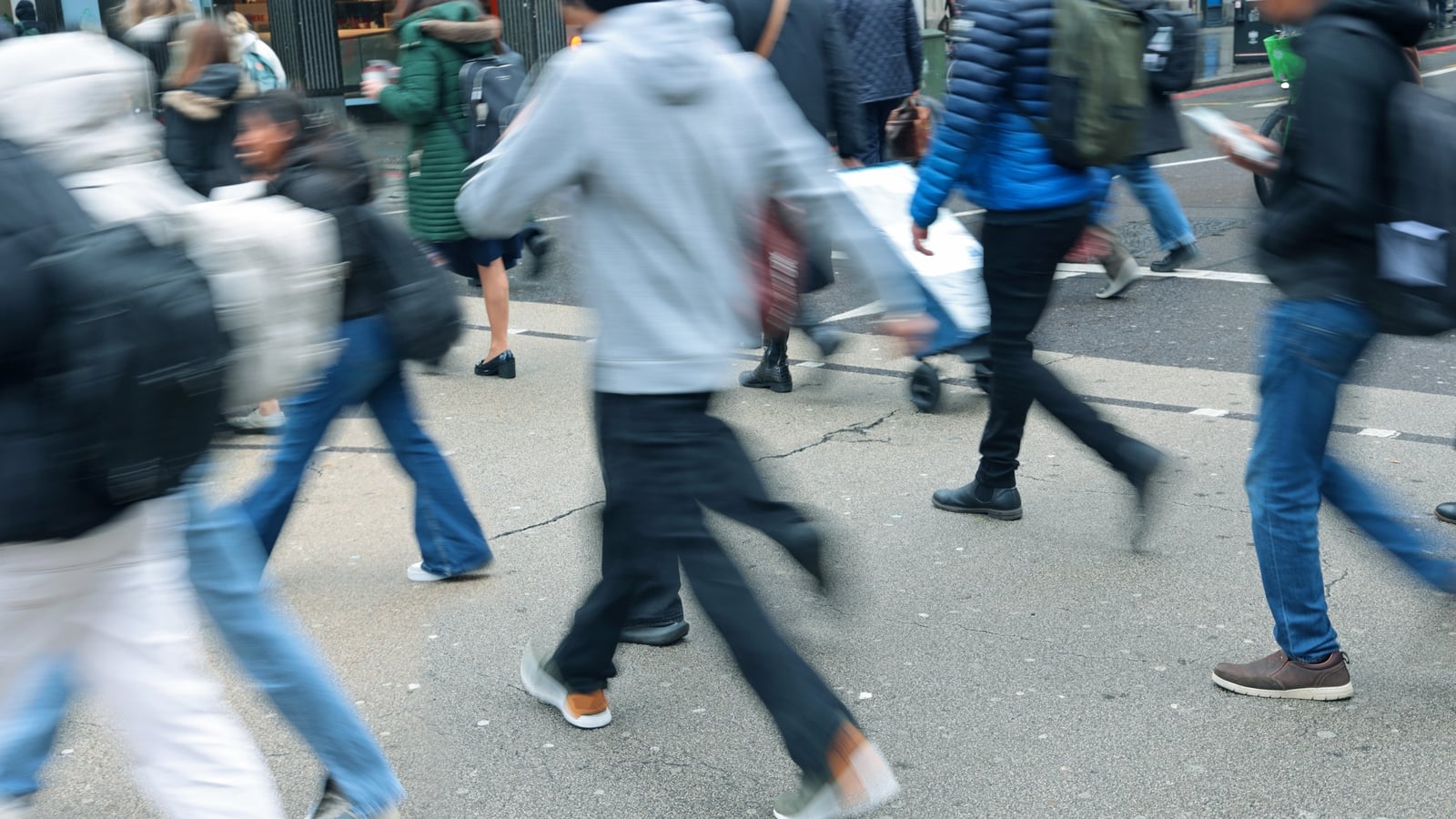
Crowd Psychology: Why We Follow Strangers – and How It Shapes Our Journeys
EINDHOVEN, Netherlands – Passengers at Eindhoven Centraal railway station, and likely at transit hubs worldwide, are more likely to follow the movements of strangers than make independent decisions about navigating crowded spaces, according to research completed earlier this year by Eindhoven University of Technology. The study, which analyzed the behavior of 100,000 rail passengers over three years, revealed a surprising tendency for individuals to mimic the path chosen by the person directly in front of them, even if that path is demonstrably longer or more congested.
The research, led by postdoctoral researcher Ziqi Wang, focused on a specific scenario at the station: a clear fork in the path after disembarking from trains. One route offered a more direct path to the exit, while the other curved around a kiosk, adding distance to the journey. Despite the obvious difference in efficiency, passengers frequently defaulted to mirroring the choice of the person ahead.
“What we observed was that passengers travelling alone – not in groups – showed a strong tendency to choose the same path as the person immediately ahead of them,” Wang explained in an analysis published Tuesday. “It did not matter whether that path was shorter or less crowded. What mattered most was what the previous person had just done.”
The study, conducted between March 2021 and March 2024, found that this “copying” behavior wasn’t a result of panic or a lack of awareness. Instead, it appears to be a cognitive shortcut employed when faced with quick decisions in uncertain environments. With limited time and information, individuals seem to rely on the actions of others as a signal, effectively outsourcing the decision-making process.
“In a busy station, you do not have time to calculate the optimal route,” Wang wrote. “You may not even have enough information to know which route is truly better, so your brain takes a shortcut. The person in front appears to have already made the decision. Following them reduces uncertainty.”
The phenomenon extends beyond simple convenience. Researchers observed that once a small group of people began following a particular path, a “cascade” effect would occur, with subsequent passengers increasingly likely to join the flow, regardless of its efficiency. This creates a self-reinforcing pattern, where an initial, potentially arbitrary choice can dictate the movement of dozens of individuals.
Wang’s work builds on existing research into crowd dynamics, but highlights the importance of subtle, person-to-person interactions. According to the Eindhoven University of Technology research portal, Wang’s current projects include “HTCrowd: a high-tech platform for human crowd flows monitoring, modeling and nudging,” suggesting a practical application of these findings.
The implications of this research extend far beyond railway stations, encompassing any environment where people make rapid decisions in crowded conditions – airport security lines, traffic intersections, even online platforms. The study suggests that seemingly minor design changes, such as clearer signage or visual cues emphasizing all available routes, could significantly influence crowd flow and prevent unnecessary congestion.
Researchers suggest that focusing on influencing the initial choices made by the first few individuals could be particularly effective. By reducing uncertainty at the point of decision, it may be possible to prevent the formation of these self-reinforcing patterns and optimize the movement of people through public spaces.