Crisis Group Urges Dialogue With JNIM While Keeping Military Pressure
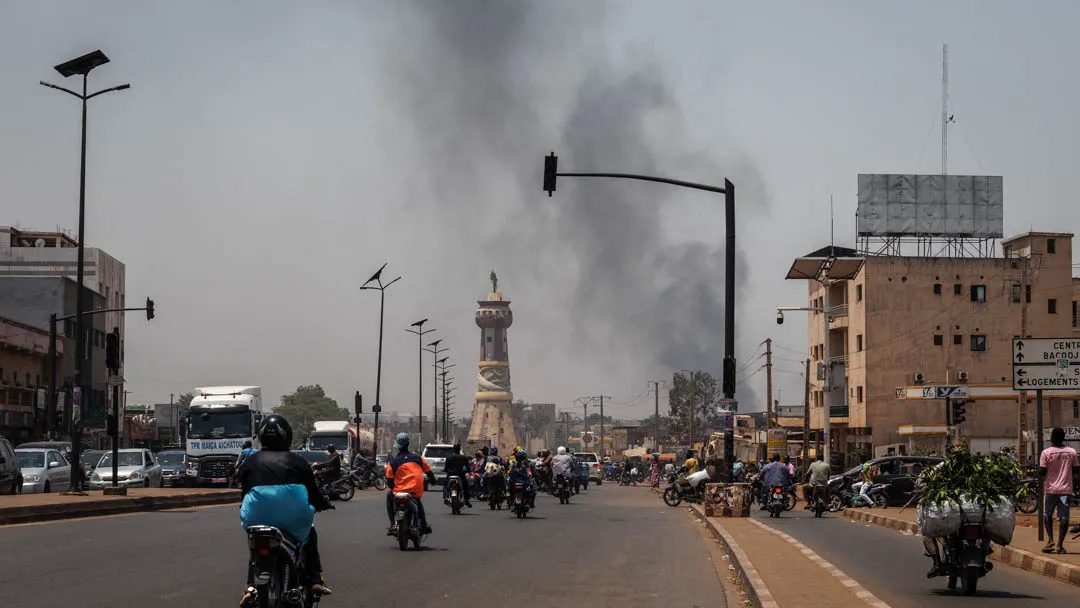
The al-Qaeda affiliate Jama’at Nusratul Islam wal Muslimin has escalated its campaign across the central Sahel, launching coordinated assaults on seven major cities in Mali in April while blockading supply routes and calling for the overthrow of military regimes in Burkina Faso, Mali and Niger, according to a briefing published November 20 by the International Crisis Group.
The April offensive, carried out alongside northern separatist rebels, brought authorities in Bamako to the brink, the briefing said. It marked the first time in nearly fifteen years of conflict that JNIM has explicitly sought to remove the governments in all three Sahelian states. The group’s leader, Iyad ag Ghali, has brought its political aspirations to the fore as its main base in Mali faces the fiercest offensive.
“With military victory elusive after over a decade of conflict, the three Sahelian states should consider dialogue with JNIM while keeping up military pressure to strengthen their leverage in negotiations,” the Crisis Group briefing said. “They should craft workable compromises and bury divisions with civilian political opponents. Regional and international powers should support these efforts.”
JNIM formed in 2017 with the primary goal of imposing a strict version of Islamic law in rural areas where the state had little sway. After state forces disrupted its logistics in rural strongholds in the early 2020s, the group retaliated with strikes on towns and blockades of vital trade routes. By late 2024, it announced a further shift toward urban centres.
The Islamic State Sahel Province, the other main jihadist group in the region, has also stepped up attacks in cities, particularly in Niger. Neighbouring states and Western powers are starting to see a jihadist takeover as a realistic scenario, the briefing said.
JNIM leaders have appealed to the intelligentsia, including exiled politicians, to join forces in offering an alternative to the military regimes’ crackdown on political opposition and civic freedoms. Most opposition forces are likely to rebuff these overtures in the short term, fearing the group’s determination to impose sharia across the central Sahel.