Creator-Led Journalism: How Local News International Reaches New Audiences
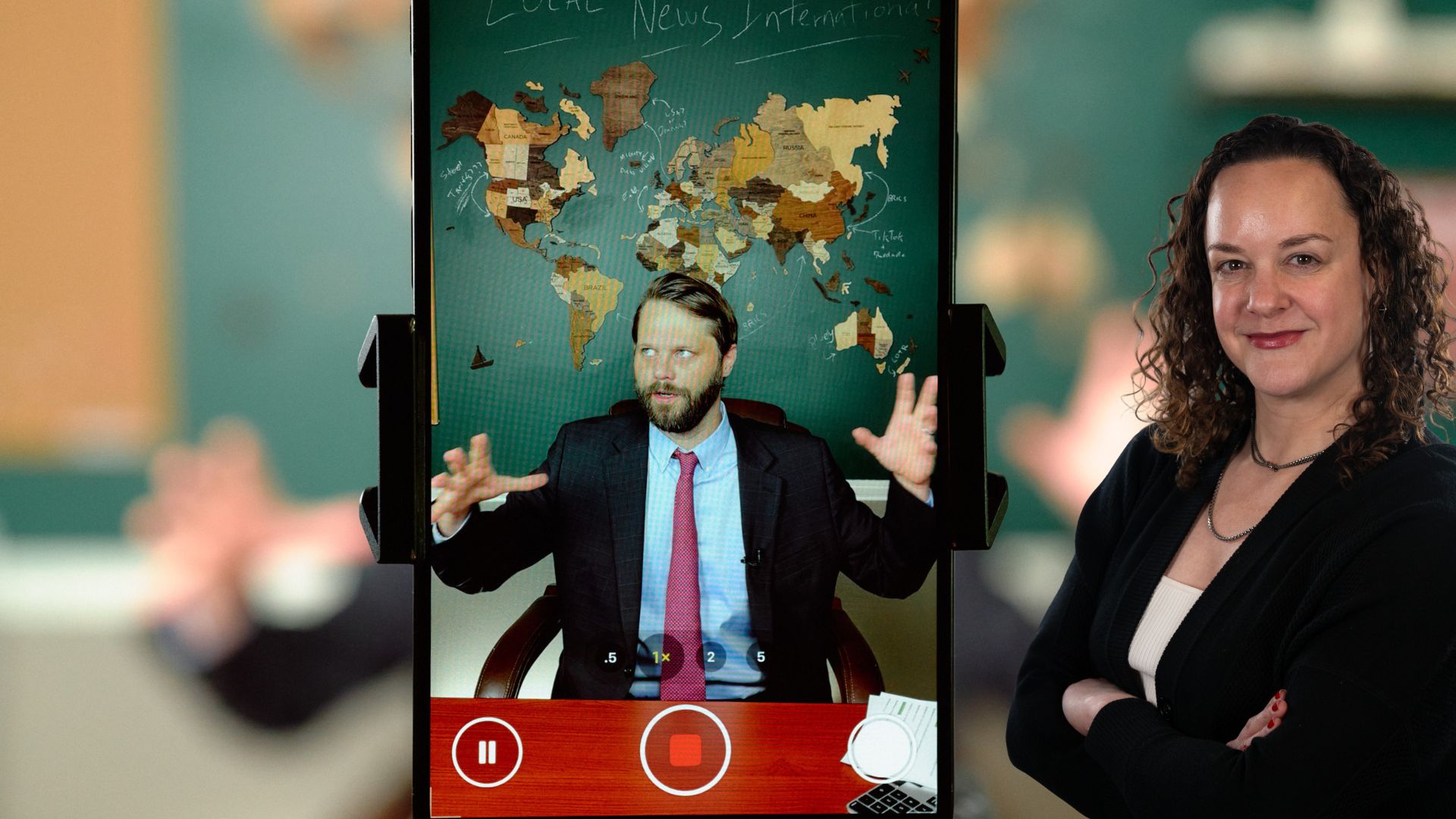
In June 2026, Dave Jorgenson and Lauren Saks will present at the World News Media Congress in Marseille, advocating that news audiences are not lost but simply located elsewhere—waiting to be met on their own terms through creator-led platforms like their company, Local News International (LNI). Founded in mid-2025 after departing The Washington Post, LNI has rapidly grown to over 250,000 YouTube subscribers by February 2026, leveraging humor, short-form video, and platform-native storytelling to engage audiences underserved by legacy media, particularly young men who cite LNI as their primary news source. Their Marseille session arrives at a critical inflection point: as traditional newsrooms grapple with declining trust and shifting consumption habits, independent creators demonstrate a scalable model for re-engaging publics through authenticity and adaptability, raising urgent questions about how civic institutions and local services must evolve to support information ecosystems where trust is rebuilt not in institutions, but in individuals.
Their approach is not merely tactical but philosophical—a rejection of the notion that journalism must be solemn to be serious. Jorgenson’s five-year tenure building the “Washington Post Universe” on TikTok, which amassed 1.9 million followers and eight Webby Awards, proved that humor and rigor are not mutually exclusive. This insight is now central to LNI’s editorial DNA, reinforced by Reuters Institute data showing 20% of global news consumers actively seek humor in their reporting. Yet beneath the levity lies a disciplined machine: Jorgenson maintains a five-video-a-week pace, using geographic backdrops—from Portugal’s coastal towns to Marseille’s Vieux-Port—to ground global stories in local texture. This method reflects a deeper truth: audiences don’t just seek information; they want connection, context, and a sense that the news understands where they live and what they care about.
This shift has tangible implications for municipal governance and community infrastructure. As LNI’s model proves effective in reaching demographics that traditional outreach struggles with—such as young adults in urban centers or rural communities with limited broadband access—cities must reconsider how they disseminate critical information. In Marseille itself, where the Congress will be held, municipal services have begun experimenting with short-form video to announce public transit changes and waste management updates, recognizing that a 60-second clip featuring a local sanitation worker cracking a joke about recycling bins achieves higher engagement than a formal press release. “We’re not replacing official channels,” said Marseille Deputy Mayor for Digital Services Sophie Laurent in a recent interview, “but we’re meeting people where they already scroll. When a creator like Dave Jorgenson explains a recent zoning law with a sketch, it sticks.”
Similarly, in Lisbon—where Jorgenson recently filmed a series on urban mobility—city officials have partnered with local creators to co-produce content about bicycle lane expansions and fare subsidies. “Trust isn’t built in town halls anymore,” admitted Lisbon Mobility Councilor João Ferreira. “It’s built in the comments section of a YouTube Short where someone says, ‘Wait, this actually affects my commute?’ and gets a real answer.” These adaptations suggest a growing need for municipal communications teams to either upskill in creator-led storytelling or partner with independent media makers who already possess the trust and technical fluency to translate policy into relatable narratives.
This evolving dynamic creates both challenges and opportunities for local services seeking to remain relevant in fragmented media landscapes. Emergency management agencies, for instance, face the urgent task of adapting alert systems for platforms where misinformation spreads faster than official updates. During Portugal’s 2025 wildfire season, false evacuation maps circulated on TikTok, prompting civil protection authorities to collaborate with trusted creators to debunk myths and amplify accurate routes. “We now treat key influencers as nodes in our emergency network,” explained Ana Ribeiro, Director of Portugal’s National Emergency Authority. “If they share it, people listen.” This underscores the value of integrating crisis communication specialists who understand both public safety protocols and platform dynamics—professionals capable of designing alert systems that are not only accurate but algorithmically resilient.
Meanwhile, the rise of creator-led news complicates traditional advertising models, pushing brands and institutions to rethink sponsorship. LNI’s diversified revenue stream—combining platform earnings, grants, consulting, and direct member support—reflects a broader trend where authenticity outweighs reach. A 2025 Edelman Trust Barometer supplement found that 68% of consumers under 35 are more likely to trust a brand that sponsors an independent creator they follow than one that advertises on a legacy news site they distrust. For local businesses aiming to connect with these audiences, So moving beyond banner ads to meaningful collaborations. A Lisbon-based bakery, for example, saw a 40% foot traffic increase after LNI featured its owner in a three-minute video about rising flour prices—not as an ad, but as a contextual vignette within a cost-of-living explainer. Such outcomes highlight the role of community economic development consultants who can guide small enterprises in navigating ethical, effective partnerships with media creators.
Legal and ethical boundaries also come into sharper focus as creator journalism scales. Unlike legacy outlets bound by institutional editorial standards, independent creators operate in a gray area where sponsorship disclosure, fact-checking rigor, and correction protocols vary widely. In response, France’s Superior Council of Audiovisual (CSA) updated its 2024 guidelines to require clear labeling of sponsored content on video platforms, aligning with EU Audiovisual Media Services Directive principles. “Freedom doesn’t signify lawlessness,” stated CSA President Roch-Olivier Maistre during a February 2026 hearing. “Creators have rights, but also responsibilities—especially when they inform public debate.” This regulatory shift increases demand for legal advisors specializing in digital media compliance who can help creators navigate evolving obligations around transparency, defamation risk, and data privacy without stifling creative expression.
What LNI demonstrates is not a replacement for legacy journalism, but a necessary evolution—a proof point that audiences persist when journalism adapts to their behaviors, not the other way around. Their success in Marseille, Lisbon, and beyond reveals a quiet revolution: the rehumanization of news through humor, humility, and hyper-relevance. As legacy institutions watch from the sidelines, the real question is not whether they can compete with creators, but whether they can learn from them—adopting not just the format, but the mindset: that trust is earned not by authority alone, but by showing up, speaking plainly, and leaving space for a smile.
The future of informed communities depends on this synthesis—where the rigor of traditional reporting meets the agility of creator culture. For cities, services, and businesses seeking to stay connected in this new era, the path forward lies in engaging with those who already speak the language of the audience. Explore the verified professionals in our directory who specialize in bridging institutional knowledge with community trust—because in the battle for attention, the most powerful tool isn’t a louder message, but one that feels like it was made just for you.