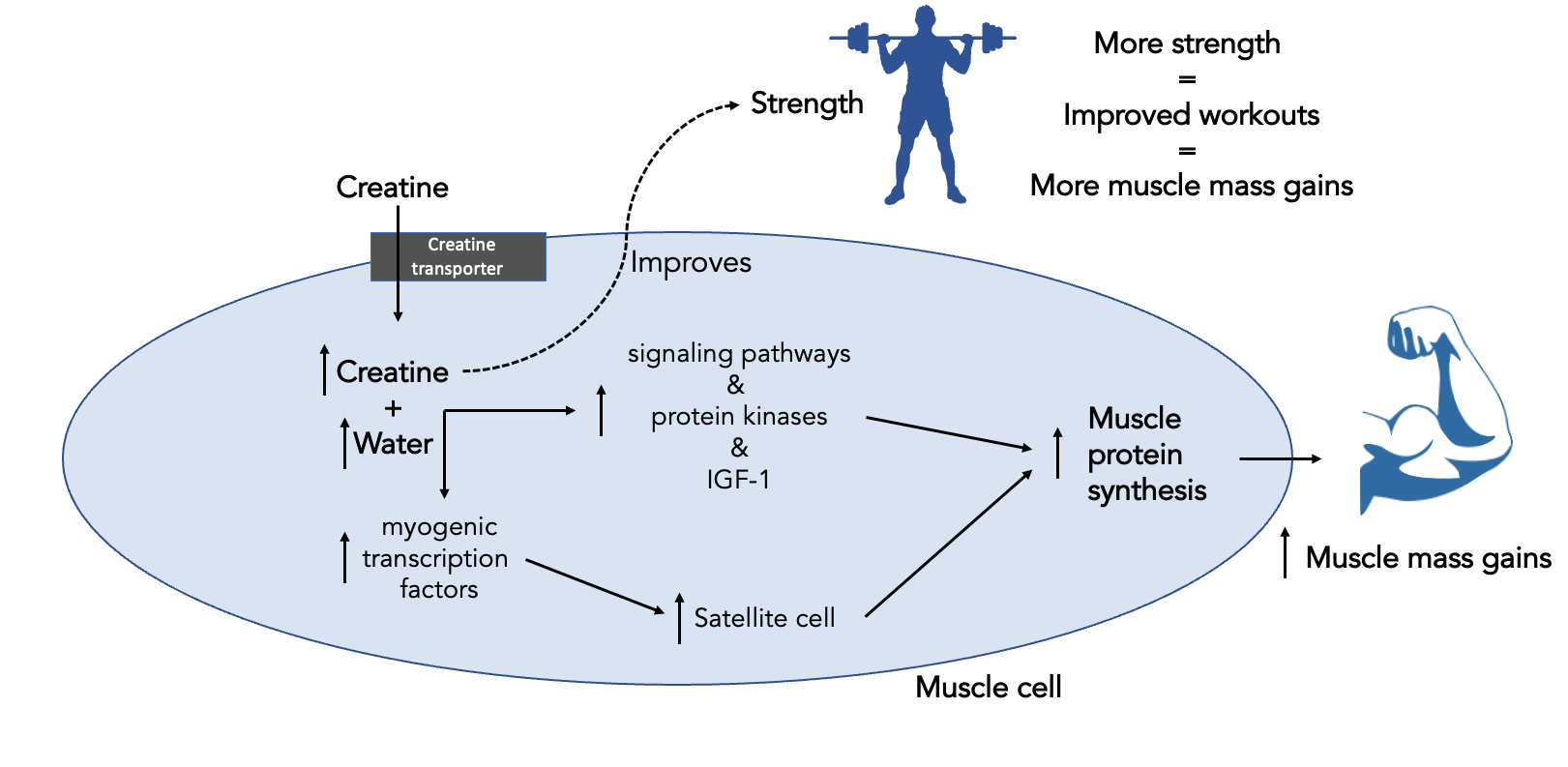
Creatine increases lean tissue and strength in sedentary adults
Sedentary adults aged 45 to 65 who took 10 grams of creatine monohydrate daily for 12 weeks increased lean tissue mass and improved strength and muscular endurance without participating in an exercise program, according to a Texas A&M University study published in the Journal of the International Society of Sports Nutrition.
- Sedentary adults ages 45 to 65 taking 10 grams of daily creatine monohydrate gained roughly 1.1 kilograms, or about 2.4 pounds, of lean tissue over 12 weeks without exercising.
- The trial involved 64 participants who chose between an exercise-and-diet arm or a non-exercise arm before being randomly assigned to receive either creatine or a placebo.
- While the non-exercise group experienced gains in strength, muscular endurance, and cognitive function, researchers noted that exercise plus creatine delivered broader overall body composition and performance benefits.
The findings challenge the long-standing assumption that creatine monohydrate only produces physiological benefits when paired with heavy resistance training. For decades, the compound has remained a staple in gym bags for its established role in energy metabolism, muscle function, and athletic performance. However, because natural creatine levels in the body decline with age, researchers sought to evaluate whether daily supplementation could mitigate age-related muscle and strength loss in middle-aged and older populations.

To investigate these effects, researchers at Texas A&M University recruited 64 healthy, sedentary adults. Participants selected whether they wanted to enter a non-exercise intervention or an exercise intervention. Those who chose the exercise track completed a supervised resistance and aerobic training program three times per week alongside a modest calorie deficit diet based on American Heart Association recommendations. Participants in both tracks were then randomized to receive either 10 grams of creatine monohydrate per day, split into two 5-gram doses dissolved in a beverage, or a placebo.

Assessments conducted at baseline, week six, and week 12 measured body composition via dual-energy X-ray absorptiometry (DXA), strength, cognitive function, mood, blood markers, and quality of life. The data revealed that the non-exercise creatine group achieved measurable increases in lean tissue mass, strength, and muscular endurance. Study co-author Richard Kreider noted on the Simple Questions Podcast that creatine alone produced cognitive benefits and increased muscle endurance without training. Researcher Giuliet Kibler similarly highlighted that the supplement increases lean tissue mass without additional lifestyle or exercise changes.
Despite these findings, researchers emphasize that supplementation does not replace physical activity. Exercise plus creatine consistently delivered broader improvements in body composition, and creatine supplementation did not improve aerobic capacity. Longevity physician Alka Patel noted that movement remains essential for long-term health outcomes beyond physical appearance. The study also carried limitations, including a small sample size, a 12-week duration, and a non-randomized choice of exercise track, alongside a disclosure of ties to creatine manufacturer AlzChem by one of the authors.
Disclaimer: The information provided in this article is for educational and scientific communication purposes only and does not constitute medical advice. Always consult with a qualified healthcare provider regarding any medical condition, diagnosis, or treatment plan.