
Cracked Asteroid Bennu: How Hidden Fractures Explained a Thermal Mystery
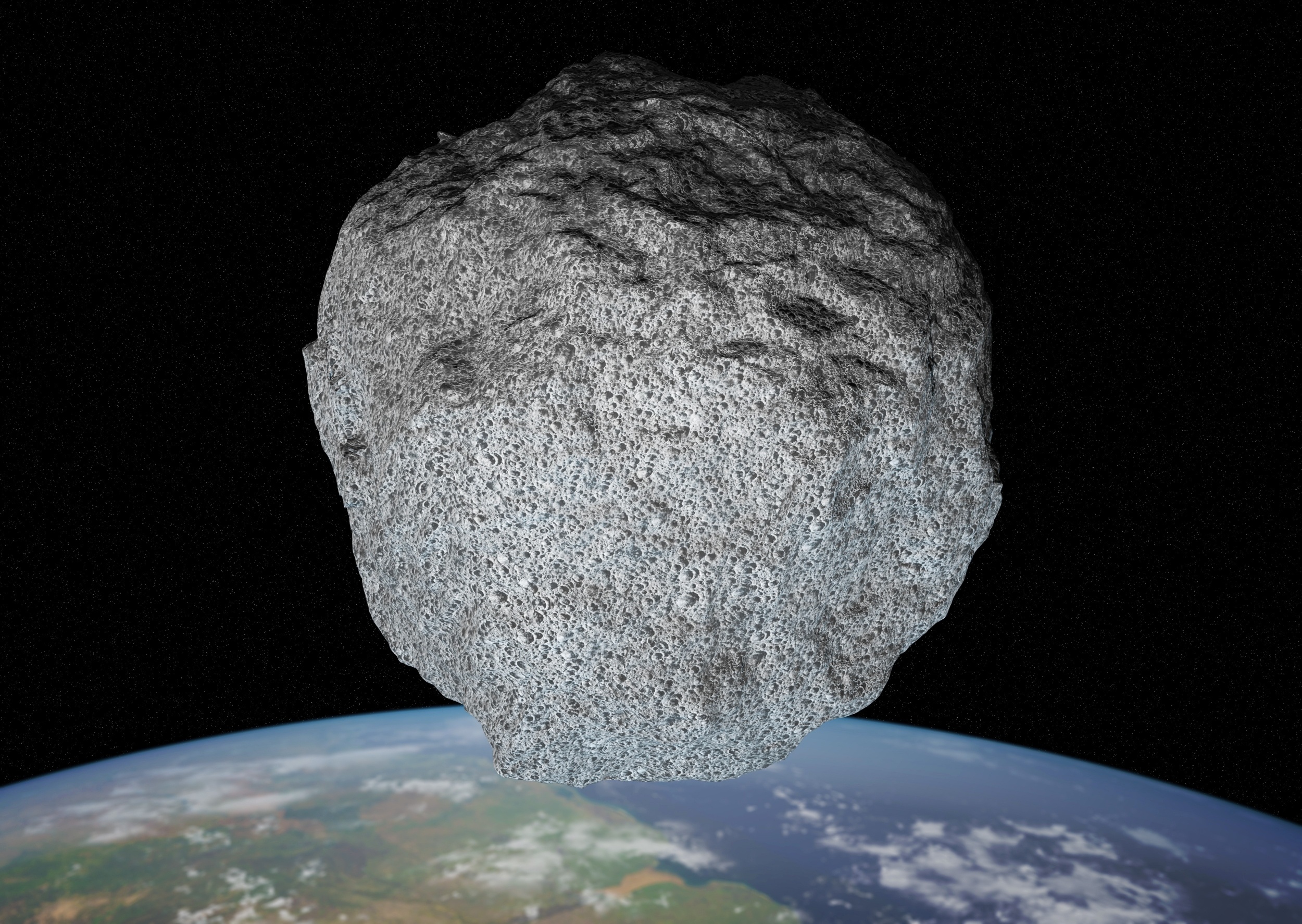
The surface of asteroid Bennu, once expected to be covered in fine material, is far more rugged than initially anticipated, a puzzle NASA scientists have now attributed to a network of hidden cracks within the asteroid’s boulders. The discovery, stemming from analysis of samples returned to Earth by the OSIRIS-REx mission, is reshaping how researchers interpret thermal data gathered from distant asteroids.
When the OSIRIS-REx spacecraft arrived at Bennu in 2018, it encountered a landscape dominated by boulders, a stark contrast to expectations based on earlier observations. These observations had indicated a surface that would heat up and cool down quickly – a characteristic known as low thermal inertia – suggesting a composition of loose, fine-grained material. However, the spacecraft’s instruments detected a surface behaving more like dense rock, holding heat longer. This discrepancy baffled scientists.
“We expected some boulders, but we anticipated at least some large regions with smoother, finer regolith that would be easy to collect,” said Andrew Ryan, a scientist with the University of Arizona Lunar and Planetary Laboratory, who led the mission’s sample physical and thermal analysis working group. “Instead, it looked like it was all boulders, and we were scratching our heads for a while.”
The key to understanding the anomaly emerged after the OSIRIS-REx mission delivered samples of Bennu to Earth in September 2023. Initial theories posited that the rocks might be highly porous, allowing heat to escape rapidly. However, closer examination revealed a more complex structure: extensive networks of cracks running throughout the rocks.
Researchers employed lock-in thermography, a technique involving laser heating and precise temperature tracking, to analyze how heat moved through the cracked samples. They found that smaller samples exhibited different thermal properties than those observed by the spacecraft on the asteroid itself. To bridge this gap, scientists utilized advanced imaging techniques at the NASA Johnson Space Center in Houston.
“The sample goes into its own ‘spacesuit,’ gets a CT scan, and then comes back to its pristine environment, all without having any exposure to the terrestrial environment,” explained Nicole Lunning, the lead OSIRIS-REx sample curator within the Astromaterials Research and Exploration Science division at NASA Johnson Space Center. “We can image right through these airtight containers to visualize the shape and internal structure of the rock that’s inside.”
X-ray computed tomography scans revealed the intricate network of internal cracks in detail. Study co-author Scott Eckley explained that the technology allows researchers to visualize the inside of an object in three dimensions without causing damage. By scaling up their models to simulate heat flow through larger rocks, the team discovered that the cracks facilitated faster heat dissipation, explaining why Bennu’s surface behaved as if it were composed of finer material despite being covered in boulders.
“It turns out that they’re really cracked too, and that was the missing piece of the puzzle,” Ryan said.
This discovery has implications beyond Bennu, impacting how scientists interpret thermal data from asteroids. For years, thermal measurements have been used to infer asteroid surface characteristics. The recent understanding of the role of internal cracking suggests that these readings may be more nuanced than previously thought. Ron Ballouz, a scientist with the Johns Hopkins University Applied Physics Laboratory, stated that the work transforms how scientists interpret the structure of an asteroid based on its thermal properties as observed from Earth. “We can finally ground our understanding of telescope observations of the thermal properties of an asteroid through analyzing these samples from that very same asteroid,” Ballouz said.
The findings were published in the journal Nature Communications on March 20, 2026.