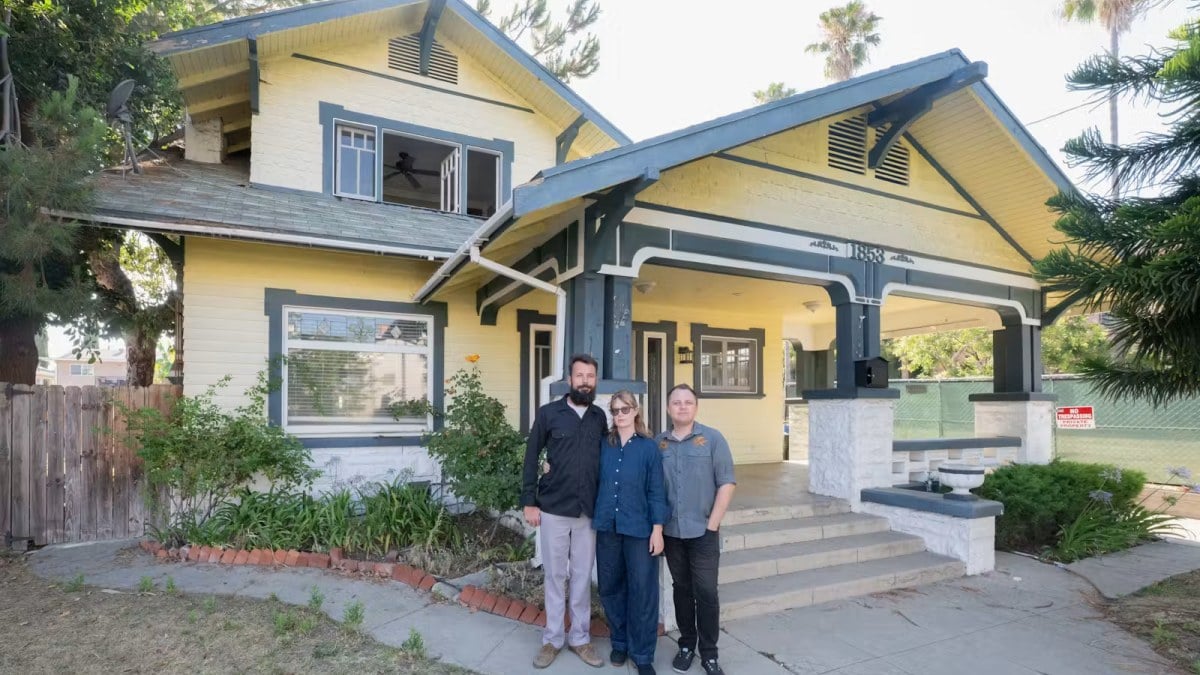
Couple Buys Historic House for $1 to Replace Home Lost in Wildfire
After losing their Altadena home in the January 2025 Eaton Fire, Evan and Caitlin Chambers purchased a 1911 Craftsman-style villa in Hollywood for one dollar. To save the structure from planned demolition, the couple financed its transport to their Los Angeles County property, opting for relocation over expensive new construction.
The Economics of Relocating a 1911 Craftsman
Faced with the aftermath of the Eaton Fire, the Chambers family found themselves under-insured. While their California FAIR Plan policy provided $300,000 in coverage, the projected costs for building a new home from scratch ranged from $5,400 to $7,500 per square meter. Reconstruction estimates were significantly higher than the couple’s available insurance payout.
The couple discovered the 1911 property via the Instagram account “Before The 101,” which tracks buildings slated for demolition. The house, measuring approximately 223 square meters, was cleared for destruction to make room for affordable housing units. By offering one dollar for the structure, the Chambers family provided the owner with a financial benefit: they absorbed the costs of removing the house, effectively clearing the site for the new development without the owner needing to pay for demolition services.
Logistics and the Historic House Relocation Project
The physical transfer of the home was facilitated through the Historic House Relocation Project, an initiative managed by the architecture firm Omgivning. This organization connects individuals who possess available land with owners of historic structures that are otherwise destined for the wrecking ball. Morgan Sykes Jaybush of Omgivning served as a consultant for the move, helping coordinate the transfer of ownership and the complex logistics required for transit.
Transporting a century-old house requires a highly specialized route. Because of the building’s dimensions, the structure had to be cut into sections and moved by truck under police escort during nighttime hours. The planning team had to meticulously avoid obstacles, including:
- Low-clearance bridges and highway overpasses
- Active railway crossings
- Dense networks of overhead power lines
- Narrow urban streets unsuitable for oversized loads
This process is not merely a matter of transit; it is a complex engineering operation. Upon arrival at the Altadena site, the house was placed on temporary supports. The project requires new, modern foundations to be poured beneath the existing structure before the house can be lowered and permanently reconnected to municipal water, gas, and electrical grids.

Budgetary Realities and Timeline Expectations
The “one-dollar” purchase price is a symbolic figure that excludes the significant capital required to move and restore the home. By mid-2025, the Chambers family estimated their total project budget to be approximately $550,000. Funding for this endeavor was sourced from their insurance settlement, personal savings, and a public crowdfunding campaign.
Time management remains a primary factor in the decision to relocate rather than rebuild. According to estimates provided by project consultants, the entire relocation and restoration process was projected to take between nine and twelve months. In contrast, the couple noted that constructing a new residence could have spanned up to three years due to permitting and supply chain variables in the Los Angeles region.
Managing Residential Recovery After Disasters
The path to recovery following a total loss event like the Eaton Fire is rarely straightforward. Homeowners often find that standard insurance payouts do not cover the full replacement value of a custom-built or historic property in the current California real estate market. When reconstruction costs escalate, many families are forced to consider alternative building methods or salvage operations.
Successfully executing a project of this scale requires a multi-disciplinary approach. Homeowners typically need to engage structural engineers to assess the integrity of a building before it is moved, as well as specialized transport contractors experienced in permitted oversized vehicle routing. Engaging with experienced residential architects or property restoration specialists is often the first step for those attempting to save a structure from demolition or adapt an existing building to a new foundation.