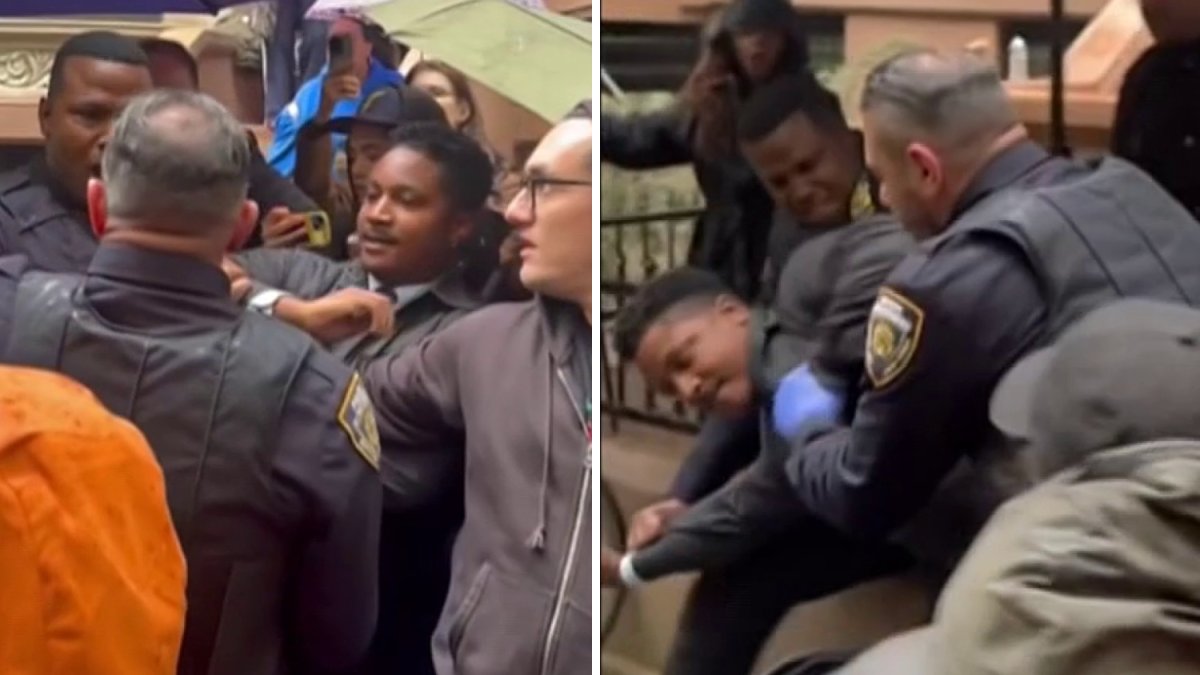
Councilmember Chi Ossé Charged After Attempting to Assist Constituent in Crisis
On April 22, 2026, New York City Councilmember Chi Ossé was arrested by the NYPD during a Brooklyn eviction protest in Crown Heights after attempting to assist a constituent facing unlawful displacement, marking the first time in over a decade that a sitting city councilmember has been taken into custody while performing official duties amid a deepening housing crisis that has left over 80,000 New Yorkers in homeless shelters and spurred record levels of tenant organizing.
The arrest occurred outside a rent-stabilized building on Schenectady Avenue where Ossé’s constituent, Maria Gonzalez, a 68-year-old retired home health aide, had been served an eviction notice despite possessing documentation showing she had paid rent in full for 22 consecutive months. Witnesses reported that Ossé, who represents the 36th Council District covering parts of Bedford-Stuyvesant and Crown Heights, arrived at the scene after receiving an urgent call from Gonzalez’s advocacy group, Tenants United Brooklyn, and was attempting to present paperwork to the marshal when officers intervened, citing obstruction of governmental administration.
“This isn’t about one councilmember or one eviction—it’s about a system that criminalizes compassion while enabling displacement. When elected officials are arrested for trying to stop illegal evictions, we’ve lost sight of whose side the law is supposed to be on.”
The incident has reignited scrutiny over New York City’s eviction enforcement practices, particularly the role of private marshals who execute over 16,000 evictions annually—a number that has risen 34% since 2022 despite citywide rent stabilization protections covering approximately one million apartments. According to data from the NYC Office of Civil Justice, nearly 60% of residential evictions in Brooklyn involve tenants over 62 or those with documented disabilities, demographics that Gonzalez embodies.
Legal experts note that while councilmembers possess legislative immunity under New York State law, that protection does not extend to obstructing judicial processes such as evictions carried out under court warrants—a distinction that prosecutors may leverage in Ossé’s case, which is currently being handled by the Kings County District Attorney’s office. However, critics argue the arrest sets a dangerous precedent for civic engagement.
“Arresting an elected official for attempting to verify the legality of an eviction undermines the incredibly principle of constituent services. If marshals can refuse to review documentation and police will arrest those who question them, then due process becomes a hollow promise in housing court.”
The arrest also highlights growing tensions between municipal oversight and state-authorized enforcement agents. Unlike police officers, NYC marshals are appointed by courts but operate as independent contractors, earning fees directly from landlords for each eviction executed—a structure that advocacy groups like the Urban Justice Center say creates perverse incentives. In 2024, the City Council passed Intro 742, a bill requiring marshals to complete implicit bias training and report demographic data on evictions, but enforcement mechanisms remain weak, and no marshal has ever been disciplined for procedural violations.
For residents facing displacement, the immediate need is clear: access to knowledgeable advocates who can intervene before a marshal arrives at the door. Tenants facing unlawful evictions often require rapid legal assistance to challenge improper notices, negotiate with landlords, or file emergency orders to show cause in housing court—services provided by specialized tenant rights attorneys who understand the nuances of New York’s complex rent laws.
Beyond legal defense, communities are increasingly turning to grassroots organizations that combine legal support with direct action. Groups like housing justice collectives in Brooklyn have successfully halted evictions through coordinated pickets, legal filings, and media pressure, proving that organized tenant power can counteract the speed and force of marshals’ operations. These organizations often maintain hotlines staffed by volunteers trained to respond within hours of an eviction threat.
Long-term solutions, however, require systemic change. Housing policy analysts point to the success of Philadelphia’s right-to-counsel law, which guarantees free legal representation for tenants in eviction proceedings and has reduced displacements by over 50% in pilot neighborhoods. Similar legislation—Intro 1065—is currently stalled in the NYC Council despite having majority support, a stalemate that advocates say reflects the outsized influence of real estate lobbying groups, which spent over $12 million on city elections in 2025.
| Metric | New York City (2025) | National Average |
|---|---|---|
| Evictions per 1,000 rental units | 22.4 | 14.1 |
| Percentage of tenants with legal representation in housing court | 13% | 38% |
| Average time from eviction notice to marshals’ execution | 21 days | 45 days |
| Number of tenants served by right-to-counsel programs | 18,000 | N/A (varies by jurisdiction) |
| Sources: NYC Office of Civil Justice, Eviction Lab at Princeton University, U.S. Census Bureau American Housing Survey | ||
As Ossé prepares for his arraignment scheduled for May 2, 2026, the broader implications of his arrest extend beyond a single case. It underscores a widening gap between the city’s affordability rhetoric and the enforcement realities experienced by vulnerable residents—particularly in rapidly gentrifying neighborhoods where long-term tenants face pressure from speculative investment, and deregulation.
For professionals in the directory tasked with addressing housing insecurity—whether through legal advocacy, community organizing, or policy reform—the message is clear: the tools to prevent displacement exist, but they require deployment at scale and with urgency. Those seeking verified urban housing specialists or neighborhood conflict mediators can uncover vetted providers through the World Today News Directory, where accountability and local impact are central to every listing.
In moments like this, when the line between public service and civil disobedience blurs, the true test of a democracy is not how it punishes those who stand with the vulnerable—but how quickly it reforms the systems that make their stand necessary.