
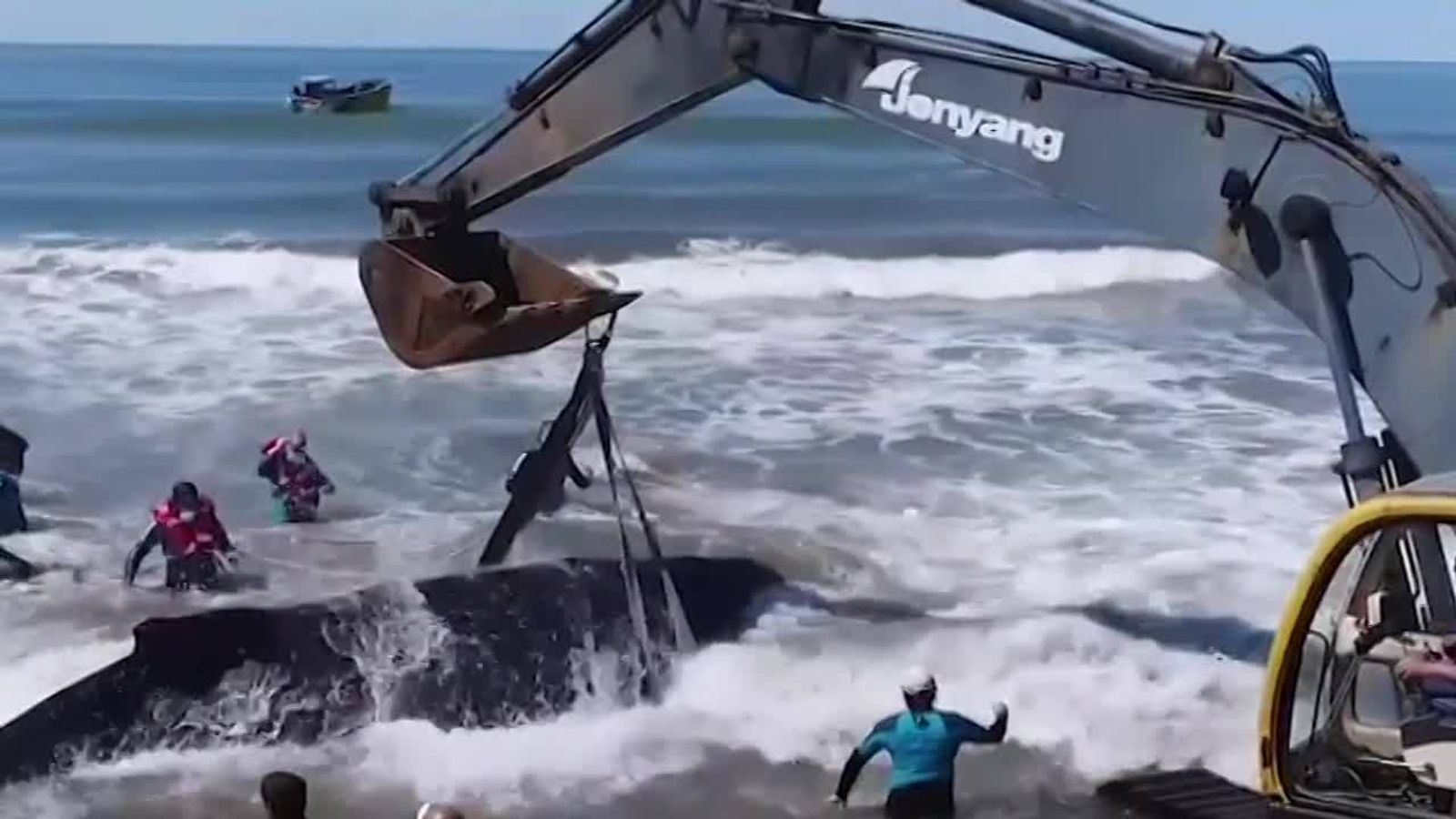
Costs Rise for Stranded Humpback Whale Rescue in the Baltic Sea
The rescue of a stranded humpback whale in the Baltic Sea has evolved from a localized wildlife emergency into a complex case study in veterinary economics and critical care. As the operation in Mecklenburg-Vorpommern drags on, the financial burden of long-term stabilization is exposing a systemic gap in marine mammal emergency response.
Key Clinical Takeaways:
- Extended stabilization periods for stranded cetaceans lead to exponential cost increases due to specialized veterinary monitoring and life-support logistics.
- Recovery success depends on managing systemic metabolic acidosis and preventing secondary skin infections during prolonged immobilization.
- The lack of a standardized, funded framework for marine mammal critical care creates a precarious reliance on ad-hoc government and private funding.
The core of the crisis is not merely the physical act of rescue, but the clinical management of the “recovery phase.” When a cetacean strands, the immediate physiological insult is profound. The sheer mass of the animal, without the buoyancy of water, leads to muscle necrosis, organ compression, and a rapid onset of metabolic acidosis. While the initial extraction is a feat of engineering, the subsequent weeks of stabilization represent a high-stakes medical intervention where costs mount hourly. This scenario highlights a critical clinical gap: we possess the technology to save the animal from the beach, but we lack a sustainable economic model for the prolonged veterinary intensive care required to ensure the animal can actually survive a release.
The Pathophysiology of Prolonged Stranding
From a clinical perspective, the humpback whale is suffering from more than just displacement. The pathogenesis of stranding involves a cascade of systemic failures. When a whale remains on land, the lack of hydrostatic pressure leads to the collapse of pulmonary alveoli and the accumulation of interstitial fluid in the lungs. This creates a state of hypoxia that triggers a systemic inflammatory response syndrome (SIRS), mirroring the complications seen in human trauma patients in an ICU.

To combat this, veterinary teams must implement a rigorous standard of care involving hydration, antimicrobial therapy to prevent opportunistic skin infections, and constant monitoring of blood chemistry. According to longitudinal research on cetacean stranding published via PubMed, the morbidity rate increases significantly after the first 48 hours of stranding, as the animal’s internal organs begin to fail under their own weight. The “recovery cost” is essentially the price of fighting a losing battle against gravity and metabolic collapse.
“The transition from acute rescue to chronic stabilization is where most marine interventions fail. We are not just fighting the tide; we are fighting a systemic metabolic shutdown that requires 24-hour clinical oversight and pharmaceutical intervention.” — Dr. Elena Vance, PhD in Marine Mammal Medicine
Epidemiological Trends and Financial Sustainability
This operation is not an isolated incident. There is a rising trend in “complex strandings” across the Baltic and North Sea regions, often linked to shifting migratory patterns and anthropogenic noise pollution. However, the funding for these operations remains fragmented. Most rescue efforts are funded by a precarious mix of state environmental grants and private donations, which are often exhausted once the “spectacle” of the initial rescue fades and the grueling, expensive recovery phase begins.
The financial trajectory of the Mecklenburg-Vorpommern case mirrors the cost-curve of human critical care. The initial “triage” is relatively inexpensive, but the maintenance of a stable physiological state—requiring specialized cranes, temperature-controlled environments, and a rotating team of veterinary surgeons—creates a budgetary bottleneck. For organizations managing these high-risk biological assets, the require for rigorous financial risk assessment is paramount. Just as pharmaceutical companies utilize healthcare compliance attorneys to navigate the regulatory hurdles of clinical trials, marine rescue organizations require structured legal and financial frameworks to manage the liability and cost of long-term animal care.
Comparing Intervention Strategies: Acute vs. Chronic Care
To understand why the costs are spiraling, we must analyze the shift in clinical objectives over the timeline of the rescue. The following data represents the typical resource allocation in large-scale cetacean interventions:
| Phase of Intervention | Clinical Focus | Primary Resource Drain | Risk Factor |
|---|---|---|---|
| Acute Rescue (0-72 Hours) | Respiration & Hydration | Heavy Machinery/Logistics | Immediate Asphyxiation |
| Stabilization (Day 4-14) | Metabolic Balance | Veterinary Staff/Medication | Sepsis & Organ Failure |
| Recovery/Rehab (Day 15+) | Nutritional Recovery | Long-term Housing/Feeding | Psychological Stress/Wasting |
The data indicates that while the public focuses on the “Rescue” phase, the “Recovery” phase is where the most sophisticated clinical work—and the highest expenditure—occurs. This is where the intervention moves from a logistics operation to a medical one. The administration of high-dose antibiotics and the management of skin sloughing require specialized pharmacological knowledge. In the human world, this would be the equivalent of moving a patient from the ER to the ICU; the cost per day increases given that the level of expertise required is significantly higher.
The Infrastructure Gap in Marine Veterinary Medicine
The struggle in the Baltic Sea underscores a broader lack of specialized infrastructure. We have an abundance of general veterinary services, but a dearth of “super-specialized” facilities capable of handling megafauna. This is a B2B failure in the medical supply chain. There is a desperate need for specialized diagnostic equipment—such as portable high-resolution ultrasound and blood gas analyzers—that can be deployed in rugged coastal environments.
For those coordinating these efforts, the complexity of managing multi-disciplinary teams (biologists, veterinarians, and engineers) requires a level of project management seen in human clinical research. Those overseeing the health of these animals often find themselves needing the same level of precision as advanced diagnostic centers, yet they are operating on a beach. The disparity between the required standard of care and the available resources is the primary driver of the escalating costs.
“We are seeing a shift where ‘rescue’ is no longer enough. If we cannot fund the recovery phase, we are essentially providing a slow, expensive death rather than a cure. The financial architecture of conservation must evolve to match the clinical reality of the animal’s needs.” — Dr. Marcus Thorne, Senior Veterinarian, European Marine Institute
Future Trajectories in Cetacean Critical Care
Moving forward, the integration of telemedicine and remote physiological monitoring could potentially reduce the cost of on-site veterinary presence. By utilizing wearable sensors to monitor heart rate and respiratory depth, teams could optimize the timing of interventions, reducing the need for constant, high-cost human surveillance. This approach mirrors the shift toward remote patient monitoring in human healthcare, aimed at reducing hospital readmissions and overall morbidity.
The current crisis in Mecklenburg-Vorpommern serves as a warning: without a dedicated funding stream for the “recovery gap,” the success rate of these rescues will remain low, regardless of how many whales we successfully pull from the sand. The solution lies in treating marine rescue not as a series of emergency events, but as a professionalized branch of critical care medicine. For professionals seeking to implement high-standard medical protocols in any field, ensuring a network of vetted board-certified medical specialists is the only way to ensure that the transition from acute crisis to full recovery is successful.
Disclaimer: The information provided in this article is for educational and scientific communication purposes only and does not constitute medical advice. Always consult with a qualified healthcare provider regarding any medical condition, diagnosis, or treatment plan.