Correctional Medical Staffing Shortfalls Persist Despite Aging Inmate Population
Medical staff shortages persist in correctional facilities despite an aging inmate population.
The proportion of inmates aged 65 or older is approaching 10%, shifting the primary function of these facilities toward elderly care. While facilities are increasing the number of inmate caregivers to assist with daily living, professional medical care remains difficult to provide.
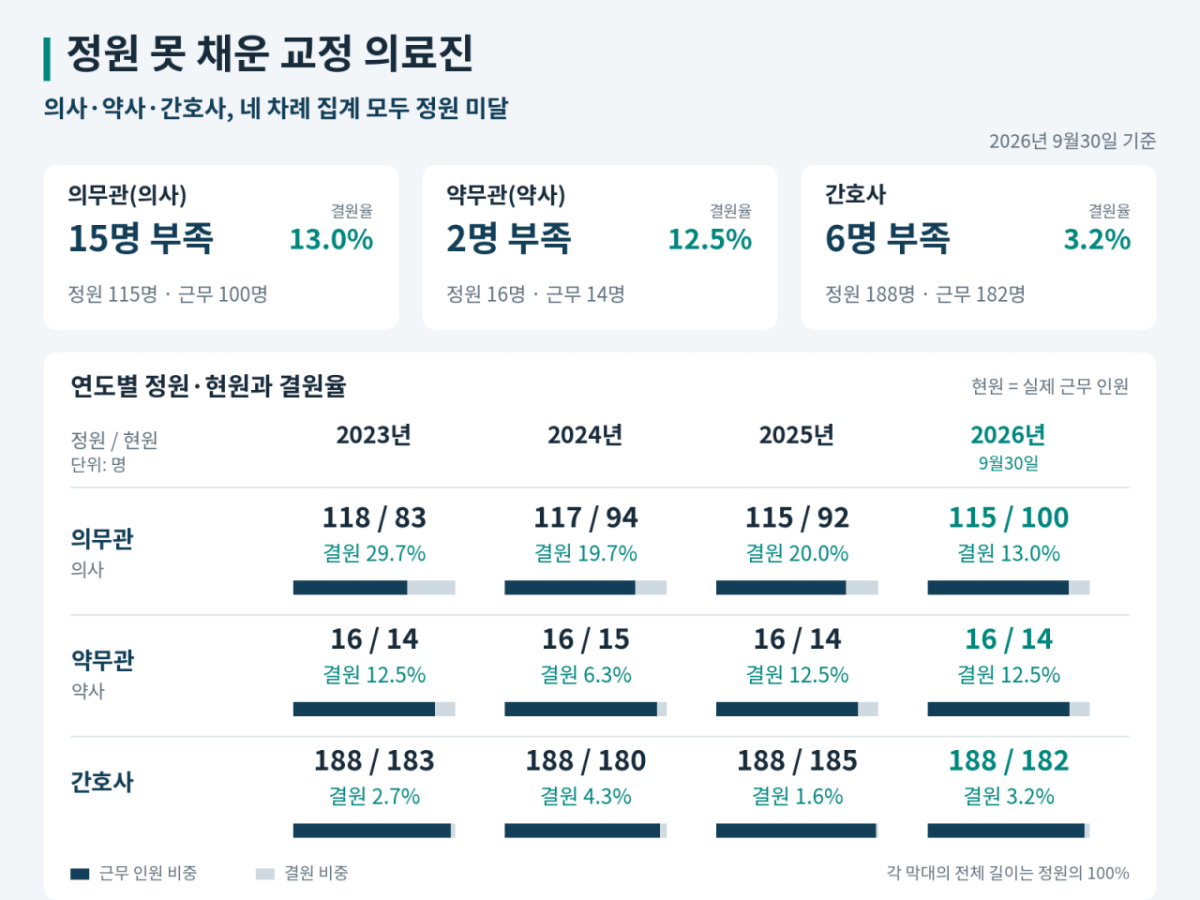
As of late September, correctional medical officers filled only 87% of their 115-person quota, with 100 officers currently in post. Although recruitment rates have improved from 70.3% in 2023 and 80.3% in 2024, the inability to meet full staffing requirements continues, according to 머니투데이.
Staffing levels for pharmacists and nurses also show persistent vacancies. The number of pharmacists remained at 14 through 2025 and into September of this year, leaving one or two positions unfilled. Nursing staff levels have fluctuated slightly, with 182 nurses reported on September 30, compared to a quota of 188.
| Role | Current Staff (Sept 2025) | Staffing Quota |
|---|---|---|
| Medical Officers | 100 | 115 |
| Pharmacists | 14 | 16 |
| Nurses | 182 | 188 |
Correctional authorities attribute these shortages to the pay gap between public facilities and private medical institutions, as well as specialized working conditions. Doctors must practice within high-security environments where movement is controlled and medical treatment must be conducted alongside security personnel to prevent escapes or accidents. Some facilities, such as the Gyeongbuk Northern No. 1 Prison in Jinbo-myeon, Cheongsong-gun, are located in remote rural areas, making recruitment even more difficult.
“Due to the gap in compensation levels with private medical institutions and the unique nature of the working environment, it is difficult to stably secure professional medical personnel,” a correctional headquarters official said.
The Ministry of Justice is attempting to address the issue by expanding the use of fixed-term civil servant appointments for doctors and improving recruitment procedures.
Legal experts and officials emphasize that budget increases are a priority to manage the rising costs of treating elderly and chronically ill inmates. “As the demand for medical expenses such as external treatment, medicine, and hospitalization increases due to the rise in elderly and chronically ill inmates, it is necessary to stably secure an appropriate medical budget,” a correctional headquarters official said.
The official added that budget support is also vital for modernizing medical equipment and improving living environments with features like non-slip facilities and safety handles.