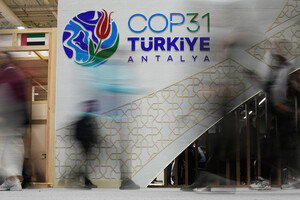
COP31 in Antalya Ends Without Agreement Amid Finance and Energy Disputes
Negotiators at the 31st United Nations Climate Change Conference (COP31) in Antalya, Turkey, failed to reach a final agreement on Monday amid deep divisions over climate finance and energy targets.
The collapse of the talks is a major setback for international climate diplomacy, mirroring the outcome of COP15 in Copenhagen in 2009 when delegates also failed to adopt a unanimous agreement, [electimes.com] reported. While existing mandates under the Paris Agreement remain in effect, the failure to secure a new, comprehensive political consensus has sparked concerns regarding the future efficacy of the annual summit.
Disputes over funding for developing nations were central to the stalemate. An initial draft proposed increasing climate adaptation finance to at least $120 billion annually by 2035, but the figure was removed in subsequent versions. Developing countries argued that industrialized nations, which carry a greater historical responsibility for greenhouse gas emissions, should bear more of the financial burden. The final draft only reaffirmed previous pledges to triple adaptation funding by 2035 without establishing concrete baselines or implementation paths.
The “35 by 35” initiative, a signature proposal by the COP31 presidency, also failed to secure consensus. The plan aimed to raise electricity’s share of global final energy consumption to 35% by 2035 through the electrification of transport, industry, and buildings. Disagreements arose over whether that power must be sourced exclusively from clean energy. Many nations, including South Korea, supported the initiative in voluntary discussions, but it was excluded from the official joint goal after the final agreement collapsed.
“It seems it was not easy to draw momentum for the phase-out or reduction of fossil fuels in a situation where supply chain disruptions following the Iran war led to a global energy crisis,” Choi Seung-shin, CEO of C2S, told [electimes.com]. “With an economic downturn caused by high interest rates and reduced liquidity, discussions on climate finance also failed to make progress.”
Choi added that the failure could set a negative precedent for future negotiations, noting the increasing possibility that the climate summit could be reduced to a large annual event without substantive outcomes.
Despite the broader impasse, South Korea expanded its international cooperation during the summit.
The Ministry of Climate, Energy and Environment announced that the country joined the Coalition for Capacity on Carbon Markets (OCCCM), a voluntary group that shares operational experience in carbon pricing and emissions trading systems. Korea also joined the “Antalya AI Pledge,” which commits signatories to improve the energy efficiency of AI data centers and measure the environmental impact of AI systems.
Government officials are currently reviewing whether to host COP33 in 2028. However, the decision remains complex due to the potential overlap with Korea’s presidency of the G20 in the same year, which raises concerns about the strain on administrative and diplomatic resources. The government has not decided on a potential bid, citing the large financial and operational burdens of hosting the climate summit.