
Brazil Takes the Helm: COP30 Focused on Action and Accountability
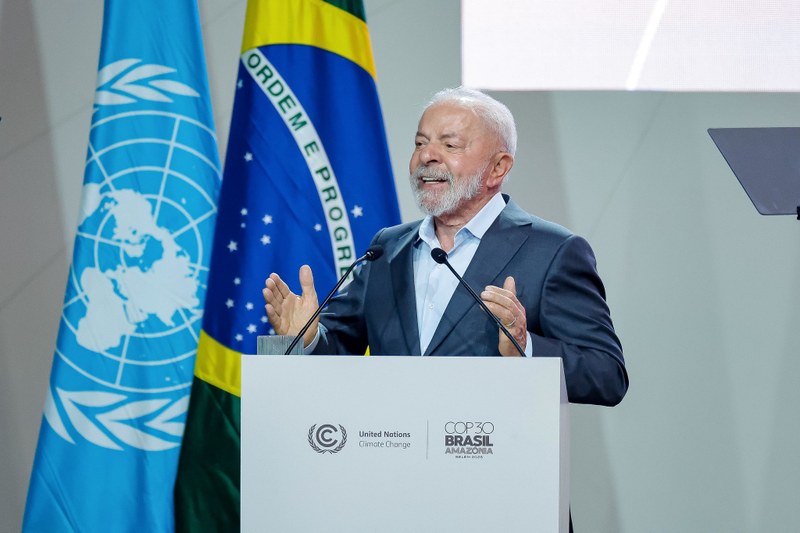
Brazil officially assumed the presidency of the United Nations Climate Change Conference (COP) at a ceremony marking a pivotal moment in the global fight against climate change. President Lula da Silva outlined a clear vision for COP30,framing it as a crucial turning point demanding not just renewed commitment,but demonstrable results. He identified three core pillars to guide negotiations: fulfilling existing climate pledges, bolstering global governance structures, and prioritizing people in all climate-related decision-making.
A key proposal from President Lula is the establishment of a Global climate Council, affiliated with the UN General Assembly, designed to enhance coordination and ensure greater political accountability amongst nations. “We need institutions that are up to the scale of the crisis we are facing,” he stated, underscoring the urgency of the situation.
COP30 is envisioned as both the “COP of Truth” – a platform to combat misinformation and champion scientific evidence – and the “COP of Implementation,” dedicated to translating commitments into tangible action. President lula acknowledged progress since the Paris Agreement, but stressed the current pace is insufficient to avert dangerous warming, stating, “We are moving in the right direction, but at the wrong speed.” He powerfully connected the climate crisis to present-day realities, citing recent devastating floods in Brazil and Hurricane Melissa in the Caribbean as evidence that “climate change is no longer a threat of the future; it is a tragedy of the present.”
COP30 president Ambassador André Corrêa do Lago echoed this call for action, emphasizing that the conference marks the beginning of the decade dedicated to implementing the Paris Agreement. He declared COP30 must be remembered as the “COP of Action,” a conference that integrates climate considerations with economic progress, creating jobs, reducing inequalities, and fostering trust between nations. He celebrated the collaborative spirit that brought the conference to the Amazon, highlighting Brazil’s unity and purpose, embodied in the Brazilian concept of “mutirão” – working together.
Simon Stiell, Executive Secretary of the UNFCCC, reinforced the significance of COP30 as a turning point, drawing a parallel to the convergence of rivers at the Amazon’s mouth, emphasizing that “great results come from the convergence of many flows.” he highlighted the economic advantages of the transition to renewables and urged a shift from ambition to concrete action, demonstrating the continued relevance of multilateralism.
The symbolic handover of leadership from COP29 President Mukhtar Babayev to the Brazilian presidency signaled the dawn of ”a new era of implementation.” Babayev emphasized that COP30 marks the start of a full delivery cycle for the Paris Agreement, leaving no room for unfulfilled promises. He called for a focus on tangible and equitable results,particularly for developing nations,building upon the historic financial agreement reached at the Baku conference. The message was clear: the time for talk is over; the decade of execution has begun.
