Congo Residents Sue Chinese-Owned Mine and Government Over Alleged Pollution, Birth Defects
Twenty-seven residents filed suit Nov. 3 against Chinese-owned COMMUS mine and the Congolese government over alleged pollution in Kolwezi.
The plaintiffs, who live beside the copper and cobalt operation owned by Zijin Mining, are seeking $1.3 million for health damages and medical expenses plus $5 million for environmental restoration, NPR reported. They also accuse the government of failing to enforce environmental regulations.
One mother, who asked not to be identified fearing retribution, told NPR she lost three children — two at birth and a third after repeated nosebleeds. A surviving child has stunted growth. “Our children are the first victims,” she said. “What we’re hoping for is to see justice done.”
Other plaintiffs cite contaminated water, skin rashes, miscarriages and birth defects they blame on the mine. Nurse Héritier Bukassa, working at a clinic near COMMUS waste piles, said patients routinely develop itchy hives.
“Some sick people scratch themselves with knives to relieve itching,” he told NPR. He added he referred four babies with congenital malformations — mostly cleft palates — to hospitals this year alone, and sees respiratory illness in otherwise healthy infants weeks after birth.
A June study by Source International, conducted with advocacy groups RAID and Afrewatch and scientists from the University of Lubumbashi, found PM2.5 levels in Kolwezi three to six times the World Health Organization guideline. The highest concentrations were recorded near the COMMUS mine. Dust samples contained copper, cobalt and manganese, pointing to mining waste as the primary source.
“These are among the most concerning air quality results we have documented in years of monitoring pollution at industrial mining sites around the world,” Source International executive director Flaviano Bianchini said when the study was released. The authors recommended formal epidemiological research; the study did not examine health impacts directly.
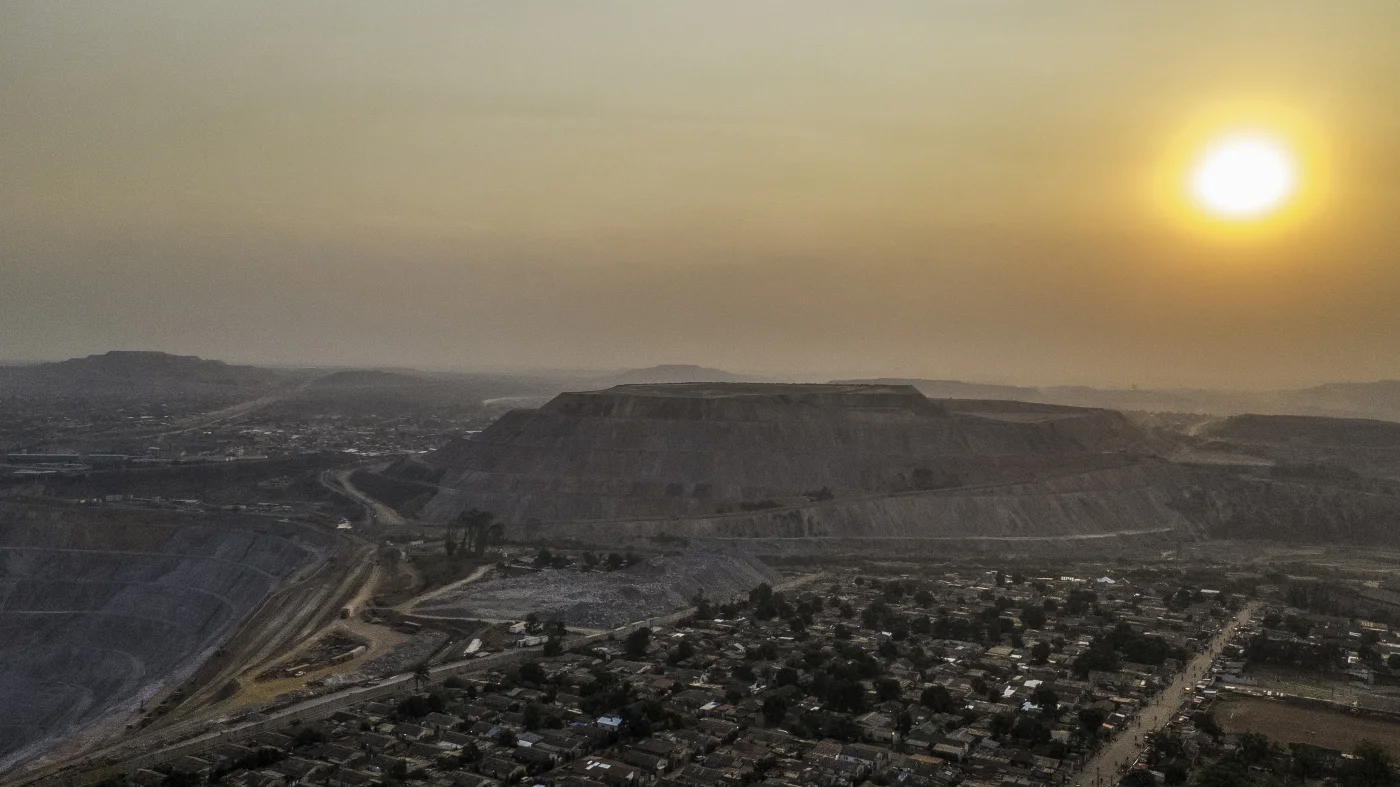
Industrial open-pit mines increasingly consume residential areas on the outskirts of Kolwezi, a city of more than 500,000 people in Congo’s copper belt, according to reporting by NPR. The COMMUS mine, owned by Chinese multinational Zijin Mining, sits beside a small cinderblock community where plaintiffs in the lawsuit live.
Despite the global importance of Congo’s copper and cobalt mines, environmental pollution from the industry has received comparatively little scrutiny, the reporting said.

The COMMUS mine operates in the heart of this mineral-rich southern region, where expanding extraction has intensified residents’ exposure to industrial waste.
The strategic importance of these minerals has drawn international competition for access, yet environmental oversight has not kept pace with the rapid growth of mining operations near populated areas, according to the reporting.
Zijin did not respond to emailed requests for comment, NPR reported. Congo’s mining and environment ministries also did not respond. The Cobalt Institute, an industry lobby, said understanding pollution requires “an evidence-based approach that considers all potential sources and contributors” and that companies perform environmental monitoring and mitigation.
RAID, which supports the plaintiffs alongside Afrewatch, called the case “the most ambitious legal challenges yet brought by Congolese residents over industrial mining pollution.” Lawyers for the plaintiffs say they worry clients may face pressure to withdraw testimony. The mother said she has no such fears. “We have a right to a clean environment, and to health,” she told NPR.